
Health & Safety Checklist for NRIs: Altitude Safety, Insurance & Medical Requirements for Kailash Mansarovar Yatra
If you ask any NRI who has completed the Kailash Mansarovar Yatra, they will tell you one thing without hesitation:
“The journey is divine — but only if your body is prepared for the altitude.”
And they’re right.
Mount Kailash isn’t just another travel spot. It’s a place where the air grows thin, the winds grows stronger, and the soul awakens. This is a land where spirituality meets raw Himalayan reality.
For NRIs—especially those living in countries far from high-altitude regions—the physical, medical requirements, and insurance-related preparations matter just as much as emotional readiness.
This guide is designed exactly for you. Whether you live in the US, UK, Australia, Canada, UAE, Singapore, New Zealand, or Europe, you’ll learn:
- Why altitude affects NRIs more
- Essential medical requirements before the yatra
- Mandatory insurance guidelines
- Medications to carry (with doctor approval)
- Safety tips for high-altitude walking
- Fitness and health preparation
- Real stories from past foreign yatris
- How Kailash Pilgrim ensures your safety
By the end, you’ll feel confident, informed, and ready for one of the most spiritually powerful journeys of your life — especially in the 2026 Tibetan Horse Year, when blessings are believed to multiply.
Table of Contents
Why NRIs Need a Dedicated Health & Safety Checklist
You might wonder why NRIs need an extra level of preparation. Here’s the simple truth:
1. Most NRIs live at sea level
Countries like the US, UK, Singapore, Australia, and the Gulf nations are the places that barely climb above sea level and have minimal elevation.
Kailash, on the other hand,landscape casually jumps to 15,000–19,000 feet, and for this and your body needs a proper heads-up.
Time, oxygen, and a slow, sensible buildup become non-negotiable if you actually want to feel okay at that height.
2. Lifestyle differences
NRIs have different diets, weather exposure, fitness routines, and immunity levels.
All of these matter when walking long distances at high altitudes.
3. The terrain is unforgiving
Dry cold.
Sudden winds.
Low oxygen.
No medical shops.
No rescue infrastructure like Western countries.
4. Medical requirements are stricter for foreign nationals
Fitness certificates, medical prescriptions, travel insurance, and high-altitude medication approvals are essential.
5. Jet lag + altitude sickens the unprepared
Flying from low-altitude countries and directly going to high terrain is a shock to the system.
This is why NRIs often face altitude sickness faster than Indian pilgrims.
But don’t worry — with awareness and the right preparation, thousands safely complete the journey every year.
Understanding Altitude & Its Impact
Altitude is the number one challenge for every Kailash pilgrim.
Mount Kailash region (Tibet) sits at:
- 4,590 meters (Mansarovar)
- 5,610 meters (Dolma La Pass)
The level of oxygen drops here nearly to 40% below sea level, your body instantly feel it . So, what exactly does altitude sickness feel like?
Early symptoms NRIs must watch for:
- Headache
- Loss of appetite
- Nausea
- Sleep disturbance
- Rapid heartbeat
- Breathlessness even while resting
- Extreme fatigue
- Dizziness
These signs usually appear within 24–48 hours of entering Tibet.
Why NRIs experience altitude sickness more:
- Sudden altitude jump after long flights
- Warmer climates back home
- Lower exposure to Himalayan-style terrain
- Higher chance of dehydration
- Dietary changes
But here’s the part most yatris miss:
- Altitude sickness is preventable.
- With proper medical requirements fulfilled, the yatra becomes safe.
Let’s move into what medical preparation you must do.
Mandatory Medical Requirements for NRIs
Before starting your yatra, every foreign pilgrim must undergo a medical check and submit a fitness certificate.
1. Recommended Medical Tests
Your doctor should check:
- Blood pressure
- ECG
- Sugar levels (fasting & PP)
- Complete blood count (CBC)
- Lung function / respiratory health
- Stress test (strongly recommended for those 45+)
- Thyroid (if applicable)
If you have any of these pre-existing conditions, you MUST take approval from your physician:
- Heart conditions
- Asthma
- Diabetes
- Chronic blood pressure
- Recent surgeries
- Severe anxiety or panic disorder
NRIs from colder countries like Canada or Scandinavian nations may adjust better but still require clearance.
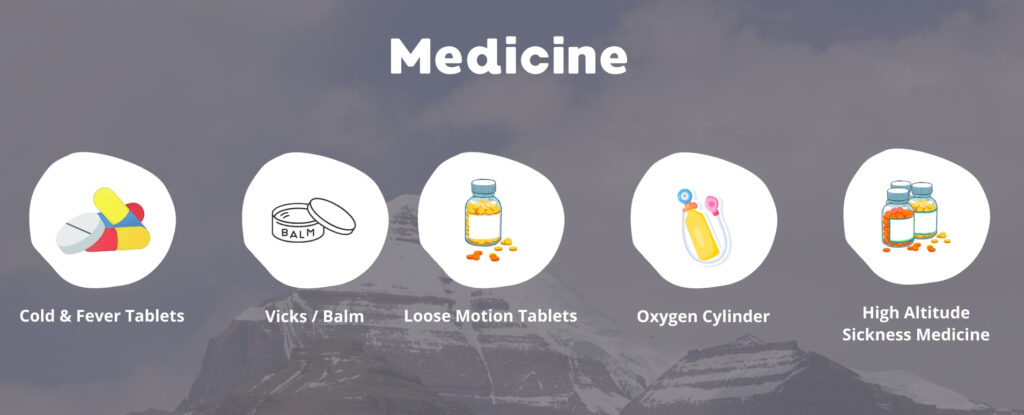
Medications to Carry for Kailash
You must carry a doctor-approved, written medical prescription for all medicines, as airport and border authorities may check them.
Your medical kit should include:
- Diamox (for altitude sickness—only after doctor’s approval)
- Blood pressure medicines
- Diabetes medicines
- Anti-vomiting tablets
- Pain relief tablets
- Antibiotics (if prescribed)
- ORS/electrolytes
- Digestion tablets
- Cough drops
- Motion sickness tablets
- Band-aids
- Elastic bandage
- Small first-aid kit
Additional essentials for foreign pilgrims:
- Medicines for acidity
- Eye drops
- Lip balm (Tibet air is extremely dry)
- Rehydration powders
- Salts & glucose
- Cold-weather inhalers
- Any personal chronic medication (1 week extra)
Kailash Pilgrim travels with its own oxygen support, a small but reliable medical kit, and Sherpas who know those mountains like the back of their hand—but your own medical preparation is crucial.
Travel Insurance Requirements for Kailash Yatra
All foreign pilgrims—including NRIs—must carry valid travel + medical insurance that covers:
- High-altitude travel
- Emergency medical evacuation
- Hospitalization in Nepal
- Helicopter rescue (if required)
- Trip delay/cancellation
Your policy should include:
- Minimum USD 50,000 coverage
- Pre-existing conditions disclosure
- Emergency evacuation up to 6,000 meters
- Repatriation if needed
Common mistakes NRIs make:
- Buying basic travel insurance that excludes high-altitude regions
- Forgetting to add “adventure travel”
- Not checking fine print for rescue eligibility
Avoid these, and you stay fully protected.
Fitness Preparation for NRIs
A bit of practice beforehand makes a huge difference once you’re on the trail, Because most foreign pilgrims don’t walk long distances daily.
Suggested 4-week plan:
Week 1 & 2
- 30 min walking daily
- Gentle stretching
- Light jogging
Week 3
- 5–6 km walk each day
- Breathing exercises
- Climbing stairs (10–15 mins)
Week 4
- 8–10 km walk
- Backpack practice (3–5 kg)
- Mindfulness/meditation
Remember:
Kailash is not a race. Walking slow and steady is the key.
Food, Hydration & Diet Tips for NRIs
Foreign travelers often face stomach upsets due to sudden changes in food. Follow this:
Before Yatra:
- Reduce caffeine
- Avoid alcohol for 7 days
- Start hydrating well
- Increase walking
During Yatra:
- Drink 3–4 liters water
- Include electrolytes
- Eat light meals
- Avoid overeating
- Carry snacks for energy
Great snack options:
- Dry fruits
- Energy bars
- Khakhra / thepla
- Roasted nuts
- Biscuits
Safety Tips During Parikrama
Especially crossing Dolma La Pass is the hardest part of the 52 km Kailash Parikrama. Follow these:
- Walk slowly
- Do NOT run
- Keep breathing steady
- Stay warm
- Drink water regularly
- Listen to your Sherpa
- Do not push yourself when tired
If you feel any severe symptoms:
- Sit down
- Inform your guide
- Do not continue walking
Your safety matters more than completing the route.
How Kailash Pilgrim Ensures NRI Safety
Thousands of NRIs trust Kailash Pilgrim because we provide:
- Sherpa-guided support
- Oxygen cylinders
- 24/7 safety monitoring
- Emergency backup vehicles
- Doctor on-call
- High-altitude training tips
- Senior-friendly itineraries
- Personalized guidance
- NRI-dedicated batches
You’re never alone on this sacred path.
Real Stories from NRI Yatris
Story 1: NRI woman from Sydney
She felt mild altitude discomfort on Day 2.
But because she followed her medical checklist, carried Diamox, and stayed hydrated — she completed the parikrama happily.
Story 2: Yatri from California
Forgot travel insurance.
Faced altitude issues in Tibet, needed medical help — his costs skyrocketed.
He later said, “Insurance would have saved me thousands.”
Story 3: Couple from Dubai
They trained for 6 weeks exactly as advised and finished the entire yatra smoothly.
Your preparation shapes your journey.
Conclusion
The Kailash Mansarovar Yatra isn’t something you just sign up for—it pulls you from the inside out. And if you’re an NRI planning to stand before that sacred mountain, the truth is simple: you’ve got to be ready in every way possible.
Mind, body, spirit… even your medical prep has to be on point. Up there, in that silence where the wind feels older than time, you realise one thing—your soul does the heavy lifting, but your preparation keeps you safe.
And with the 2026 Tibetan Horse Year coming closer—a rare cycle that shows up only once in six decades—this is the moment to start getting yourself ready. Not later. Now.
Q1. What medical requirements are mandatory for NRIs?
A fitness certificate, medical check-up, prescriptions, and essential high-altitude medications.
Q2. Do NRIs need insurance for Kailash Yatra?
Yes, high-altitude insurance with evacuation coverage is compulsory.
Q3. How can NRIs avoid altitude sickness?
Train properly, hydrate well, walk slowly, rest enough, and follow your guide’s advice.
Q4. What is the best time for NRIs to do Kailash Yatra?
May–September, especially 2026 Tibetan Horse Year.
Ready for Kailash Mansarovar Yatra 2026?
Kailash Pilgrim is here to guide you safely and meaningfully.
📞 India: +91 93276 21782 📞 India: +91 99977 74497 📞 Australia: +61 424388831
Walk with faith. Walk with preparation. Walk with us.
🕉️ Har Har Mahadev.
One Response