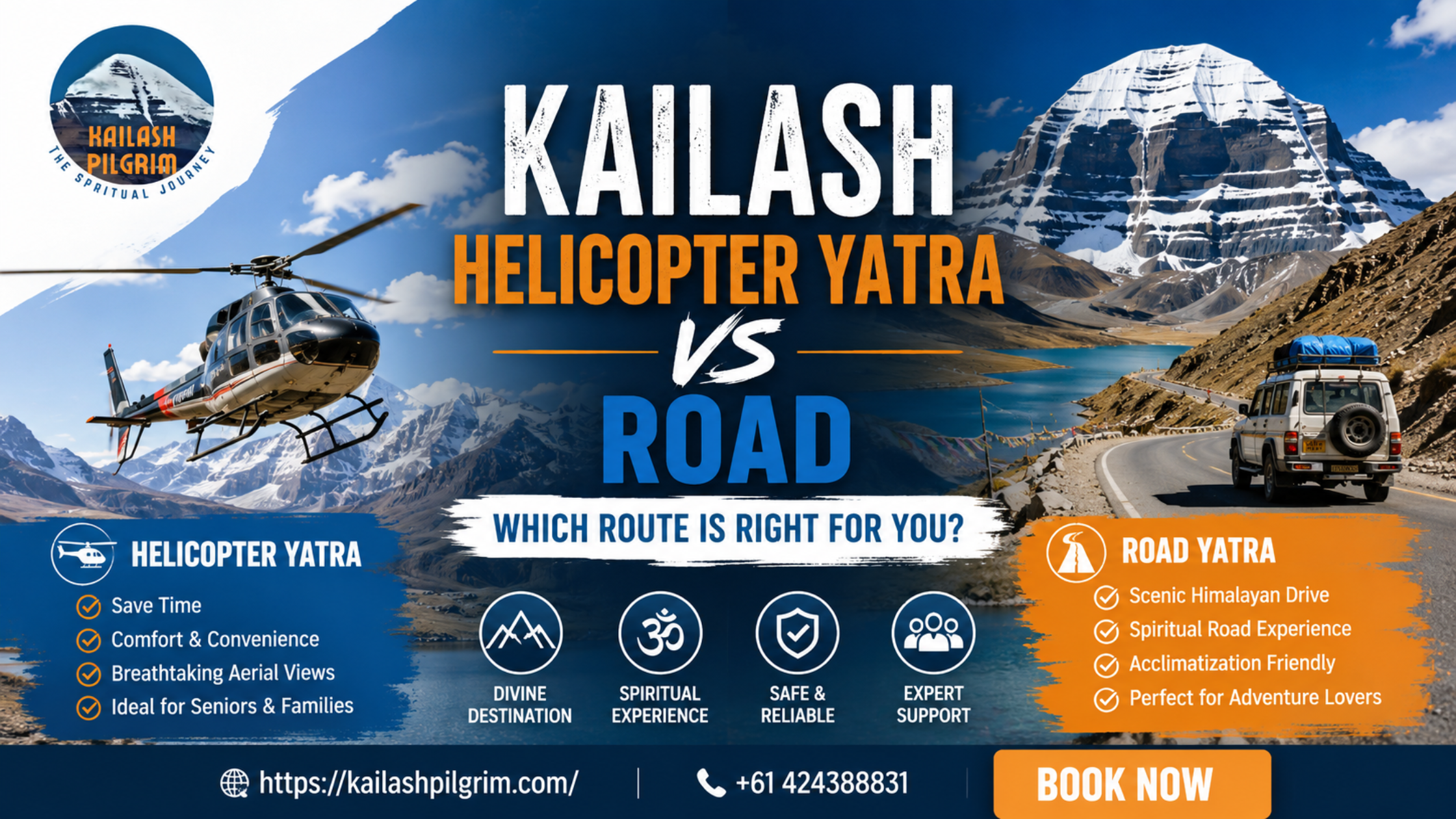
Kailash Helicopter Yatra vs Road: Which Route Is Right for You?
You’re standing at a decision point that matters more than you think. The kailash helicopter yatra gets you there in five days. The road route takes fifteen. One costs nearly double. The other demands triple the physical endurance.
Neither is objectively “better” — but one is almost certainly right for you, and the other could turn your pilgrimage into a medical emergency or a regret you’ll carry for years.
I’ve watched this play out across 20+ Kailash journeys since 1996. Pilgrims choose helicopter thinking they’re buying comfort and safety. Sometimes they are. Sometimes they’re buying a ticket to altitude sickness at 15,000 feet with nowhere to descend quickly.
Others pick the road route imagining they’ll “tough it out” — then realize at Day 7 that willpower doesn’t cure breathlessness at high altitude. The choice isn’t about budget or bravery. It’s about matching the route to your body, your timeline, and what you actually came to Kailash to experience.
Let’s break this down the way someone who’s actually guided both routes would — with the friction points nobody mentions in the glossy brochures.
Time Investment: Five Days vs Fifteen Days of Your Life
The Kailash helicopter yatra compresses the entire pilgrimage into roughly five days. You fly from Kathmandu to Hilsa, drive to Mansarovar, complete the parikrama, and return. Done. If you’re an NRI with limited leave from work, or a senior with family commitments, this feels like the only viable option.
The road route stretches across 14 to 16 days. You drive from Kathmandu through the Tibetan plateau, spending days acclimatizing at progressively higher altitudes before you even see Mansarovar. It’s slow. Deliberately slow.
Here’s what most operators won’t tell you: that slowness is your body’s best friend. The kailash yatra by road builds acclimatization into every day. You sleep at 12,000 feet, wake up, drive to 14,000 feet, rest, move to 15,000 feet. Your body adjusts in stages. By the time you reach Mansarovar at 15,060 feet, you’ve had a week to adapt.
The helicopter route doesn’t give you that runway. You’re in Kathmandu at 4,600 feet on Day 1. By Day 2 or 3, you’re at Mansarovar — 15,060 feet. Your body hasn’t caught up. For some pilgrims, especially those over 60 or with no prior high-altitude exposure, this jump triggers headaches, nausea, dizziness, and in serious cases, acute mountain sickness that requires immediate descent.
We’ve had pilgrims on kailash helicopter package who spent their entire time at Mansarovar managing symptoms instead of experiencing darshan. That’s not a failure of faith. That’s physiology. Your cardiovascular system doesn’t care about your devotion to Mahadev — it cares about oxygen pressure, and at 15,000 feet, there’s 40% less of it than at sea level.
Cost Reality: What You’re Actually Paying For
A kailash helicopter package runs anywhere from ₹3,50,000 to ₹5,50,000 per person in 2026, depending on operator and inclusions. The road route typically costs ₹2,00,000 to ₹3,00,000. On paper, the helicopter is pricier. But price and value aren’t the same thing.
With helicopter, you’re paying for speed and reduced physical exertion on the journey to Kailash. But here’s the part that surprises people: you still walk the parikrama. That 52-kilometer circumambulation around Mount Kailash happens on foot regardless of how you arrived.
The helicopter doesn’t make the parikrama easier — it just gets you there faster. If your knees can’t handle that trek, or your lungs struggle at altitude, the helicopter won’t solve that problem. It might worsen it, because you haven’t had time to acclimatize.
The road route spreads cost over more days, but it also spreads physical demand more intelligently. You’re walking shorter distances daily, resting more, and giving your body time to adjust before the big parikrama push.
At Kailash Pilgrim, we’ve seen senior citizens in their late 60s complete the road route successfully because the acclimatization buffer made the altitude manageable. Some of those same pilgrims wouldn’t have survived the helicopter route’s rapid ascent.
You’re not just paying for transport. You’re paying for time — time your body desperately needs at elevation.

Altitude Acclimatization: The Variable That Changes Everything
This is where most pilgrims get it wrong. They think altitude is a challenge you overcome with fitness or determination. It’s not. Altitude is a biological reality that requires time — not strength.
The road route builds in acclimatization naturally. You stop at Nyalam (12,000 feet), Saga (14,600 feet), Paryang (15,000 feet), and Manasarovar (15,060 feet) over multiple days. Each stop lets your body increase red blood cell production and adjust to lower oxygen levels. By Day 8 or 9, when you’re ready for the parikrama, your body has adapted. You’re still tired, still breathless — but you’re functional.
The helicopter route doesn’t offer that luxury. You ascend too fast. Even with oxygen support and medical staff on standby — both of which Kailash Pilgrim provides on every Kailash helicopter yatra— your body is playing catch-up the entire trip. Some pilgrims do fine.
They’re naturally good at altitude, or they’ve trained at elevation, or they’re just lucky. Others spend two of their five days feeling miserable, popping Diamox, and wondering why they’re not experiencing the spiritual high they came for.
We had a yatri from Melbourne in 2024 — fit, mid-50s, regular gym-goer — who chose helicopter thinking it was the “smart” route. By the second night at Mansarovar, he had a splitting headache and nausea so severe he couldn’t perform the puja. He descended the next morning.
A year of preparation, ₹4,00,000 spent, and he never completed the parikrama. Would the road route have made a difference? We’ll never know for sure. But slower ascent gives your body a fighting chance.
Physical Demand: What Actually Breaks People
Neither route is easy. Let’s be honest about that. But they’re difficult in different ways.
The kailash yatra by road demands endurance over time. Long drives — eight to ten hours some days — on rough Tibetan roads. Basic accommodations. Cold nights. Thin air that makes even brushing your teeth feel like cardio. You’re uncomfortable for two weeks. But discomfort is manageable if it’s spread out.
The helicopter route compresses that discomfort. You’re not on the road as long, but the altitude hits you harder and faster. The parikrama still happens. The Dolma-La Pass — at 18,600 feet — still has to be crossed on foot.
If you’re not acclimatized, that pass can feel impossible. We’ve watched pilgrims turn back halfway, not because they lacked devotion, but because their bodies were hypoxic and their legs wouldn’t move.
Here’s the nuance nobody talks about: the helicopter route is not the easier route for seniors or people with health concerns. It feels easier because you fly instead of drive. But flying bypasses the acclimatization that makes the actual pilgrimage — the parikrama — survivable.
For many pilgrims over 65, the road route is actually safer, because by the time they reach Kailash, they’re ready for it.
If you have average fitness, no high-altitude experience, and you’re debating between the two, the road route is almost always the better bet. You’ll be tired. You’ll be cold. But you’ll be acclimatized, and that matters more than anything.
Spiritual Experience: Speed vs Immersion
This part is subjective, but it’s worth saying plainly: the road route feels more like a pilgrimage. The helicopter route feels more like a visit.
When you drive through the Tibetan plateau for a week, watching the landscape shift from green valleys to barren moonscapes, sleeping in tiny guesthouses, eating simple meals, dealing with dust and cold and the slow realization that you’re truly far from everything familiar — something shifts inside you.
The journey becomes part of the transformation. By the time you see Kailash rising in the distance, you’ve earned that moment. You’ve walked — or driven — toward it for days.
The helicopter delivers you there. Quickly. Efficiently. You see Kailash, you do the parikrama, you leave. It’s powerful — Kailash is always powerful — but the journey doesn’t carve into you the same way.
This isn’t spiritual gatekeeping. It’s observation. Pilgrims who take the road route consistently describe the experience as deeper, more grounding, more emotionally resonant. The hardship becomes part of the devotion. The discomfort becomes part of the offering.
If you’re coming to Kailash for darshan and you need to return quickly, helicopter works. If you’re coming for transformation, for something that changes you at a cellular level, the road gives you space for that.
Weather Dependency and Risk Factors
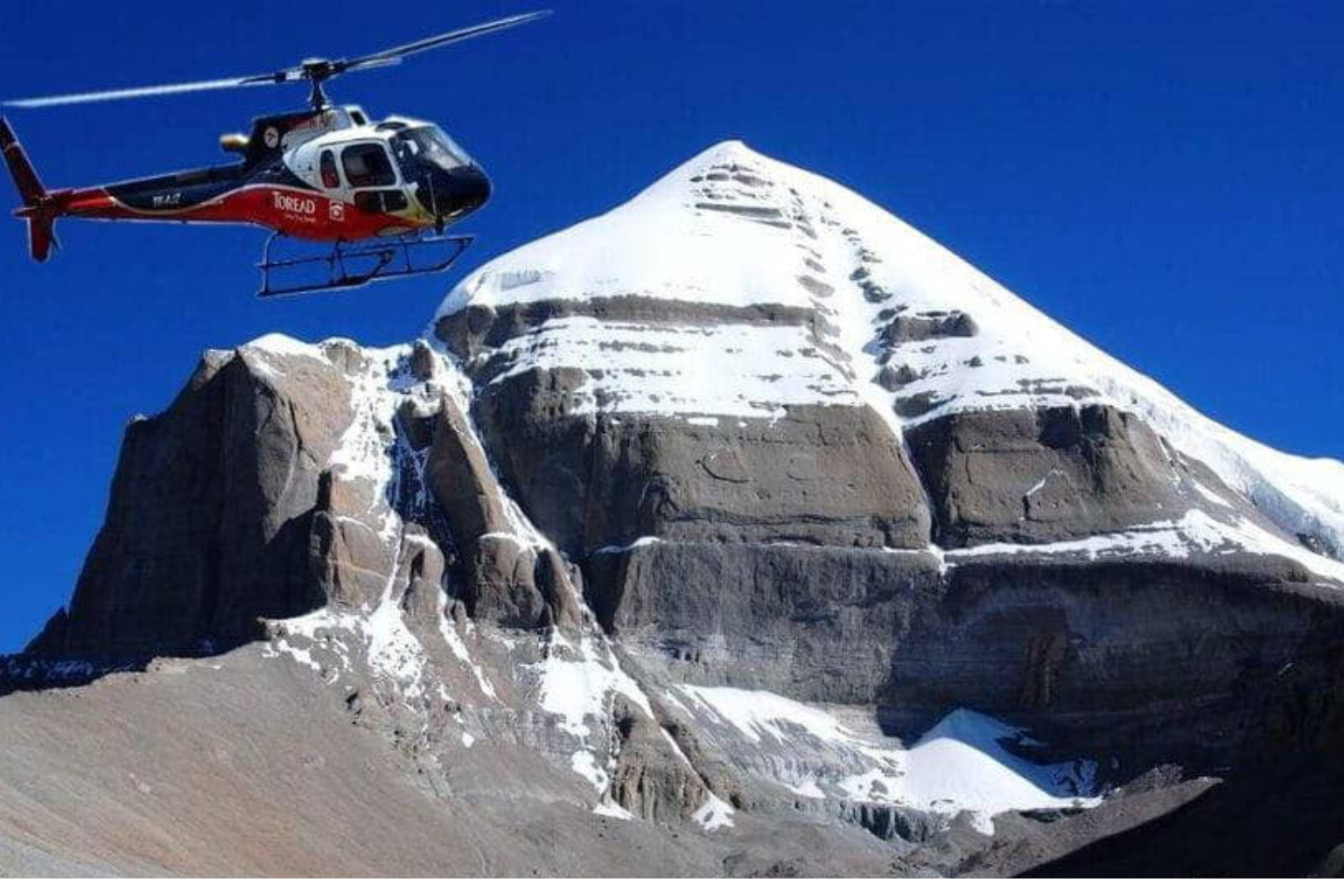
Here’s a practical point that derails helicopter plans more than people expect: weather. Helicopter flights to and from Hilsa are highly weather-dependent. Fog, wind, cloud cover — any of these can delay or cancel flights.
We’ve had Kailash helicopter package groups stuck in Kathmandu for two extra days waiting for clearance. Others have been stranded in Hilsa waiting to return.
When that happens, your five-day yatra becomes eight days. Your return flight is missed. Your leave runs out. Your family panics. The road route doesn’t eliminate risk, but it doesn’t depend on visibility windows the way helicopters do.
Weather also affects the parikrama itself, regardless of how you arrive. But if you’ve taken the helicopter and you’re already racing against time, a weather delay can unravel your entire schedule. The road route builds in buffer days. You have flexibility. With helicopter, you’re betting on perfect conditions.
Who Should Choose Helicopter vs Road?
Choose Kailash helicopter yatra, if you are physically unable to endure long drives but can still walk the parikrama, if you genuinely cannot spare more than one week, if you’ve spent time at altitude before and acclimatized well, or if your doctor has cleared you for rapid altitude gain. It’s not a comfortable route — it’s a compressed route.
Choose the road route if you’re over 60 with no high-altitude experience, if you have any cardiovascular or respiratory concerns, if you want the full immersive pilgrimage, or if you simply want to give your body the best chance to handle elevation safely.
At Kailash Pilgrim, we guide both routes, and we’re honest about which one suits which yatri. Ms. Shalini Patel has completed over 20 Kailash journeys — she’s seen both routes succeed and both routes fail. The difference is never about the route. It’s about matching the route to the person.
The 2026 Fire Horse Year Factor
This year adds urgency. The Tibetan Fire Horse Year occurs once every twelve years and is considered the most auspicious time for Kailash pilgrimage. Slots are filling faster than usual. Both helicopter and road packages are booking months ahead. If you’re planning for 2026, decide now — not just which route, but whether your body is ready for either.
We’ve started one-year preparation programs for exactly this reason. Physical conditioning, altitude simulation advice, spiritual readiness guidance. The yatra doesn’t start when you land in Kathmandu. It starts the day you commit.
Frequently Asked Questions
Is Kailash helicopter yatra safe for senior citizens?
It depends on the individual. Helicopter yatra is safe if the senior has no major cardiovascular issues and has prior high-altitude exposure. However, rapid ascent increases altitude sickness risk. Seniors with no altitude experience often do better on the road route with gradual acclimatization. Always consult a doctor experienced in high-altitude medicine before booking.
How much does a kailash helicopter package cost in 2026?
Expect to pay between ₹3,50,000 and ₹5,50,000 per person for a full helicopter package, including flights, permits, accommodation, and meals. Price varies by operator, group size, and inclusions like oxygen support and medical staff. Road route packages typically range from ₹2,00,000 to ₹3,00,000.
What is the best way to reach Kailash Mansarovar if I have limited time?
If you only have 7-10 days and are physically capable of handling rapid altitude gain, the helicopter route is the best option. However, “best” doesn’t mean easiest — you’ll still face altitude challenges and must complete the parikrama on foot. If you can extend to 14-16 days, the road route is safer and more spiritually immersive.
Can helicopter flights to Kailash get cancelled due to weather?
Yes, frequently. Helicopter flights to and from Hilsa depend on clear weather and visibility. Fog, high winds, and cloud cover can delay flights by hours or even days. Always plan buffer days in your schedule and be prepared for itinerary changes. Road routes are less affected by weather delays.
Do I still need to walk the parikrama if I take the helicopter?
Yes. The helicopter only transports you to and from the Kailash region. The 52-kilometer parikrama around Mount Kailash, including the Dolma-La Pass at 18,600 feet, is done entirely on foot regardless of which route you choose. The helicopter doesn’t reduce the physical demand of the pilgrimage itself — only the journey to reach it.
Ready to Choose Your Path to Kailash?
The right route isn’t about what sounds better in a brochure. It’s about what your body can handle, what your schedule allows, and what kind of experience you’re actually seeking. At Kailash Pilgrim, we’ve guided both routes for over two decades. We know which pilgrims thrive on helicopter and which ones need the road. We know because we’ve walked both paths — literally — and we’ve seen what works.
If you’re still unsure which route suits you, or if you want personalized guidance based on your health, age, and experience level, reach out to Kailash Pilgrim. We offer pre-yatra consultations, medical clearance support, and one-year preparation programs designed specifically for the 2026 Fire Horse Year pilgrimage.
Your Kailash journey deserves more than guesswork — it deserves expertise born from experience. Contact us today and let’s find the path that’s truly right for you.