

Kailash Mansarovar Yatra Senior Citizens Safety Guide 2026
That’s not unusual for us at Kailash Pilgrim. Since 1996, I’ve watched hundreds of senior devotees — many in their sixties, seventies, and a few in their eighties — complete the Kailash Mansarovar Yatra. Not because they’re superhuman. Because they prepared properly, traveled with people who understood their needs, and refused to let age define their devotion.
Let me be direct. The Kailash Mansarovar Yatra for senior citizens isn’t impossible. But it’s not a leisure holiday either. If someone tells you it’s easy, they’re lying. If someone tells you it’s too dangerous for your age, they don’t know what they’re talking about.
Here’s what actually matters. The right preparation timeline, the right medical protocols, the right route selection, and the right support team. Get these four elements right, and age becomes far less important than devotion.
Why Senior Devotees Succeed Where Younger Trekkers Fail
I learned something surprising over 20 Kailash journeys. Physical fitness isn’t the deciding factor at high altitude. Mental preparation is.
Young trekkers rush. They push through discomfort. They ignore early warning signs of altitude sickness because they’re embarrassed to slow down. Senior pilgrims? They listen to their bodies. They pace themselves. They know the difference between normal tiredness and something that needs attention.
Last year, we had a 63-year-old devotee from Toronto and a 28-year-old from Mumbai on the same yatra. The younger man developed severe altitude sickness on day four because he insisted on carrying his own bag and walking too fast. The older devotee — who followed every acclimatization protocol we suggested — completed the parikrama without a single health episode.
That’s not luck. That’s wisdom meeting preparation.
Senior citizens planning the Kailash Mansarovar Yatra for senior citizens actually have advantages. You’ve spent decades learning patience. You understand that reaching the destination matters more than reaching it fast. You’re more likely to follow medical advice instead of arguing with it. These aren’t small things at 18,000 feet.
The real challenge isn’t your age. It’s finding an operator who understands that senior pilgrims need different support than adventure tourists. Too many companies treat this sacred journey like Himalayan trekking. They’re not the same thing.
Medical Assessment: What Your Doctor Needs to Actually Check
Here’s where most senior pilgrimage preparation Kailash goes wrong. You visit your GP, mention high altitude travel, and they either panic or give you generic advice about staying hydrated.
That doesn’t help.
Six months before your planned yatra — not six weeks, six months — you need specific medical evaluations. Your cardiologist needs to assess your heart’s response to reduced oxygen. Your pulmonologist needs to test your lung capacity under stress conditions. If you have diabetes, your endocrinologist needs to adjust medication protocols for altitude and physical exertion.
We’ve worked with enough senior devotees to know exactly what tests matter. Resting ECG isn’t enough. You need a stress ECG that shows how your heart performs under exertion. Blood oxygen saturation readings at sea level tell you nothing about high altitude response.
Pulmonary function tests — specifically forced vital capacity and peak expiratory flow — predict altitude tolerance far better than age does.
One mistake we see repeatedly: devotees who control their blood pressure perfectly at home assume it’ll behave the same way at altitude. It won’t. High elevation often requires medication adjustment. Your doctor needs to know this before you depart, not after you’re struggling at 15,000 feet.
At Kailash Pilgrim, we don’t accept medical clearance letters that say “fit to travel.” Too vague. We need documentation of specific cardiovascular and pulmonary metrics, current medication lists with altitude-adjusted dosing where necessary, and emergency protocols if chronic conditions flare up.
That sounds intense because it is. The Kailash Yatra health precautions for seniors aren’t paranoia. They’re the difference between completing your divine calling and turning back with regret.
The One Year Preparation Timeline That Actually Works
Most tour operators give you a three-month preparation checklist. We give you twelve months.
Not because we’re cautious. Because one year of gradual preparation produces better outcomes than three months of panicked training.
Month one through three is cardiovascular foundation. Walking 30 minutes daily at whatever pace feels comfortable. Not power walking. Not training for a marathon. Just consistent, gentle cardiovascular activity that your heart adapts to slowly. Senior citizens don’t benefit from aggressive fitness programs. You benefit from steady, sustained adaptation.
Month four through six, you increase duration without increasing intensity. That daily 30-minute walk becomes 45 minutes, then an hour. Same comfortable pace. The goal is building endurance, not speed. You’re teaching your cardiovascular system to sustain effort, which matters far more at altitude than burst performance.
Month seven through nine is breathing practice. High altitude elderly travelers need to maximize lung efficiency before oxygen levels drop. We teach devotees pranayama techniques — not because they’re mystical, though they are sacred, but because controlled breathing improves oxygen utilization measurably.
Ten minutes of alternate nostril breathing daily, practiced correctly, conditions your respiratory system for thin air.
Month ten through twelve is mental and spiritual preparation. You’ll be living with discomfort for two weeks. Not pain, hopefully, but discomfort. Cold mornings. Thin mattresses. Long drives. Simple food.
Senior pilgrims who complete the yatra successfully spend months visualizing and accepting these conditions before departure, not discovering them with shock when they arrive.
We’ve seen devotees skip this timeline and complete the yatra. We’ve also seen them struggle unnecessarily. The question isn’t whether you can do it with less preparation. The question is why you’d choose to suffer more when proper preparation exists.
Route Selection: Why Road Matters More Than You Think
Here’s the single most important decision for the Kailash Mansarovar Yatra for senior citizens: Kathmandu road route versus helicopter route.
Most operators push helicopters for senior pilgrims. Fast ascent, less physical strain, premium experience. Sounds perfect. Here’s why it’s often wrong.
Helicopter routes take you from low altitude to very high altitude in hours. Your body doesn’t get time to produce more red blood cells. Your cardiovascular system doesn’t get gradual acclimatization. You land at Mansarovar, and suddenly you’re at 15,000 feet with zero adaptation time.
Young trekkers can sometimes push through this. Senior bodies can’t and shouldn’t have to.
The Kathmandu road route — yes, it’s longer and involves more driving — gives you staged altitude gain. You sleep at progressively higher elevations: Kerung at 9,000 feet, Saga at 14,000 feet, finally Mansarovar at 15,000 feet. Each night, your body adapts a bit more. By the time you reach the sacred lake, you’ve had nearly a week of acclimatization.
That week isn’t wasted time. It’s the difference between enjoying the parikrama and suffering through it.
Last year, a 71-year-old devotee from Sydney specifically chose our road route over a cheaper helicopter package. His family thought he was making things harder on himself. At Mansarovar, while helicopter pilgrims struggled with headaches and nausea, he walked the lakeshore with minimal discomfort.
On day eight, he told me the extra driving days were the best decision he’d made. His body was ready.
This doesn’t mean helicopters never work. For devotees with specific mobility limitations who can’t handle long drives, aerial darshan provides a way to receive Mahadev’s blessings when road pilgrimage isn’t viable. But defaulting to helicopter because you’re over 65? That’s solving the wrong problem.
Altitude Acclimatization Protocols That Actually Prevent Sickness
Every operator talks about acclimatization. Few actually implement proper protocols.
Real altitude acclimatization for senior citizens Tibet pilgrimage isn’t about drinking more water and walking slowly. Those help, but they’re not the core protocol.
The core protocol is this: controlled ascent rates, mandatory rest days at critical elevations, continuous oxygen saturation monitoring, and immediate descent plans when thresholds are crossed.
We never ascend more than 1,500 feet of sleeping elevation per day once you’re above 10,000 feet. That’s the medical standard, and we don’t compromise on it.
Most altitude sickness happens because groups push too high, too fast, trying to stick to tight schedules. Your pilgrimage with Kailash Pilgrim has buffer days built into the itinerary specifically so we never have to rush altitude gain.
Rest days aren’t wasted days. At Saga, we spend a full day at 14,000 feet before moving higher. Your red blood cell count increases. Your breathing rate adjusts. Your kidneys adapt to new oxygen levels. By the time we reach Mansarovar, your body has done 80% of the adaptation work.
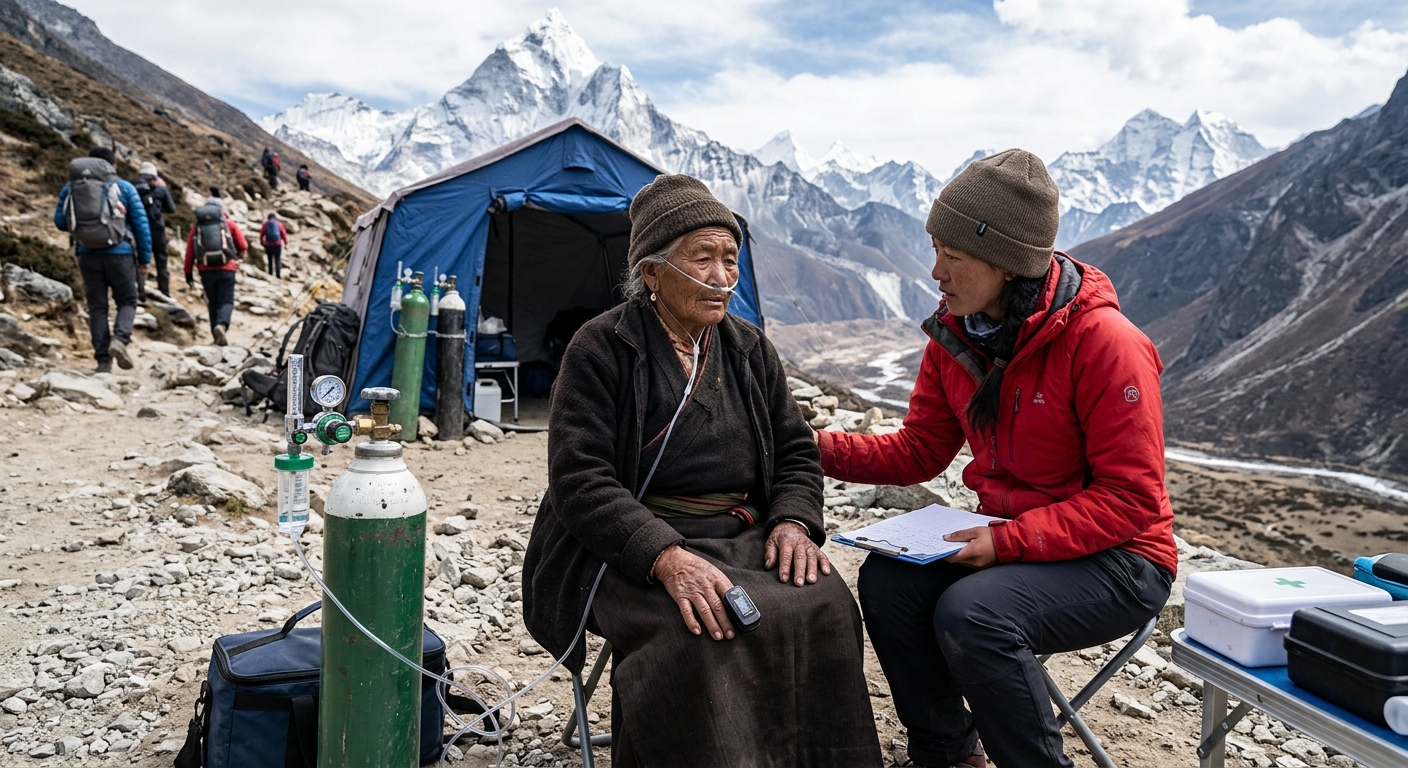
Oxygen saturation monitoring happens twice daily for every senior devotee. Before breakfast and before dinner, we check your SpO2 levels with pulse oximeters. Normal at sea level is 95-100%. At high altitude, anything above 85% is generally safe. If you drop below 85%, we watch you closely. If you drop below 80%, we intervene immediately.
That intervention isn’t always descent. Sometimes it’s supplemental oxygen for a few hours. Sometimes it’s an extra rest day. Sometimes it’s medication like acetazolamide that helps your body adjust faster. But we never ignore threshold breaches hoping they’ll resolve on their own.
One thing we’ve learned through difficult experience: senior pilgrims often underreport symptoms. You don’t want to slow the group down. You’re embarrassed to make a fuss. You’ve traveled so far and don’t want to turn back.
That’s exactly why we monitor objectively with medical devices rather than relying only on self-reporting. Numbers don’t lie or feel embarrassed.
Medical Support and Emergency Response Systems
Here’s what distinguishes serious operators from dangerous ones: actual medical infrastructure, not just a first aid kit and optimistic thinking.
Every Kailash Pilgrim yatra travels with a dedicated medical support team. Not a guide with basic first aid training. An actual medical professional experienced in high-altitude health management, carrying emergency oxygen systems, altitude sickness medications, cardiac emergency protocols, and direct communication links to hospitals in Kathmandu and Lhasa.
The oxygen systems matter more than most devotees realize. Portable oxygen concentrators, backup cylinders, nasal cannulas, and masks designed for high-altitude use. If your saturation drops, we can stabilize you immediately while deciding next steps. That immediate response window has prevented emergency evacuations more times than I can count.
Our vehicles carry two-way satellite communication because mobile networks disappear in Tibet. If something goes seriously wrong, we’re not driving around looking for signal. We’re calling for help immediately.
Emergency protocols include predetermined evacuation routes from every overnight stop. If you develop severe altitude sickness, pulmonary edema, or cardiac distress at Mansarovar, we know exactly which route reaches lower elevation fastest. Every driver knows these routes. Every team member has practiced the coordination required.
This sounds heavy. Maybe it scares you a bit. Good. You should work with operators who take medical emergencies seriously enough to plan for them, even though most yatras never need these systems.
The goal isn’t to scare you away from the pilgrimage. The goal is showing you that proper support exists, so fear of medical emergencies shouldn’t stop you from answering Mahadev’s call.
Physical Limitations and Mobility Solutions for the Parikrama
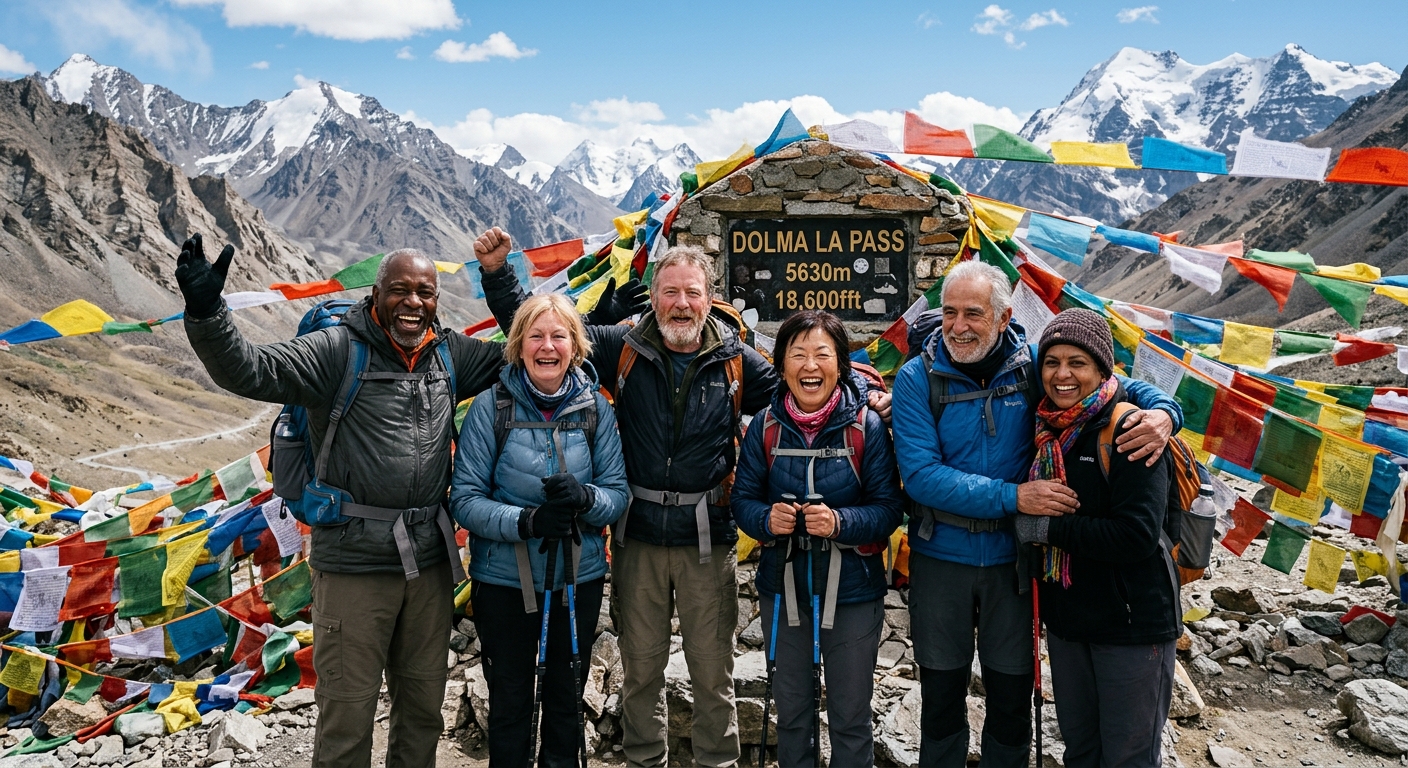
The Mount Kailash parikrama is 52 kilometers over three days, with the Dolma La pass reaching 18,600 feet. Let’s be honest about what that means for senior citizens.
You’re not hiking Himalayan trails. The path around Kailash is well-established, but it’s uneven, rocky in places, and consistently above 15,000 feet. Some sections have gradual inclines. Others have steep climbs, particularly approaching Dolma La.
For many senior devotees, walking the entire parikrama isn’t realistic. That doesn’t mean you can’t complete it.
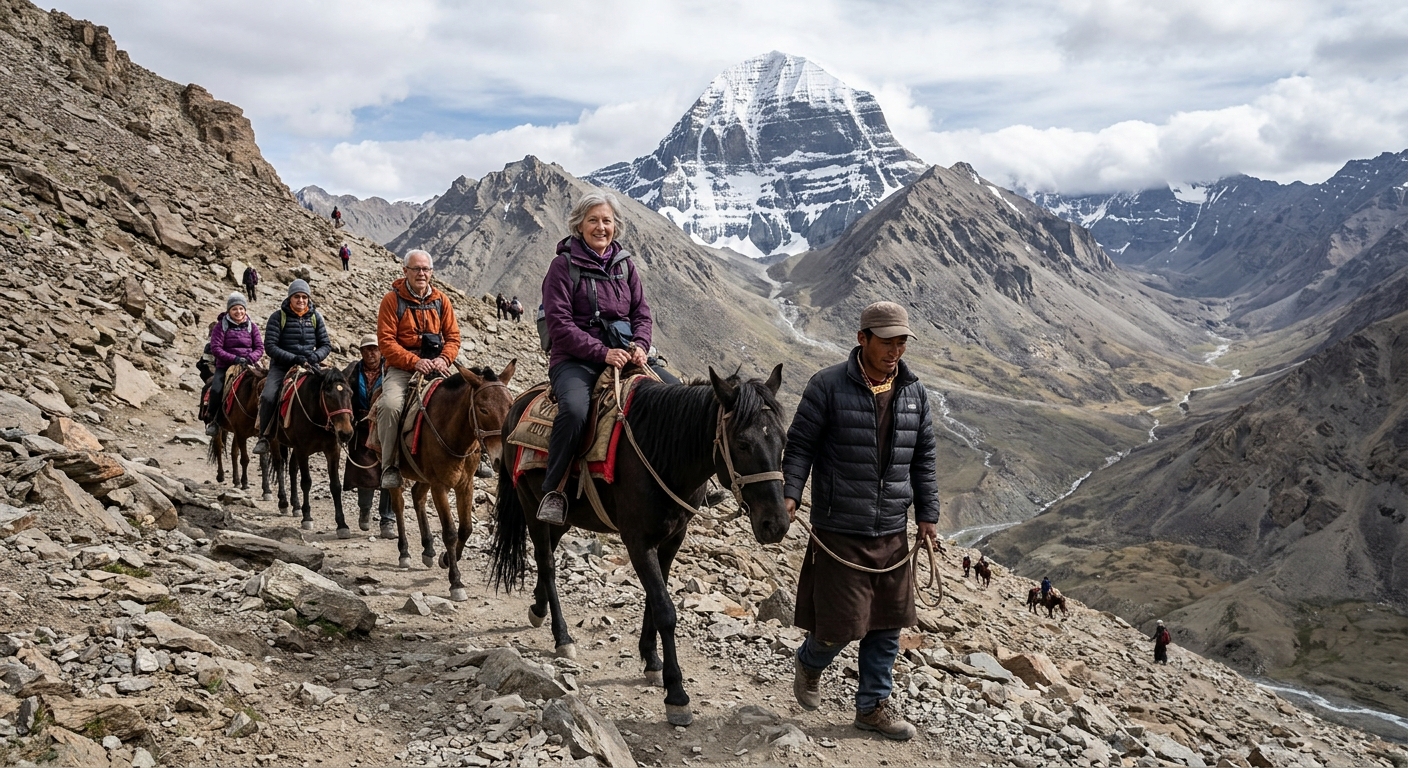
We provide horse support for senior pilgrims who need it. Not as a luxury upgrade. As a practical mobility solution that lets devotion overcome physical limitation. You walk the sections you’re comfortable with. You ride the sections that would exhaust or injure you. There’s no shame in this, despite what you might think.
Last year, a 68-year-old devotee from London walked about 40% of the parikrama and rode horses for the remaining 60%. When he completed the circuit, his sense of spiritual accomplishment was identical to pilgrims who walked every step. Mahadev doesn’t measure your devotion in kilometers walked. He sees your heart’s intent.
Sherpa support accompanies every senior pilgrim on the parikrama route. These aren’t just guides. They’re experienced altitude specialists who recognize early distress signs, adjust pace dynamically, and physically assist on difficult sections. Your Sherpa carries your day pack so you’re never bearing unnecessary weight.
They monitor your breathing and energy levels constantly. They know when to slow down before you realize you need to.
At Dolma La pass, the highest point, we often spend 15-20 minutes at the top rather than rushing through. You’ve reached 18,600 feet — one of the most sacred points on earth. You need time to offer prayers, experience the moment, and let your body stabilize before descending.
Weather, Timing, and the Sacred 2026 Fire Horse Year
Senior pilgrims need to understand seasonal realities. The Kailash Mansarovar region is accessible roughly from May through September. Outside these months, snow closes mountain passes and temperatures drop dangerously low.
Within that window, conditions vary significantly. May and early June offer fewer crowds but colder temperatures, especially at night. Late August and September bring warmer weather but also monsoon rains that can delay travel and make roads difficult.
For senior citizens, July and early August typically offer the best balance — relatively warm temperatures, more stable weather patterns, and fully open routes. Night temperatures at Mansarovar still drop near freezing, but daytime conditions are manageable with proper clothing.
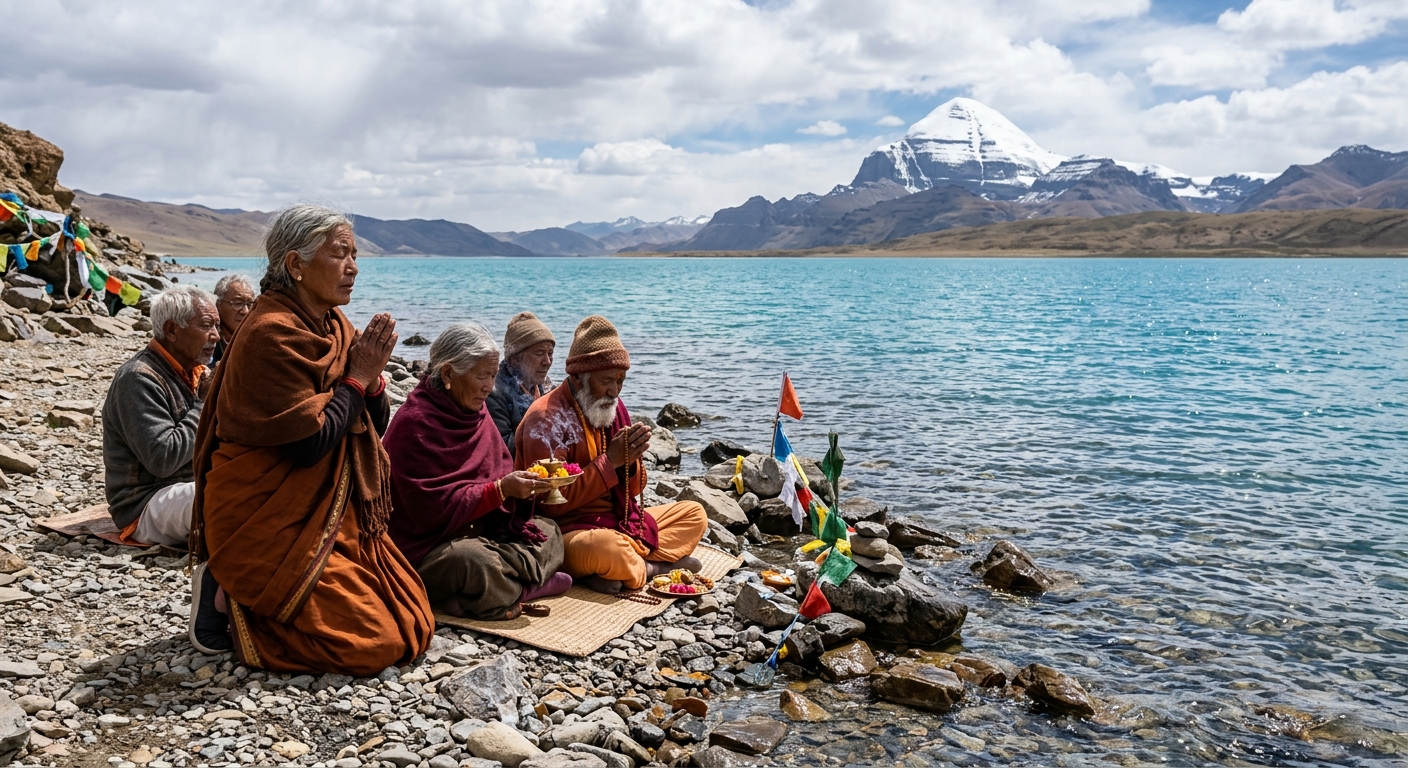
2026 presents something extraordinary that happens once every twelve years: the Tibetan Fire Horse Year. According to ancient Buddhist and Hindu traditions, completing the Kailash parikrama during Fire Horse Year holds the spiritual merit of 108 ordinary circumambulations. That’s not marketing language. That’s sacred calendar alignment that draws devotees worldwide.
For senior pilgrims, this creates both opportunity and challenge. Opportunity because the spiritual significance may make this your most important pilgrimage. Challenge because 2026 will see unprecedented demand, limited permits, and crowded routes.
Kailash Pilgrim started accepting 2026 bookings in late 2024. By mid-2025, over 60% of our Fire Horse Year slots were confirmed. If you’re considering 2026 for your sacred journey, waiting means losing the opportunity. Permit allocations are controlled by Chinese authorities and strictly limited. When they’re gone, they’re gone.
One thing to understand clearly: Fire Horse Year isn’t easier or harder physically. The elevation, the distance, the challenges remain identical. What changes is the spiritual weight of the accomplishment and the number of devotees attempting it simultaneously.
NRI-Specific Challenges and Support Systems
Senior citizens living abroad face coordination challenges that domestic Indian pilgrims don’t encounter. Visa processes, international flights, time zone coordination, travel insurance requirements, medical documentation standards — each adds complexity.
We built Kailash Pilgrim specifically to solve these problems for NRIs. Based in Australia but operating in India and Tibet, we understand both worlds.
Chinese visa and Tibet permit processing for Australian, UK, Canadian, US, UAE, and Singapore passport holders requires different documentation than Indian citizens. Many tour operators don’t process international permits themselves — they outsource to agents who may or may not understand current requirements. That leads to delays, rejections, and last-minute panic.
We handle permit processing directly, working with our established contacts in Chinese consulates and Tibet permit authorities. You submit your documentation once through our secure portal. We follow up on every step. You receive regular updates rather than wondering whether things are progressing.
International travel insurance for senior citizens engaging in high-altitude pilgrimage isn’t standard travel coverage. Many policies specifically exclude high-altitude trekking or impose age-based restrictions.
We work with insurance providers who specialize in pilgrimage travel and understand that Kailash Yatra, while challenging, isn’t mountaineering. The coverage you need includes emergency evacuation, high-altitude medical treatment, trip cancellation for health reasons, and repatriation coverage.
Money management matters too. You’ll be traveling through Nepal, Tibet, and back — different currencies, limited ATM access in remote areas, varying card acceptance.
We provide clear guidance on cash requirements, currency exchange timing, and backup payment options. Senior pilgrims shouldn’t be worrying about financial logistics when they’re trying to focus on spiritual experience.
The time zone coordination challenge is real when your family is in Melbourne or Toronto and you’re communicating from Tibet. We provide scheduled check-in calls from locations with reliable communication, so your loved ones receive regular updates without you constantly worrying about connectivity.
Daily Life During Yatra: What Senior Devotees Actually Experience
Let me describe a typical day at Mansarovar so you know what you’re signing up for.
You wake around 6 AM when the support staff brings morning chai to your room. Yes, rooms — not tents. We use guesthouses with actual beds, attached bathrooms where available, and heating systems for cold nights. This isn’t adventure camping. You’re not roughing it unnecessarily.
Breakfast is vegetarian, prepared considering digestive sensitivity at high altitude. Simple foods — rice porridge, toast, eggs for those who take them, chai, fruit. Nothing heavy or difficult to digest. Altitude suppresses appetite naturally, but you need calories for energy and warmth.
Morning activities might include walking around Mansarovar’s shores, offering prayers, or gentle movement to maintain circulation. We don’t schedule strenuous activity immediately after meals or first thing in morning before your body has fully woken up.
Lunch is the main meal — dal, rice, sabzi, roti. Again, simple and digestive-friendly. Afternoon rest is mandatory for senior pilgrims. You’re at 15,000 feet. Your body is working harder just to maintain basic functions. Rest isn’t laziness. It’s necessary acclimatization.
Evening prayers and group satsang happen before dinner. This is when the yatra transforms from travel to pilgrimage. Devotees share bhajans, readings, personal reflections. The spiritual community you build with fellow pilgrims becomes support structure as important as medical teams and oxygen supplies.
Dinner is light — soup, vegetables, roti, chai. Heavy meals before sleeping at altitude cause discomfort. You’ll sleep better with lighter evening food.
Bedtime comes early because mornings start early, and your body needs extra sleep to recover from altitude stress. Sleeping at elevation never feels completely restful at first. You’ll wake occasionally. Your breathing rhythm changes. This is normal and improves as you acclimatize.
The physical conditions are basic but dignified. Clean facilities, adequate warmth, nutritious food, hot drinks available throughout the day. What you won’t have: luxury amenities, extensive menu choices, consistently hot showers, perfect temperature control, or mobile internet to scroll endlessly.
Most senior devotees adjust within two to three days. The ones who struggle are usually those who expected comfort levels identical to home. This is sacred pilgrimage in remote Tibet, not a resort holiday.
Real Stories: Senior Devotees Who Completed the Journey
I want you to hear from people who’ve actually done this, not just from me.
Ramesh Patel, 69, from Birmingham completed the yatra in 2024. His words: “I spent six months preparing and doubting in equal measure. My children thought I was mad. My doctor was skeptical. I was terrified I’d fail and embarrass myself. The first three days were hard — not painful, just uncomfortable and strange.
By day five, something shifted. My body found its rhythm. The parikrama was the most physically challenging and spiritually overwhelming experience of my life. I walked about half, rode horses for the difficult sections, and felt absolutely no diminishment of the spiritual experience.
If you’re 65 or older and hearing the call, don’t let age stop you. Let proper preparation carry you.”
Meera Krishnan, 72, from Melbourne, traveled with us in 2023. She has moderate arthritis and was our oldest pilgrim that year. Her reflection: “I told Shalini honestly about my limitations before booking. She didn’t minimize them or pretend they didn’t matter. She explained exactly what support systems existed and what realistic expectations looked like.
That honesty gave me confidence to commit. The yatra was hard some days. My knees hurt at Dolma La. I cried from exhaustion twice. But I never felt unsafe or unsupported. The medical team monitored me constantly. My Sherpa adjusted pace to my needs without making me feel like a burden.
Standing at Kailash’s base after completing parikrama, I felt Mahadev’s presence more clearly than any temple experience in my entire life. Age gave me wisdom to appreciate what I was experiencing. Youth couldn’t have valued it the same way.”
These aren’t exceptional people. They’re ordinary devotees who prepared properly and traveled with a team that understood their needs.
The Honest Assessment: Should You Actually Attempt This?
I won’t tell you that every senior citizen can complete the Kailash Mansarovar Yatra. That would be dishonest and potentially dangerous.
You shouldn’t attempt this pilgrimage if you have severe cardiac disease, uncontrolled hypertension above 160/100 despite medication, chronic obstructive pulmonary disease with significant impairment, recent surgery within six months, or unstable medical conditions requiring frequent intervention.
You should seriously consider whether this journey is right for you if you have significant mobility limitations requiring constant assistance, severe arthritis limiting walking to less than 30 minutes, cognitive impairment affecting judgment and safety awareness, or psychological conditions that altitude and isolation might worsen.
You can likely complete this pilgrimage successfully if you have well-controlled chronic conditions, realistic expectations about physical challenges, commitment to full preparation protocols, willingness to accept support without ego interference, and genuine spiritual calling rather than ego-driven bucket list mentality.
That last point matters more than you might think. Devotees who approach Kailash as spiritual pilgrimage accept difficulty as part of the sacred journey. Devotees who approach it as adventure achievement struggle emotionally when things get hard.
The question isn’t “Am I too old?” The question is “Am I prepared to do what proper preparation requires, and am I traveling with people who’ll support my specific needs?”
If the answer to both is yes, age becomes far less limiting than you fear.
Frequently Asked Questions
What is the maximum age limit for Kailash Mansarovar Yatra?
There’s no official maximum age limit for Kailash Mansarovar senior citizens pilgrimages, but most operators require medical clearance for anyone over 65. At Kailash Pilgrim, we’ve successfully guided devotees into their mid-seventies, with medical approval and proper preparation being far more important than chronological age.
How long does senior pilgrimage preparation Kailash actually take?
Minimum six months for those with existing good health and regular activity levels; ideally one full year for comprehensive cardiovascular conditioning, altitude preparation, and spiritual readiness. Shorter timelines are possible but increase difficulty and health risks significantly.
What happens if I get altitude sickness during the yatra?
Our medical team monitors oxygen saturation levels twice daily for all senior pilgrims. If altitude sickness develops, we provide immediate supplemental oxygen, altitude sickness medication, and additional rest time.
Severe cases trigger pre-planned descent to lower elevation, with evacuation support available through our satellite communication systems and established emergency routes.
Can I do the parikrama if I have knee problems or limited mobility?
Yes, with horse and Sherpa support. Many senior devotees complete the parikrama by walking comfortable sections and riding horses on difficult terrain, particularly the steep approaches to Dolma La pass. This isn’t considered lesser accomplishment — it’s practical wisdom that allows devotion to overcome physical limitation.
Your Next Step Toward This Sacred Journey
Twenty years of guiding senior devotees to Mount Kailash has taught me this: the pilgrims who complete this journey successfully aren’t the youngest or fittest. They’re the ones who prepared properly, traveled with experienced support, and honored both their devotion and their limitations.
If you’re a senior citizen feeling Mahadev’s call to Kailash, that calling is real and worth honoring. Age brings wisdom, patience, and spiritual depth that enrich the pilgrimage experience in ways youth simply cannot match.
At Kailash Pilgrim, I personally ensure that every senior devotee receives the medical support, altitude protocols, mobility assistance, and spiritual guidance that this sacred journey demands. After completing over 20 Kailash Yatras since 1996, I don’t see pilgrims as customers. I see devotees answering a divine calling that deserves respect and proper support.
The 2026 Fire Horse Year represents a once-in-twelve-years spiritual opportunity. If you’ve been considering this pilgrimage, delaying past 2026 means waiting until 2038 for equivalent sacred merit — and none of us can guarantee what health or circumstances will look like then.
Contact Kailash Pilgrim today for your detailed senior citizen yatra assessment. We’ll review your health status honestly, outline realistic preparation timelines, explain support systems specific to your needs, and help you determine whether this journey is right for you. The conversation is detailed, honest, and carries no obligation — just clarity about what this pilgrimage truly requires.
Your age doesn’t disqualify you from reaching Mahadev’s abode. Lack of proper preparation and support does. Let’s make sure you have both.