

Kailash Mansarovar Helicopter vs Road Journey is a choice that paralyzes many pilgrims. A retired banker from Melbourne — 64 years old, fit enough but worried — had dreamed of Mount Kailash for decades. He called us three times in one week asking the same question: helicopter or road? His wife wanted the helicopter. His heart said road. His doctor said altitude was the real enemy, not the mode of transport.
That’s the conversation I’ve had with hundreds of pilgrims since my first Kailash journey in 1996. The question sounds simple. It’s not. The Kailash Mansarovar helicopter yatra versus the road journey isn’t about speed versus scenery. It’s about what your body can handle, what your spirit needs, and what you’re willing to sacrifice for either.
I’m Shalini Patel, and I’ve completed this pilgrimage more than 20 times. I’ve taken both routes more times than I can count — helicopter when permits were tight and clients needed speed, road when the journey itself was the point. I’ve watched people thrive on the road and struggle in the helicopter. I’ve seen the opposite just as often. What I’ve learned is this: the right choice has almost nothing to do with which route sounds better on paper.
Let me walk you through what actually matters.
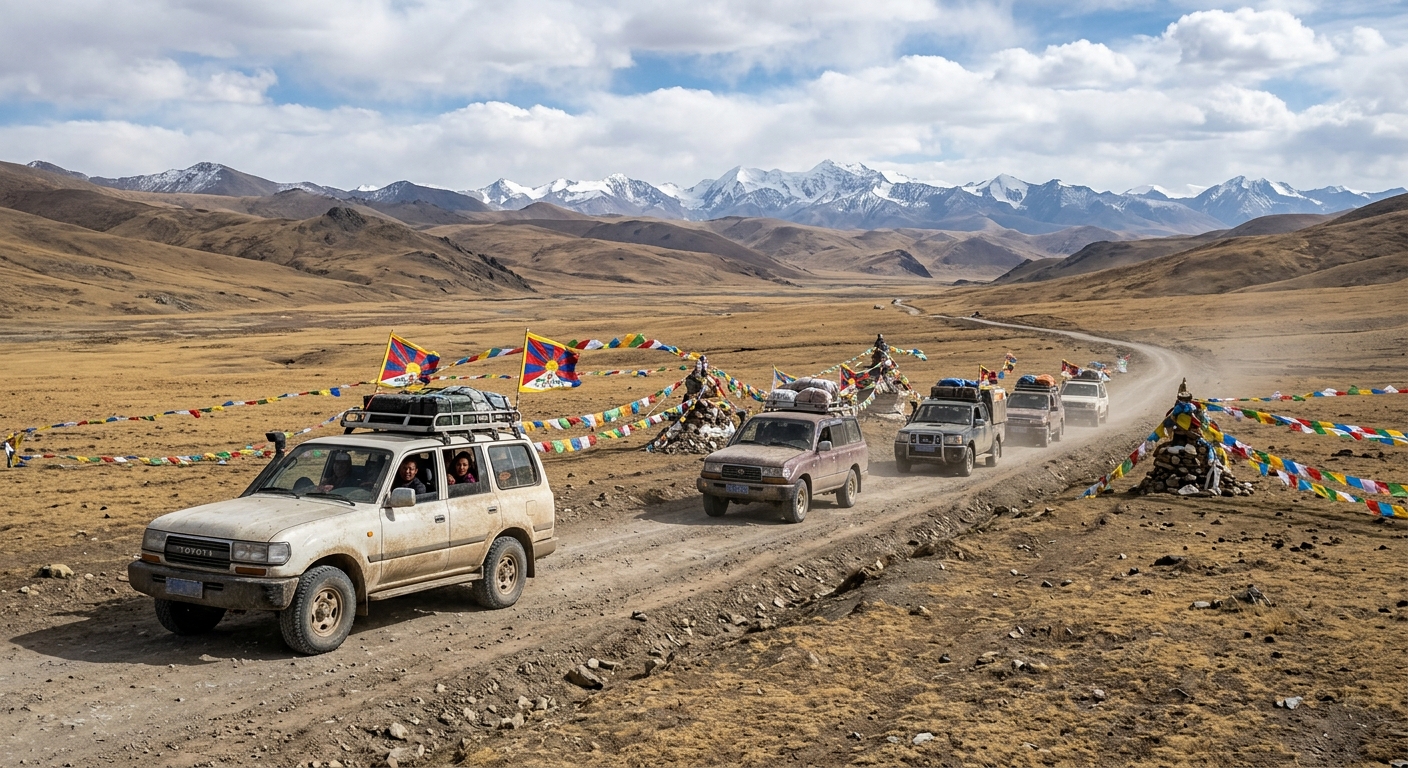
Myth 1: Kailash Mansarovar Helicopter vs Road Journey: Is the Helicopter Route Only for People Who Can’t Handle the Road?
This one shows up in every WhatsApp group. Someone posts about booking the helicopter yatra, and three people reply within minutes suggesting they’re taking the easy way out. It’s nonsense, and it misses the entire point of why helicopters exist for this pilgrimage.
The Kailash Mansarovar helicopter yatra was never designed as a shortcut for the unfit. It was designed to solve one specific problem: rapid altitude gain kills people. The road journey gives you days to acclimatize — Kathmandu at 1,400 meters, gradual climbs through the Tibetan plateau, stops that let your body adjust before you hit Mansarovar at 4,590 meters. The helicopter doesn’t. You go from Kathmandu’s comfortable altitude to near-5,000 meters in under two hours. Your body doesn’t care how spiritually ready you are. It cares about oxygen saturation.
We had a client in 2023 — a marathon runner from Sydney, 52 years old, no health issues — who insisted on the helicopter because he only had eight days off work. He landed at Mansarovar, felt fine for 90 minutes, then spent the next six hours with a splitting headache and nausea so severe he couldn’t complete the parikrama. His fitness meant nothing. His body needed time to adapt, and the helicopter didn’t give him that.
But here’s what most people miss: the helicopter route isn’t easier. It’s faster, yes. But it demands a different kind of preparation. You need pre-acclimatization before you even fly — ideally altitude training or at minimum spending time at elevation in the weeks leading up. You need to be mentally prepared for the shock of sudden altitude. And you need to accept that the journey is compressed into days, not weeks, which means you experience Kailash in concentrated bursts rather than a gradual spiritual unfolding.
Some pilgrims need that. Senior citizens with limited mobility who can’t endure days of road travel but can handle altitude with proper medical support. NRIs from the UK or Canada who have tight work schedules but have been preparing physically for months. Devotees who’ve done the road journey before and want to experience Mahadev’s abode differently. None of them are taking the easy way out. They’re choosing the route that fits their reality.
The road journey is physically demanding in a completely different way. Long hours in a vehicle on rough terrain. Basic accommodations. Digestive issues from changing food and water. The parikrama on foot at altitude. But your body has time to adapt. You arrive at Kailash ready, not shocked. For first-time pilgrims, especially those over 60, the road often makes more sense — not because they can’t handle the helicopter, but because the gradual ascent is safer.
Kailash Pilgrim always tells clients this: fitness matters for both routes. The helicopter demands better pre-trip preparation and stronger baseline health. The road demands endurance and patience. Neither is a backup for people who didn’t prepare.
The Cost Question Nobody Answers Honestly
Here’s what you’ll read online: helicopter packages cost more, road packages cost less, pick based on your budget. That’s not wrong. It’s just incomplete. The real cost difference between the Kailash Mansarovar helicopter yatra and the road journey isn’t just the package price — it’s what you pay for in risk, time, and the experience itself.
Let’s start with the obvious. A helicopter yatra package typically runs 30 to 50 percent higher than the equivalent road package. For 2026, that’s the difference between roughly $4,500 and $7,000 depending on the operator, the route, and what’s included. That’s a real gap. For most pilgrims, it’s not trivial.
But the money question gets more complicated when you factor in time. The road journey takes 12 to 14 days minimum. The helicopter yatra can be done in seven to nine days. If you’re an NRI flying in from Australia or the USA, those extra days mean more flights, more leave from work, and more time away from family. One client from Singapore did the math and realized that between the flights, accommodation in Kathmandu, and unpaid leave, the “cheaper” road journey was costing him nearly the same as the helicopter — just spread across different line items.
Then there’s the hidden cost of risk. The road journey involves long drives through remote Tibetan terrain. Landslides happen. Roads close. Permits get delayed. I’ve had groups stuck for two extra days waiting for a route to clear. Nobody refunds you for that time. The helicopter yatra has weather risk — flights can be delayed or canceled if visibility is poor — but the delays are usually hours, not days. You’re paying for reliability as much as speed.
What nobody talks about is the cost of failure. If you attempt the road journey and your body can’t handle it — altitude sickness, exhaustion, injury — you’ve spent the money and the time but didn’t complete the pilgrimage. The helicopter reduces some of that risk by cutting the physical endurance requirement, but increases the altitude shock risk. You’re trading one kind of failure mode for another.
The most honest answer I can give is this: don’t pick based on price alone. Decide what kind of journey you need — gradual and immersive or fast and focused — and then figure out if you can afford it. If the road journey fits your body and timeline and you can’t stretch to the helicopter, the road is still a profound experience. If the helicopter fits your constraints and you can manage the cost, don’t let anyone guilt you into thinking it’s less valid.
We’ve had clients do the road journey and come back saying they wished they’d done the helicopter so they could have spent more time at Mansarovar instead of on the road. We’ve had helicopter clients say they wished they’d taken the road so they could have absorbed the landscape. Both are right. Your budget sets the boundary. Your priorities should set the choice.
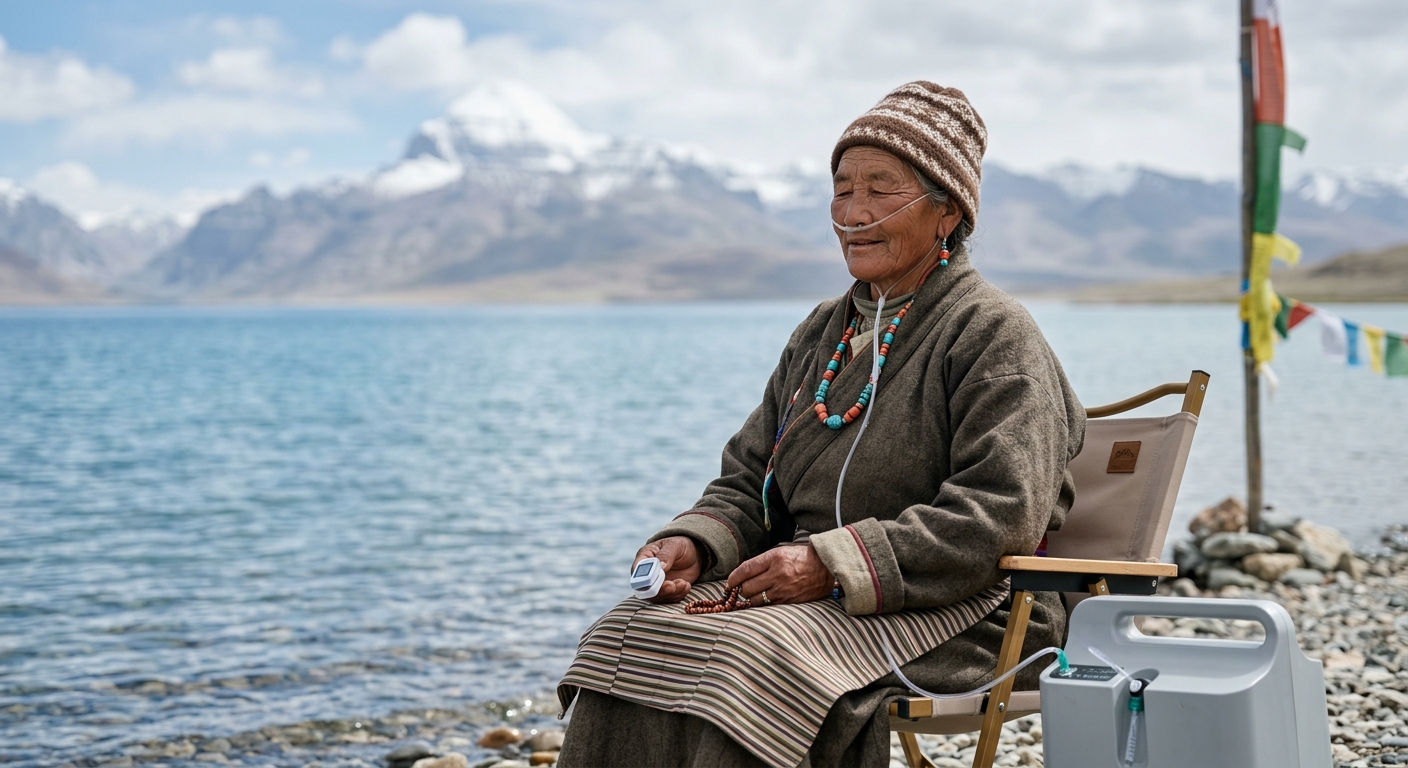
Myth 2: The Road Journey is More “Authentic” or “Spiritual”
This myth drives me crazy because it implies that one route brings you closer to Mahadev than the other. The truth is harder and less romantic: the sacredness of the Kailash Mansarovar pilgrimage has nothing to do with how you arrive.
Here’s what I’ve observed across 20-plus journeys: devotion shows up in both groups. The road pilgrims who sing bhajans at dawn in a freezing guesthouse. The helicopter pilgrims who break down in tears the moment they see Mount Kailash from the air. The man who walked every step of the parikrama despite severe knee pain. The woman who couldn’t walk at all but completed the circumambulation in a vehicle, chanting the entire way. Who decides which experience is more authentic?
The road journey offers something the helicopter can’t: time to transition. You leave Kathmandu’s noise and slowly move into the vast silence of Tibet. You watch the landscape change. You sit with your thoughts for hours. For many pilgrims, that gradual shift is spiritually necessary. It’s not just travel — it’s a detachment from the everyday world. By the time you reach Kailash, you’re already a different person. That’s powerful.
But the helicopter yatra offers its own kind of intensity. You’re thrust into the presence of the sacred mountain with almost no buffer. There’s no time to ease into it, no gradual build. You step off the helicopter and Kailash is right there. For some devotees, that shock is exactly what they need — an immediate, overwhelming confrontation with the divine. One client from London described it as being “spiritually ambushed.” She meant it as a compliment.
What I tell every group is this: the journey to Kailash is not the pilgrimage. The pilgrimage is your internal preparation, your surrender, your intention. The route is logistics. Yes, logistics shape the experience. But they don’t determine its depth.
I’ve met pilgrims on the helicopter route who spent a full year preparing — fasting, meditating, studying the spiritual significance of every site. I’ve met road pilgrims who treated it like a difficult trek with some temples along the way. The mode of transport didn’t dictate the outcome. The inner work did.
Kailash Pilgrim has always emphasized the one-year preparation model — not because it makes the journey harder, but because it makes it deeper. Whether you take the helicopter or the road, that preparation is what transforms the trip from tourism into pilgrimage. Without it, both routes are just transport.
The other thing nobody mentions: the road journey can become so physically exhausting that the spiritual experience gets buried under discomfort. I’ve watched pilgrims so drained by days of rough roads and bad sleep that they could barely focus during the parikrama. The helicopter group that same week was rested, alert, and fully present. Which group had the “authentic” experience? Both. And neither. Authenticity isn’t a competition.
If you believe that suffering makes the pilgrimage more valid, take the road. If you believe that devotion is what matters, take whichever route lets you show up as your best self. Lord Shiva doesn’t grade you on the route you choose. He sees your heart. That’s it.
What Your Body Actually Needs — Not What You Think It Needs
This is where most pilgrims get it wrong. They assess their fitness based on how they feel at sea level or how many steps they can walk in a day. Then they arrive at 4,500 meters and realize none of that mattered. Altitude is not a fitness test. It’s a biological lottery with some rules you can influence, but not control.
The road journey gives your body incremental exposure. You sleep at progressively higher elevations — Kathmandu, then Kerung, then Saga, then Darchen. Each night, your body produces more red blood cells to carry oxygen. By the time you reach Mansarovar, you’ve adapted. Not completely — nobody fully adapts in 10 days — but enough that you’re functional. The risk of severe altitude sickness drops significantly with this gradual approach.
The Kailash Mansarovar helicopter yatra skips all of that. You go from breathing normally to gasping within hours. Your body has no time to adjust. We’ve had clients with oxygen saturation levels drop into the low 80s within 90 minutes of landing. That’s dangerous. It’s manageable with supplemental oxygen and good medical support, but it’s not something you can ignore. If you’re over 65, have any heart or lung issues, or have never been above 3,000 meters, the helicopter is a bigger gamble than most operators admit.
But here’s what surprised me over the years: younger doesn’t mean safer. I’ve seen 30-year-olds collapse on the helicopter route while 68-year-olds handled it fine. The difference was pre-acclimatization. The older pilgrims had spent weeks at altitude beforehand — hiking in the Himalayas, doing breathing exercises, training their bodies. The younger ones assumed their fitness was enough. It wasn’t.
For the road journey, the main physical challenge isn’t altitude — it’s endurance. You’re sitting in a vehicle for eight to 10 hours a day on roads that feel like they’re actively trying to break you. Your back hurts. Your digestion goes haywire from the changing food and water. You’re sleeping in basic guesthouses with unreliable heating. By day five, most pilgrims are exhausted before they even start the parikrama. If you have chronic back pain, joint issues, or digestive sensitivity, the road journey can be harder than the altitude itself.
We had a senior citizen from Melbourne a few years ago — 71 years old, healthy but with mild arthritis. She was terrified of the helicopter because of altitude concerns. We suggested the road. By day six, her knees were so inflamed from the rough roads that she could barely walk. The parikrama was agony. In hindsight, she probably should have taken the helicopter, trained at altitude beforehand, and saved her joints. The “safer” choice wasn’t safer for her specific body.
Here’s the framework I use with every client: if you’re over 60, have any cardiovascular concerns, or have never been above 3,500 meters, the road journey is almost always the better choice. If you’re under 60, reasonably fit, and can commit to pre-acclimatization training, the helicopter is viable. If you have mobility issues, joint pain, or digestive sensitivity, the helicopter might actually be kinder to your body despite the altitude risk.
But the non-negotiable part — regardless of which route — is medical preparation. Every Kailash Pilgrim group travels with oxygen cylinders, pulse oximeters, and altitude sickness medication. We monitor oxygen saturation twice daily. We don’t push anyone who’s struggling. I’ve turned clients around mid-journey when it wasn’t safe to continue. That’s not common in this industry. Most operators push people through because turning back means refunds and bad reviews. We don’t operate that way. Your life matters more than completing the circuit.
Myth 3: The Helicopter Lets You Skip the Hard Parts
I wish this were true because it would make the decision easy. It’s not. The Kailash Mansarovar helicopter yatra eliminates the long road travel. It does not eliminate the altitude, the cold, the physical challenge of the parikrama, or the spiritual weight of standing in front of the world’s most sacred mountain.
The hardest day on either route is the same: the parikrama around Mount Kailash. That’s a 52-kilometer circumambulation at altitudes between 4,600 and 5,600 meters. You’re walking — or riding, if you physically can’t walk — through steep terrain, freezing wind, and thin air. The helicopter doesn’t change that. Neither does the road. On that day, everyone is equal.
What the helicopter does change is how much energy you have left when you get to that day. Road journey pilgrims have been traveling for a week already. They’re tired, sore, and often battling minor illnesses from the journey. Helicopter pilgrims are fresher physically but hit harder by altitude. The question isn’t which is easier. The question is which kind of hard you’re better equipped to handle.
The other thing the helicopter doesn’t skip: acclimatization at Mansarovar. Even though you flew in, you still need to spend at least one full day at the lake letting your body adjust before attempting the parikrama. Most helicopter packages include this, but some don’t. We’ve seen operators who fly clients in, spend six hours at Mansarovar, then push them toward the parikrama the next morning. That’s reckless. If your package doesn’t include at least 24 hours of acclimatization time at Mansarovar, don’t book it.
The cold is the same. The food is the same. The altitude headaches are the same. The stunning, overwhelming beauty of Mount Kailash is the same. The only thing the helicopter eliminates is the journey across Tibet. Whether that journey matters to you is the real question.
For some pilgrims, crossing the Tibetan plateau is half the pilgrimage. They want to see the landscape, visit the monasteries, absorb the remoteness. For others, it’s just distance between them and Kailash. Neither perspective is wrong. But if you book the helicopter thinking you’re skipping discomfort, you’re going to be disappointed. You’re trading one set of challenges for another.
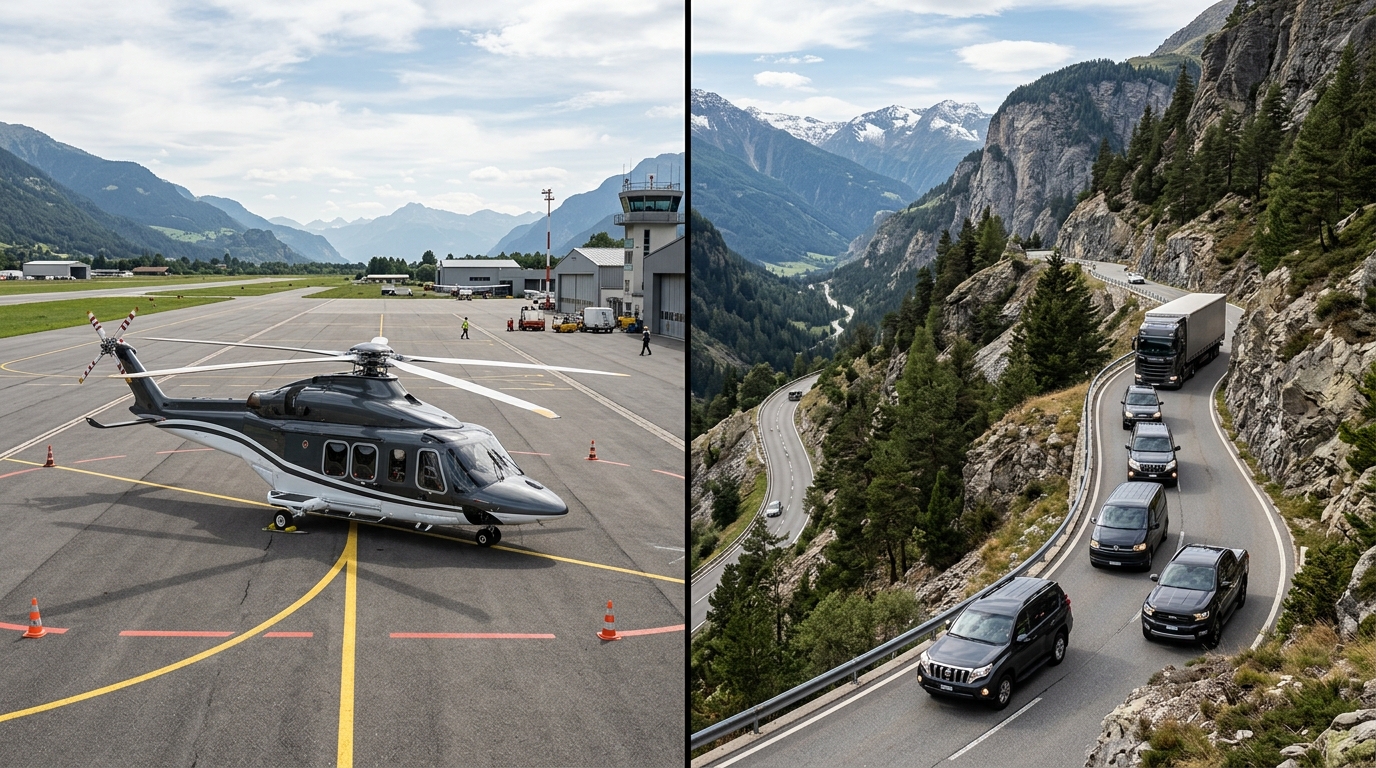
When the Helicopter is Actually the Right Choice
There are situations where the Kailash Mansarovar helicopter yatra isn’t just an option — it’s the only sensible option. If you fit any of these profiles, the helicopter makes more sense than the road even if the road appeals to you emotionally.
First: limited time. If you’re an NRI from the USA or Canada and you can only take 10 days off work, the road journey doesn’t fit. You can either skip the pilgrimage or take the helicopter. Spirituality doesn’t pause because your employer won’t give you three weeks leave. We’ve had clients who saved for years and could only make the trip work because the helicopter compressed the timeline. That’s not compromise. That’s pragmatism.
Second: mobility limitations. If you can’t sit in a vehicle for 10 hours a day, the road journey will break you. Clients with severe back issues, hip replacements, or chronic pain conditions often do better on the helicopter route because it reduces travel time by more than half. Yes, the altitude risk is higher, but if the alternative is not going at all, the helicopter becomes the path.
Third: you’ve already done the road journey and want a different experience. We’ve had repeat pilgrims choose the helicopter specifically because they’ve already absorbed the overland route. They want to see Kailash from the air, spend more time at Mansarovar itself, and experience the pilgrimage with different pacing. That’s a completely valid reason.
Fourth: you have the medical support to handle rapid altitude exposure. Some clients come with personal physicians or have done extensive altitude training. They’re equipped for the shock. For them, the helicopter is a calculated choice, not a gamble.
And here’s the one nobody talks about: if you’re terrified of the road journey, don’t force yourself to do it. Fear doesn’t make you a better pilgrim. If the thought of two weeks on rough roads fills you with dread, that dread will poison the experience. Take the helicopter. Arrive ready to be present. Your pilgrimage will be better for it.
When the Road Journey is What Your Soul Needs
The road journey isn’t better. But for some pilgrims, it’s necessary. Not because it’s more authentic, but because the journey itself is the transformation. If you fit any of these, the overland route is probably your answer.
You want time to detach. Modern life is noise. The road journey through Tibet is silence. Days with nothing to do but sit, think, and watch the landscape change. No phone signal. No work emails. No distractions. For pilgrims coming from high-pressure careers or chaotic family situations, that enforced slowness is part of the healing. The helicopter doesn’t offer that. You’re back in your regular life within 10 days. The road journey gives you space to become someone different before you return.
You need gradual acclimatization. If you’ve never been above 3,000 meters, if you have mild heart or lung concerns, or if you’re simply cautious about altitude, the road journey is safer. You’re giving your body the gift of time. That’s worth the discomfort of the travel itself.
You want to see the journey. The overland route takes you through landscapes you won’t see any other way — remote Tibetan villages, high-altitude deserts, monasteries clinging to cliffsides. For some pilgrims, witnessing that world is part of understanding the sacredness of Kailash. The mountain doesn’t exist in isolation. It exists in a vast, ancient, unforgiving landscape. Seeing that matters.
You have the time and the body for it. If you’re under 65, reasonably healthy, and can take three weeks away, the road journey offers a completeness that the helicopter can’t match. You’re not rushing. You’re living the pilgrimage day by day.
And finally: you’re doing this once. If this is your only Kailash journey — if you’re not planning to return, if this is the culmination of years of longing — the road journey gives you more. More time at Mansarovar. More moments of silence. More opportunities to absorb what you’re experiencing. The helicopter is efficient. The road is immersive. For a once-in-a-lifetime pilgrimage, immersion might be what you want.
The 2026 Fire Horse Year Changes Nothing — and Everything
Everyone’s talking about the 2026 Tibetan Fire Horse Year. It’s real. According to Tibetan Buddhism, circumambulating Mount Kailash during a Fire Horse Year carries the spiritual merit of 12 normal years. It’s a once-in-12-years event, and yes, it’s significant. But here’s what most operators won’t tell you: it doesn’t change the logistics. The altitude is the same. The challenges are the same. The choice between helicopter and road is the same.
What it does change is urgency. Permits for 2026 are already tighter than usual. More pilgrims want to go. Helicopter slots fill faster. Road journey groups are booking a year in advance. If you’re planning to go in 2026, waiting until the last minute isn’t an option. Both routes will be more crowded, more expensive, and harder to book. Kailash Pilgrim started taking 2026 bookings in early 2025 precisely because we knew demand would surge.
But the Fire Horse Year blessing doesn’t favor one route over the other. Whether you fly or drive, the parikrama carries the same spiritual weight. Don’t let the hype pressure you into a route that doesn’t fit your body or your life. The sacredness of the year is an amplifier. It amplifies whatever pilgrimage you were already supposed to make.
If you were leaning toward the helicopter, the Fire Horse Year is not a reason to force yourself onto the road. If the road journey is what your soul needs, don’t let limited helicopter slots panic you into flying. The blessing is in the intention and the completion, not the mode of arrival.
That said, the 2026 Mahakumbh alignment with the Fire Horse Year creates a window that devotees wait a lifetime for. If you’ve been delaying this pilgrimage for years, this is the year to commit. Just commit to the route that actually works for your body, your schedule, and your preparation. The spiritual benefit doesn’t require suffering. It requires devotion.
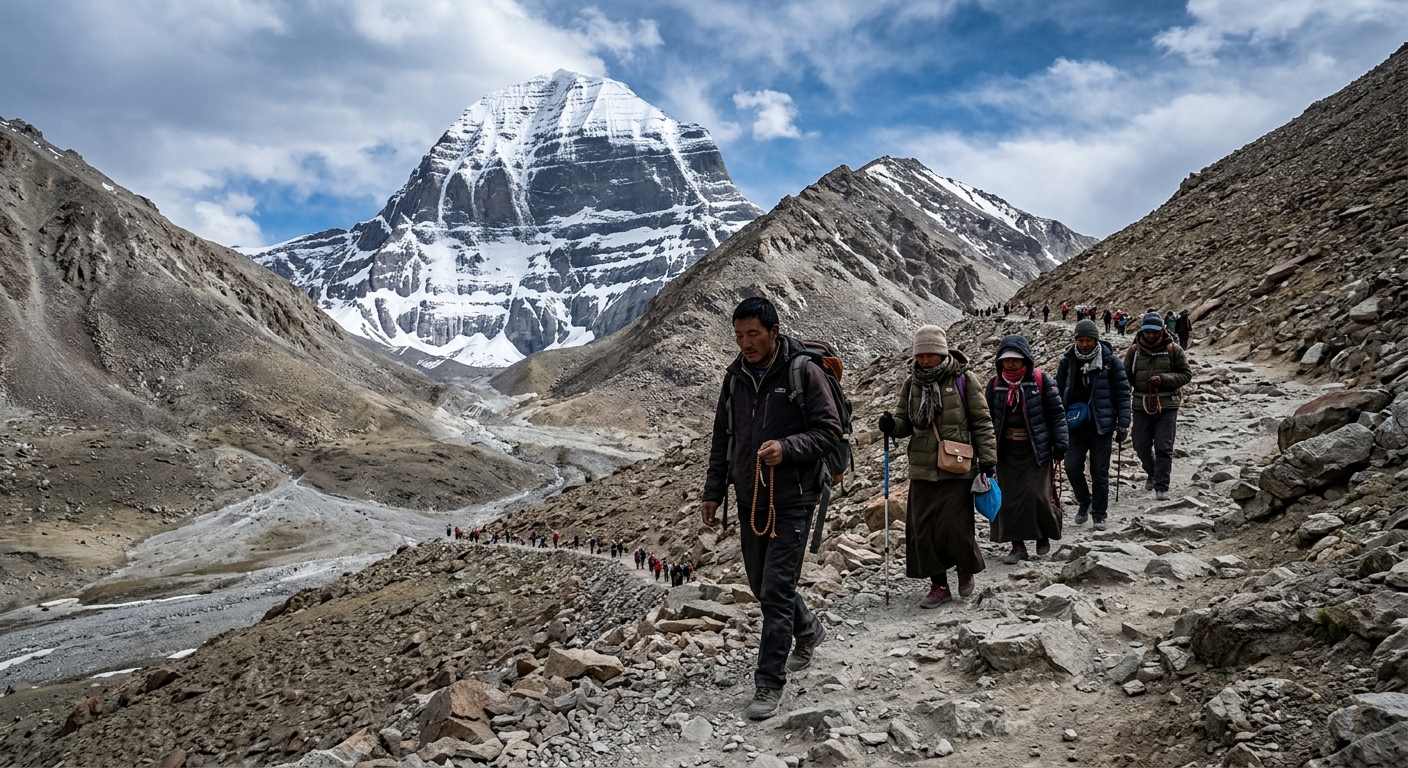
How to Actually Decide
Stop reading reviews. Stop asking strangers in Facebook groups what they did. Here’s the framework that works. Answer these questions honestly — not how you wish you could answer them, but how they actually are.
How much time do you have? If it’s fewer than 12 days, the helicopter is your only realistic option. If you have three weeks, the road journey becomes viable.
How old are you, and what’s your medical history? Over 65 with any cardiovascular concerns: road journey. Under 60, healthy, willing to train at altitude: helicopter is safe. Somewhere in between: medical evaluation determines the choice.
Have you ever been above 3,500 meters? If no, the road journey is safer for your first Kailash pilgrimage. If yes and you handled it well, the helicopter is a calculated risk.
What’s your relationship with discomfort? Long bumpy roads, basic food, cold nights — if that sounds unbearable, don’t force the road journey. Rapid altitude gain, compressed timeline, less landscape absorption — if that sounds wrong, don’t force the helicopter.
How much can you afford? If budget is tight, the road journey is cheaper. If time is the constraint, the helicopter might save you more than the cost difference when you factor in flights and leave.
Why are you going? If this is a spiritual duty you’ve postponed for years, choose the route that lets you complete it safely. If this is about seeing Tibet and absorbing the journey, take the road. If this is about standing in front of Mount Kailash and completing the parikrama, both routes deliver that.
Once you answer those honestly, the decision usually becomes obvious. Not easy — obvious. The hard part is accepting that the route your ego wants might not be the route your body needs.
Frequently Asked Questions
Is the Kailash Mansarovar helicopter yatra safe for senior citizens?
Yes, but only with proper medical clearance and preparation. If you’re over 65 and considering the helicopter, get a cardiac evaluation and a fitness assessment from a doctor familiar with high-altitude travel. Pre-acclimatization training is non-negotiable. Helicopter groups should travel with supplemental oxygen and pulse oximeters. The rapid altitude gain is the primary risk — not the helicopter itself. If your doctor clears you and you commit to preparation, senior citizens can safely complete the helicopter yatra. We’ve had clients in their early 70s complete it successfully with proper support.
How much does a helicopter yatra cost compared to the road journey in 2026?
Helicopter packages for 2026 typically range from $6,500 to $8,000, while road journey packages range from $4,000 to $5,500, depending on the operator and what’s included. That’s roughly 40 to 50 percent more for the helicopter. Factor in your total travel costs — international flights, accommodation in Kathmandu, time off work — to get a realistic comparison. The helicopter saves you about five to seven days, which can offset some of the cost difference if you’re flying internationally and taking unpaid leave.
Can I complete the parikrama on the helicopter route if I have mobility issues?
Yes, but walking the full 52-kilometer parikrama is challenging at that altitude regardless of the route. If you have significant mobility issues, both routes allow for vehicle-assisted circumambulation for part of the parikrama, though walking at least some portion is traditional. The helicopter route doesn’t reduce the difficulty of the parikrama itself — it only reduces the travel days leading up to it. Discuss your specific limitations with your operator before booking. Some clients complete the parikrama over two days instead of one to manage the physical demand.
What is the best time to book for the 2026 Fire Horse Year pilgrimage?
Now. Permits for 2026 are already being allocated, and both helicopter and road journey slots are filling faster than normal years. Kailash Pilgrim recommends booking at least 10 to 12 months in advance for 2026 departures. Helicopter slots in particular are limited by weather windows and aircraft availability. If you’re committed to going in 2026, delay costs you options. Most reputable operators require full payment or significant deposits six months before departure to secure permits and logistics.
Your Pilgrimage Waits — Choose the Path That Serves It
The choice between the Kailash Mansarovar helicopter yatra and the road journey is not a test of your devotion. It’s a practical decision that should honor your body, your life circumstances, and what you actually need from this pilgrimage. One route is not holier than the other. One is not braver. They’re different paths to the same sacred destination.
At Kailash Pilgrim, we’ve guided both routes for decades because we understand that every pilgrim’s journey is unique. Ms. Shalini Patel’s 20-plus Kailash journeys have taught us that preparation matters more than the route. Medical support matters. Spiritual intention matters. The mode of transport is logistics. Important logistics, yes — but still just logistics.
If you’re ready to begin your Kailash Mansarovar pilgrimage in 2026, reach out to us now. We’ll assess your health, your timeline, and your intentions — and recommend the route that actually fits your life. We don’t push one option over the other. We tell you the truth about both. Because your safety and your spiritual experience are the only metrics that matter.
Mount Kailash is calling you. How you answer that call — by helicopter or by road — is between you, your body, and Mahadev. We’re here to make sure the path you choose is the one that brings you home transformed, not just tired.