
You’re going to Kailash. The destination you’ve dreamed of for years. And then someone mentions altitude sickness, and suddenly the spiritual journey feels like a medical gamble.
Here’s what most pilgrimage operators won’t tell you upfront — altitude sickness at Kailash Yatra isn’t just possible, it’s likely if you don’t prepare right. At Kailash Pilgrim, we’ve led over 20 Parikramas since 1996. We’ve seen yatris who trained for months sail through 18,500 feet without a headache. And we’ve watched physically fit pilgrims struggle at base camp because they ignored acclimatization.
The difference? Knowing what altitude sickness actually is, how your body behaves above 13,000 feet, and what works when prevention fails. This isn’t theoretical advice. It’s what keeps our batches safe year after year across one of the world’s most challenging high-altitude pilgrimages.
What Is Altitude Sickness and Why Does It Hit So Hard at Kailash?
Altitude sickness — also called acute mountain sickness or AMS — happens when you climb too high, too fast. Your body needs oxygen. At 18,000 feet, the air holds about 50% less oxygen than at sea level. Your lungs work harder. Your heart pumps faster. Your brain swells slightly.
That’s not dramatic language. That’s physiology.
Most pilgrims start feeling symptoms between 8,000 and 12,000 feet. At Kailash, you’re crossing 16,000 feet within days of leaving Kathmandu. The Dolma La Pass sits at 18,600 feet. You don’t get weeks to adjust. You get days, sometimes hours.
The mistake? Thinking fitness equals immunity. We’ve watched marathon runners hit AMS harder than 60-year-old yatris who paced themselves correctly. Altitude sickness doesn’t care how many kilometres you run at sea level. It cares how fast you ascend and how your individual body adapts to thin air.
Here’s the truth — everyone going to Kailash Mansarovar Yatra will experience some level of altitude stress. The goal isn’t to avoid it entirely. The goal is to prevent it from becoming dangerous.
Recognizing the Symptoms Before They Escalate
You need to know what altitude sickness feels like the moment it starts. Not three hours later when you’re too nauseous to walk.
The early signs show up within 6 to 12 hours of reaching higher altitude. Headache is almost universal — not the migraine kind, more like pressure behind your eyes. You’ll feel tired even after resting. Your appetite disappears. Sleep becomes shallow and broken.
That’s mild AMS. Manageable. Reversible.
Then there’s moderate AMS. The headache doesn’t respond to painkillers. You feel dizzy standing up. Nausea turns into vomiting. Your coordination suffers — buttons become hard to fasten, walking feels unsteady.
And if you ignore those signs and keep climbing? Severe AMS, which splits into two life-threatening conditions: high altitude pulmonary edema (fluid in the lungs) and high altitude cerebral edema (brain swelling). You’ll hear a wet cough, see confusion, experience extreme fatigue even while resting.
At Kailash Pilgrim, we train every yatri to self-monitor using a simple rule: if your symptoms aren’t improving after 24 hours at the same altitude, or if they’re getting worse despite rest and medication, you descend. No exceptions. No “just one more day.”
One pilgrim in 2019 insisted his headache was dehydration. It wasn’t. We descended 2,000 feet that night, and his oxygen saturation climbed from 78% to 89% within four hours. He rejoined the Parikrama two days later. Had we waited until morning, the outcome could’ve been very different.
How to Prevent Altitude Sickness Before You Even Leave Home
Prevention starts months before your flight to Kathmandu. Most yatris focus on cardiovascular fitness — that helps, but it’s not the main game.
The one-year preparation program we run at Kailash Pilgrim isn’t about turning you into an athlete. It’s about teaching your body to handle progressive stress, improving lung efficiency, and mentally preparing for discomfort without panic.
Walk daily. Start with 30 minutes, build to 90. Add incline where possible — hills, stairs, treadmill gradient. Your legs need endurance, but more importantly, your lungs need to learn sustained effort. Breathing exercises help more than most people expect. Pranayama, specifically anulom vilom and kapalbhati, trains controlled breathing and oxygen efficiency.
Then there’s the acclimatization schedule on the ground. You can’t replicate 16,000 feet at home, but you can train your body to adapt faster once you’re there.
Our itineraries build in acclimatization days at Nyalam (12,000 feet) and Tingri (14,000 feet) before pushing to Lake Mansarovar (15,000 feet). You sleep lower than you climb during the day — climb high, sleep low is the oldest altitude rule, and it works.
Here’s where most pilgrims make the mistake — they rest completely on acclimatization days. Wrong. You should be active. Walk around camp. Stretch. Keep blood moving. Lying in a tent all day doesn’t acclimatize you; it just delays the stress until you start moving again.
Hydration matters more than you think. Aim for 4 to 5 litres of water daily once you’re above 10,000 feet. Dehydration mimics and worsens altitude sickness. Your urine should stay clear to pale yellow. Dark urine is a warning sign.
Avoid alcohol completely. Skip sleeping pills unless prescribed specifically for altitude. Both suppress your breathing reflex at night, which is exactly when your body needs to breathe deeply to maintain oxygen levels.
The Right Medication and When to Use It
Acetazolamide, sold as Diamox, is the most commonly used medication for preventing altitude sickness at Kailash Yatra. It works by making your blood slightly more acidic, which forces you to breathe faster and deeper. That speeds up acclimatization.
Start taking it 24 hours before you reach high altitude — not when you feel symptoms. The standard dose is 125 to 250 mg twice daily. Some yatris experience tingling in fingers and toes, frequent urination, or a metallic taste in carbonated drinks. These are normal side effects, not reasons to stop.
But here’s what nobody tells you — Diamox isn’t a magic shield. It reduces risk and severity. It doesn’t guarantee immunity. We’ve had yatris on Diamox still develop mild AMS because they pushed too hard, didn’t hydrate, or skipped acclimatization rest.
Dexamethasone is the emergency medication. It’s a steroid that reduces brain swelling fast. We carry it in every medical kit, but it’s not for prevention — it’s for buying time during a descent when someone has severe symptoms. If Dexamethasone comes out, the Parikrama is over for that person. You descend immediately.
Ibuprofen or paracetamol helps with headaches. Keep doses moderate — your liver works harder at altitude, and you don’t want to add medication stress.
Some yatris ask about Ginkgo Biloba or other herbal supplements. There’s limited evidence they work. If you want to try them, fine, but don’t rely on them instead of acclimatization and hydration.
One thing we insist on — bring your medication in original packaging with prescriptions. Border crossings between Nepal and Tibet are strict, and unlabelled pills create problems.
What to Eat and Drink to Manage High Altitude Stress
Your body burns more calories at high altitude even while resting. Digestion slows. Appetite drops. And yet, eating well is one of the simplest ways to prevent altitude sickness from worsening.
At Kailash Pilgrim, we serve 100% Sattvic meals throughout the Yatra — no meat, no eggs, no alcohol, no onion or garlic. It’s not just spiritual preference. Sattvic food is lighter, easier to digest, and doesn’t tax your system when oxygen is already scarce.
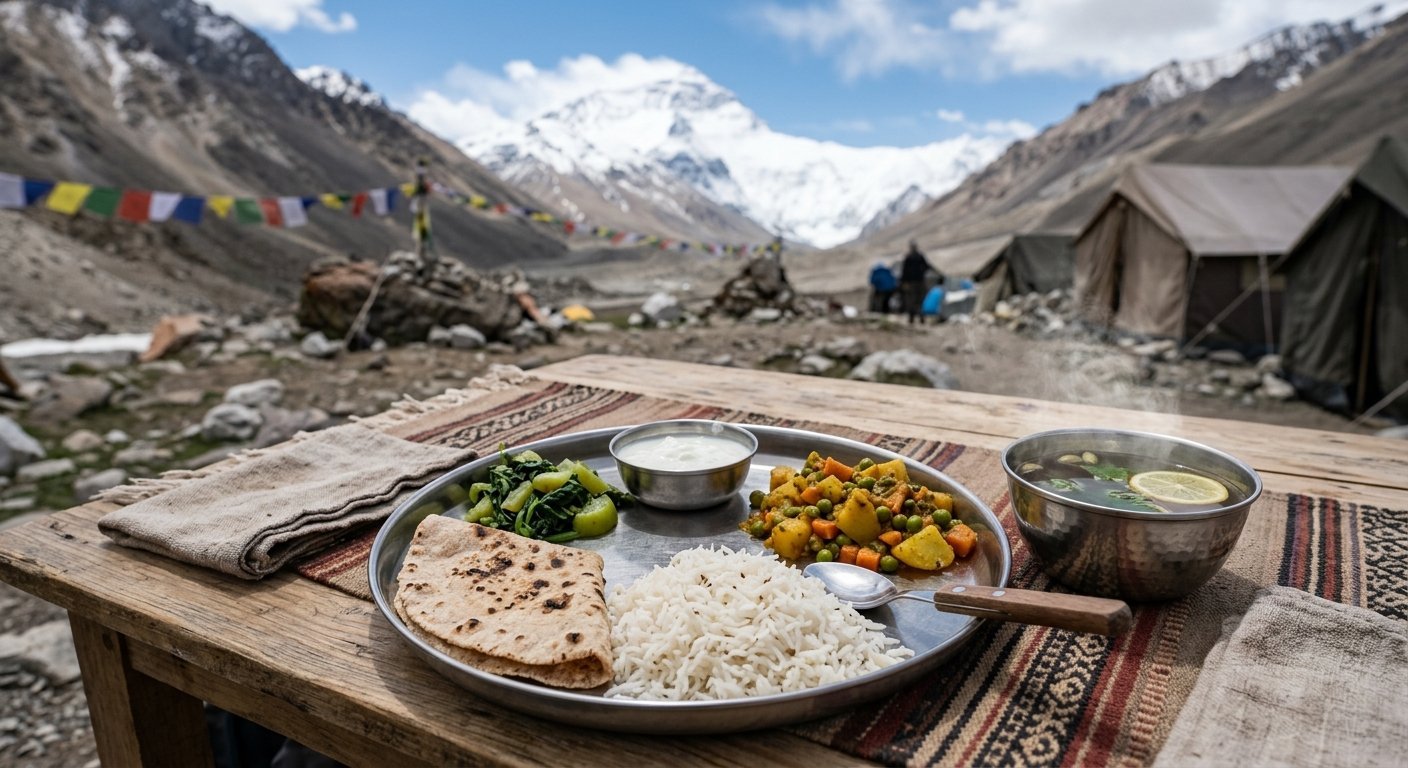
Carbohydrates are your primary fuel above 12,000 feet. Rice, chapati, oats, boiled potatoes. Your body processes carbs more efficiently in thin air than proteins or fats. Eat smaller portions more frequently rather than three heavy meals. Your stomach doesn’t handle volume well at altitude.
Avoid rich, greasy, or fried food. Even if it’s available, skip it. Digestion diverts blood and oxygen away from your brain and muscles — exactly what you don’t want during acclimatization.
Warm liquids help. Herbal teas, lemon water, soup. They keep you hydrated and help maintain core body temperature, which drops faster at high altitude. Cold water can shock your system and worsen nausea.
One yatri in 2023 asked why we serve hot lemon water with honey every morning. Simple — it’s hydration, easy calories, and warmth in one cup. She thought it was ceremonial. It’s strategic.
Electrolyte balance matters. You lose salts through increased urination and faster breathing. ORS packets or electrolyte powders help, but don’t overdo sodium — excess salt can worsen fluid retention, which some people experience at altitude.
Managing Symptoms When Prevention Isn’t Enough
You did everything right. You acclimatized. You hydrated. You took Diamox. And you still have a pounding headache and zero appetite at 15,000 feet.
It happens. Now what?
First — stop ascending. If you’re trekking, halt. If you’re at camp, stay put. Moving higher with worsening symptoms is the single most dangerous decision a yatri can make.
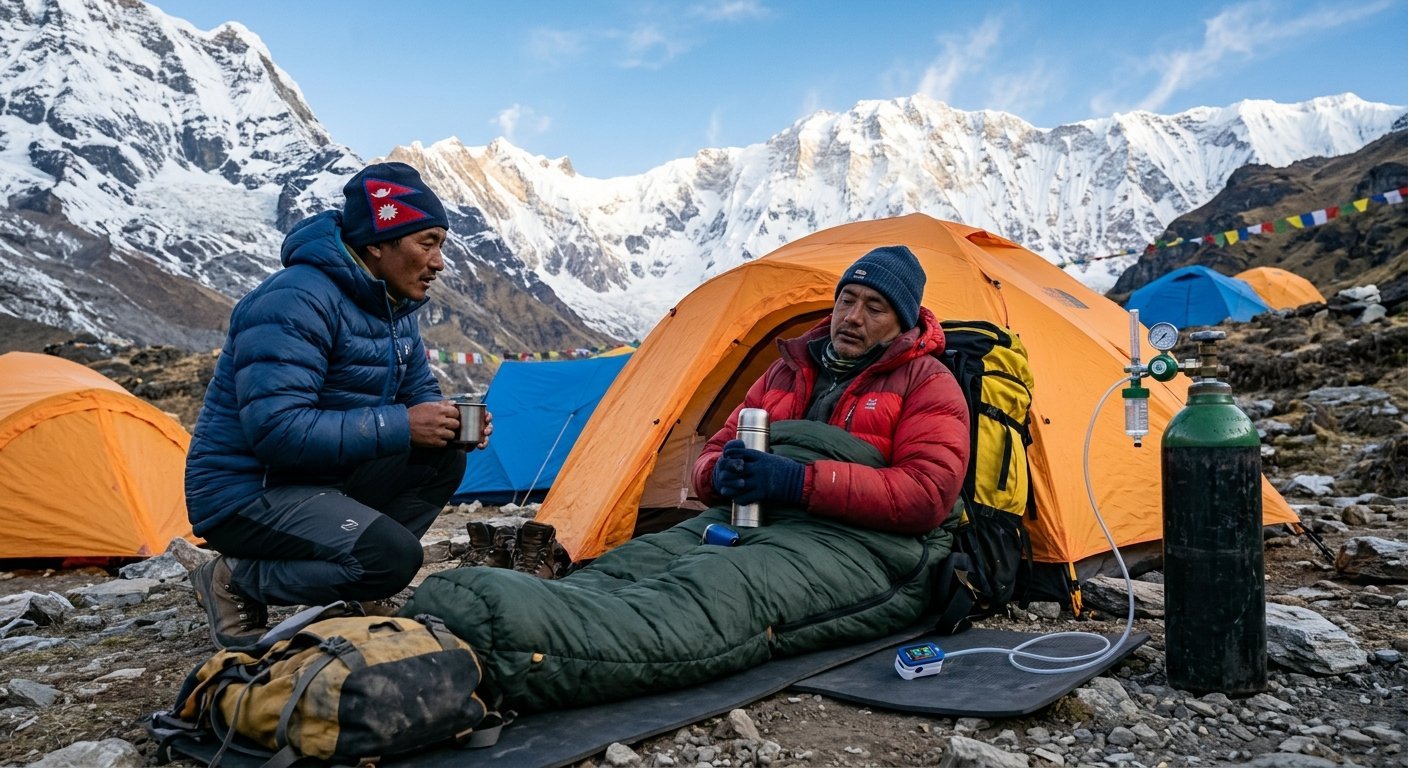
Second — rest, but don’t lie completely flat. Prop yourself up at a 30-degree angle. It helps reduce fluid buildup in your brain and lungs. Sleep is hard at altitude anyway; use rolled blankets or a backpack to stay slightly elevated.
Third — force fluids even if you’re nauseous. Small sips every 10 minutes. Dehydration makes everything worse, and vomiting accelerates it.
Fourth — oxygen supplementation if available. Our support teams carry portable oxygen cylinders for exactly this reason. Even 15 minutes on supplemental oxygen can relieve a severe headache and improve your saturation levels enough to stabilize.
If symptoms persist or worsen after 24 hours at the same altitude, or if you develop severe symptoms — confusion, inability to walk straight, chest tightness, coughing up frothy fluid — you descend immediately. Not in the morning. Now.
Descent is the only guaranteed cure for altitude sickness. Medication buys time. Oxygen helps temporarily. Descending 1,000 to 2,000 feet reverses symptoms within hours in most cases.
We’ve had to evacuate yatris twice in 28 years. Both times, the delay wasn’t the altitude sickness — it was the yatri refusing to accept they needed to descend. Pride, spiritual commitment, fear of disappointing the group. None of that matters when your oxygen saturation is below 75%.
Why Mental Preparation Matters as Much as Physical Fitness
You can train your legs and lungs for months, but if your mind isn’t ready for discomfort, you’ll struggle.
Kailash Parikrama is not a comfortable journey. You’ll be cold. You’ll sleep poorly. You’ll feel breathless walking 20 steps. Your head will ache. Food won’t taste good. And that’s normal.
The yatris who manage altitude sickness best aren’t always the fittest — they’re the ones who accept discomfort without spiralling into panic. Anxiety increases your breathing rate, which can worsen the sensation of breathlessness and trigger more anxiety. It’s a loop that’s hard to break once it starts.
Meditation and breathing techniques help. Before the Yatra, practice slow, controlled breathing — 4 counts in, 6 counts out. It calms your nervous system and trains you to breathe efficiently even when your body wants to gasp.
Maintain a positive but realistic mindset. You’re going to feel bad at some point. That doesn’t mean you’re failing. It means you’re at 17,000 feet.
One pilgrim told me in 2021 that her mantra during the Parikrama wasn’t a prayer — it was “this is temporary.” Headache? Temporary. Nausea? Temporary. Fatigue? Temporary. It kept her moving when stopping felt easier.
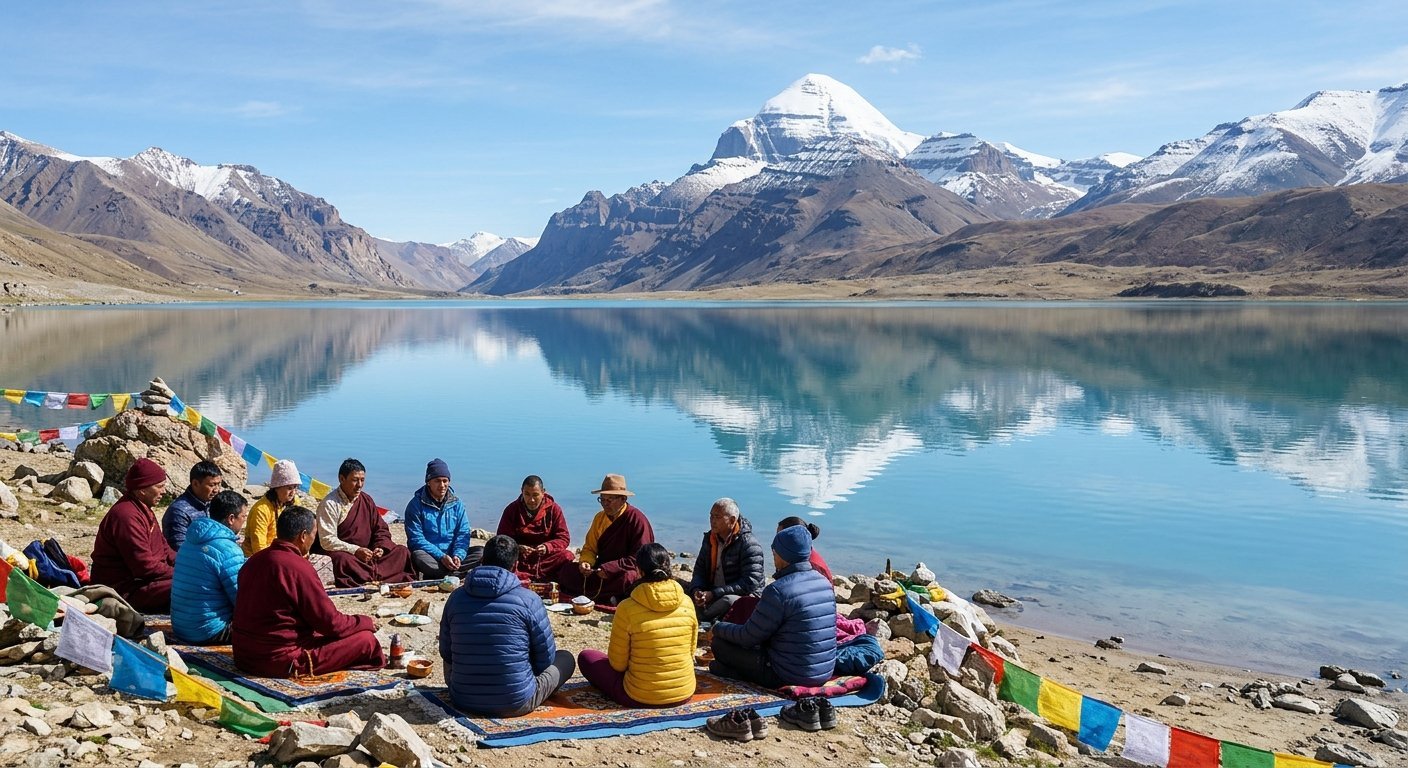
At Kailash Pilgrim, we encourage yatris to focus on the spiritual purpose, not the physical suffering. You’re circumambulating Mount Kailash, the abode of Lord Shiva. The discomfort is part of the pilgrimage, not a distraction from it.
What Kailash Pilgrim Does Differently to Keep You Safe
We’ve completed over 20 Kailash Parikramas since 1996 with a 28-year safety record. That doesn’t happen by accident.
Our one-year preparation program isn’t optional. It includes fitness guidance, altitude training protocols, breathing exercises, and monthly check-ins. By the time you board the flight, we know your baseline fitness, your medical history, and your risk factors.
We limit batch sizes. Smaller groups mean personalized attention. Our guides monitor every yatri daily — oxygen levels, symptoms, energy, appetite. If someone’s saturation drops or symptoms appear, we adjust the itinerary immediately.
We carry comprehensive medical kits on every Yatra: Diamox, Dexamethasone, portable pulse oximeters, oxygen cylinders, and emergency medications. Our guides are trained in high-altitude first response. Not just certified — trained through real-world scenarios.
The itinerary includes built-in buffer days. If someone needs an extra acclimatization day at Nyalam or Tingri, we have time. We don’t rush. We’ve turned back from Dolma La when weather or a yatri’s condition made it unsafe. The Parikrama will still be there. Your health won’t wait.
We serve 100% Sattvic meals prepared fresh daily. No packaged food, no shortcuts. Nutrition at altitude isn’t optional, and we treat it as seriously as acclimatization.
And here’s the part most operators skip — post-Yatra debriefs. We track every yatri’s experience, symptoms, and recovery. That data shapes how we refine our protocols year after year.
The One Thing Most Yatris Get Wrong About Altitude
They assume altitude sickness is binary — you either get it or you don’t.
That’s not how it works.
Altitude sickness exists on a spectrum. Everyone feels something above 12,000 feet. The question is whether it stays mild and manageable or escalates into something dangerous.
Your job isn’t to avoid symptoms entirely. It’s to recognize them early, respond appropriately, and not push through warning signs hoping they’ll disappear.
The yatris who do best at Kailash Mansarovar Yatra are the ones who respect the altitude without fearing it. They listen to their bodies. They follow acclimatization schedules even when they feel fine. They hydrate even when they’re not thirsty. They rest even when they’re eager to keep moving.
And they accept that some days, you wake up at 15,000 feet feeling terrible, and that’s okay. You adjust, you manage, you move forward when your body’s ready.
Frequently Asked Questions
Can I do Kailash Yatra if I’ve never been to high altitude before?
Yes. Most yatris haven’t. What matters is preparation — physical training, acclimatization during the Yatra, and following medical protocols. We’ve guided first-time high-altitude pilgrims successfully for decades.
How long does it take to acclimatize to Kailash altitude?
There’s no fixed timeline. Most people need 3 to 4 days of gradual ascent from Kathmandu (4,600 feet) to Mansarovar (15,000 feet). Our itineraries build in acclimatization stops at Nyalam and Tingri before reaching Kailash.
What if I develop altitude sickness during Parikrama — will I have to abandon the Yatra?
Not necessarily. Mild symptoms often improve with rest, hydration, and medication at the same altitude. If symptoms worsen or become severe, descending 1,000 to 2,000 feet usually resolves them, and you can resume after stabilizing. Safety always comes first.
Is Diamox safe for everyone?
Most people tolerate it well, but it’s contraindicated if you’re allergic to sulfa drugs or have certain kidney conditions. Consult your doctor before the Yatra. We require medical clearance from all participants during the preparation phase.
Ready to Begin Your Kailash Journey the Safe Way?
Altitude sickness at Kailash Yatra is manageable when you prepare right, acclimatize properly, and travel with experienced guides who prioritize your safety over schedules.
At Kailash Pilgrim, led by Ms. Shalini Patel with over 20 completed Parikramas since 1996, we’ve refined every detail of high-altitude pilgrimage safety. From the one-year preparation program to on-ground medical support, small private batches, and 100% Sattvic meals, we’ve built a framework that works.
The 2026 Tibetan Horse Year is a once-in-12-years sacred window for circumambulating Mount Kailash — the Mahakumbh of Mount Kailash. If you’re feeling the call, now is the time to begin preparation.
Reach out to Kailash Pilgrim today. Let’s talk about your readiness, your concerns, and how we’ll get you to Kailash and back safely.