
Best Time to Visit Mount Kailash & Mansarovar Lake—Weather, Seasons & Peak Travel Guide
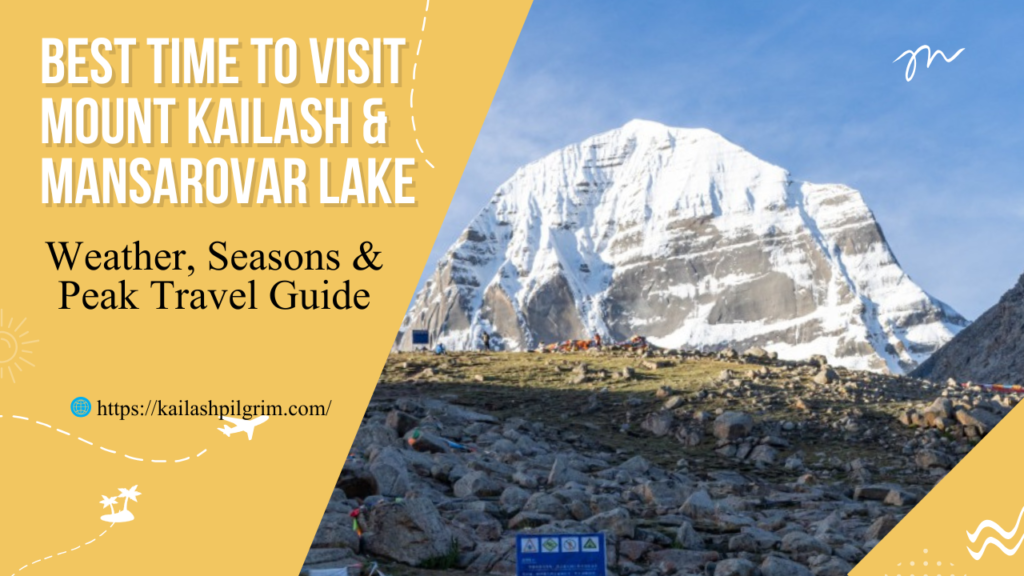
Mount Kailash and Mansarovar Lake go beyond being simple sacred spots. They turn into life-changing trips for so many people around the globe. This place counts as the home on earth for Lord Shiva. It also serves as the link between heaven and earth in a cosmic way. Devotees show up here. Adventure seekers come too. Spiritual travelers join in as well.
If you ask any NRI who has dreamed of standing before Mount Kailash, they’ll tell you one simple truth:
“Timing is everything.”
The weather at Kailash does not just change; it completely dictates the journey.
The winds whisper their own language, the cold may arrive without warning, and the terrain can change from friendly to being merciless within just a few hours. For the foreign pilgrims visiting Mount Kailash from the US, UK, Australia, Canada, UAE, Singapore, Europe, or anywhere else in the world, choosing the best time of pilgrimage is singularly the most significant decision before they can plan the pilgrimage.
Why?
Because Kailash Mansarovar Yatra is not like any other yatra of Himalayan journey. The factors like Your experience, safety, Darshan visibility, and even spiritual depth depend heavily on the month you choose. In this detailed NRI-focused guide, you’ll discover:
- Best time to visit Mount Kailash (Month-by-month breakdown)
- Weather patterns, temperatures & terrain conditions
- When NRIs experience the smoothest travel
- How seasons affect altitude, views, and safety
- When the crowd is less—and when it becomes intense
- Why 2026 (Tibetan Horse Year) is the most powerful year
- Expert insights from Kailash Pilgrim’s 10+ batches
By the end, you’ll know exactly which month suits your body, your travel schedule, and your spiritual intent.
Why Choosing the Right Time Matters for NRIs
Many NRIs live in cities with low altitude—London, Sydney, Dubai, Toronto, New York…
Jumping from everyday city life straight into heights of 15,000–19,000 feet can hit the body harder than most people expect.
The right timing ensures:
- Stable weather
- Safer walking conditions
- Less altitude stress
- Clear views of Kailash Parvat
- Better travel connectivity
- Reduced risk of AMS (Altitude Mountain Sickness)
- A smooth Mansarovar Parikrama
Your month decides everything—from how comfortably you walk to whether you truly witness Kailash in all its glory.
Kailash Yatra Months: Complete Weather & Travel Guide
Kailash Mansarovar Yatra opens only for a few months, May – September. Yet every month unfolds differently, and each of those carries a distinct atmosphere. It also comes with specific benefits and common challenges. Below is the most detailed seasonal breakdown created specifically for NRIs:
MAY – Beginning of Yatra Season
Best for: seniors, first-time trekkers, NRIs needing stable weather
Temperature:
Day: 8°C to 15°C
Night: 2°C to 5°C
Highlights:
- Mild temperatures
- Clear skies → Best visibility of Kailash
- Low crowd compared to peak season
- Best time for helicopter route (Lucknow/Kathmandu)
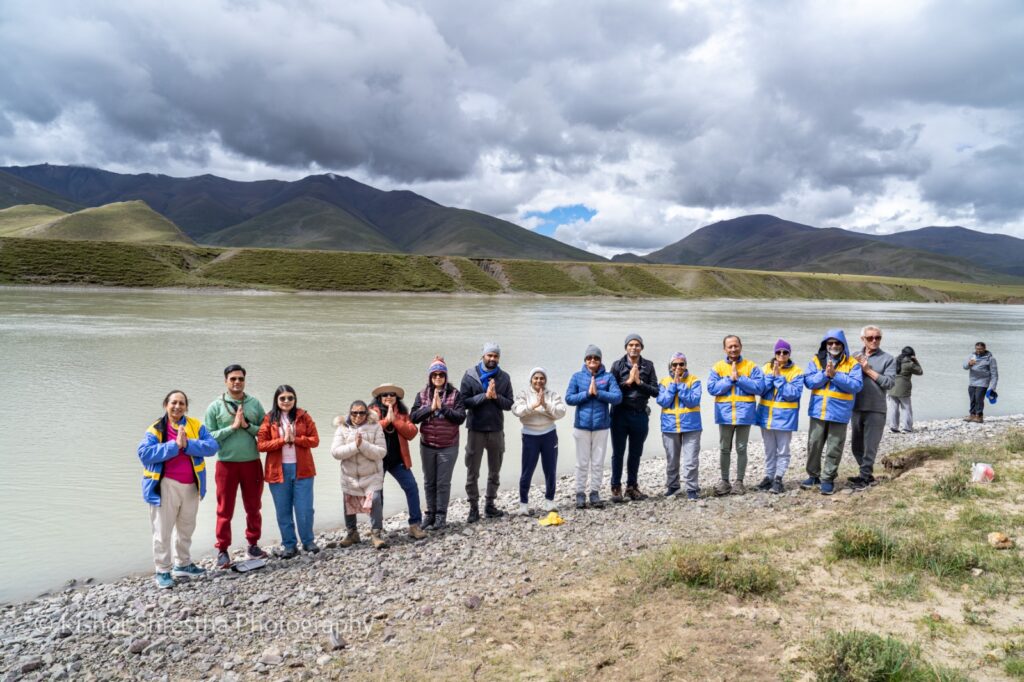
Why Prefer May: After months of winter closure, the landscape feels fresh, peaceful, and spiritually potent. Paths for walking turn out to be a bit easier on the feet during this time. That creates a more secure setup overall for visitors from abroad, especially those used to living right at sea level in their hometowns.
Travel Tip: If your body takes longer to adapt to altitude, May is your safest window.
JUNE—One of the Best Months to Visit Kailash
Best for: travellers who wants the perfect blend of good weather and spiritual energy
Temperature:
Day: 10°C to 18°C
Night: 0°C to 6°C
Highlights:
- Stable weather
- Less wind compared to late July
- Beautiful blue Mansarovar Lake reflections
- Pleasant Parikrama conditions
Why NRIs Love June: Jet lag+altitude is already a tough combination. June offers the warmest daytime temperatures, making the Kora (Parikrama) easier.
Travel Tip: June is the most “balanced” month—ideal for all age groups.
JULY – Warmer Days, Slightly Unpredictable Skies
Best for: Younger pilgrims, trekkers, repeat yatris
Temperature:
Day: 12°C to 20°C
Night: 3°C to 10°C
Highlights:
- Warmest month of the year
- Green landscapes
- Pleasant walking conditions
Challenges:
- Occasional rain at lower regions
- Cloud cover may limit Kailash visibility
Travel Tip: If warmer air appeals to you and shifting patterns in the weather do not bother you much, then heading out in July makes for the top choice.
AUGUST – The Spiritual Peak Month
Best for: Individuals on a spiritual pilgrimage looking to refuel their spiritual energy
Temperature:
Day: 10°C to 18°C
Night: 2°C to 8°C
Highlights:
- Festivals in Tibet bring the culture of the area to life
- STUNNING NATURE
- Many consider August the most spiritually charged month
Challenges:
- Higher crowd levels
- Occasional weather delays
Travel Tip: If deep spiritual immersion matters more than weather stability, August may be your calling.
Why 2026 Tibetan Horse Year Is Once-in-a-Lifetime
Tibetan astrology says that in the Horse Year, one Kora equals the merit of thirteen. It’s a spiritual multiplier that only appears once every 60 years.
Moments like this don’t repeat easily. They rise once in six decades.
1966 was the last… And after 2026, the next one won’t arrive until 2086.
For NRIs who have been waiting for “the right time,” 2026 is the most powerful window of your lifetime.
So, what is the best time for NRIs to visit Kailash Mansarovar?
- Most Recommended Months: May, June & early July
- Best for Seniors: May & June
- Best for Trekkers: July–September
- Best for Clear Views: September
- Best for Spiritual Energy: August & 2026 overall (Tibetan Horse Year)
These months offer the safest walking terrain, clearer weather, and smoother travel transitions for foreign residents.
Why NRIs Experience Kailash Yatra Differently
Living abroad means:
- low-altitude environments
- air-conditioned lifestyles
- limited exposure to mountain winds
- different dietary patterns
- varying fitness routines
This makes weather selection even more critical.
Up at more than 15,000 feet, a slight dip in temperature really affects your breathing. It hits your energy too. Confidence takes a knock as well. Choosing the best month leads to a safer Kailash yatra. It turns the whole thing into something more enjoyable.
How Kailash Pilgrim Ensures NRI Comfort & Safety
With 10+ successful Kailash batches, the team at Kailash Pilgrim specializes in guiding NRIs through:
- climate preparation
- altitude adaptation
- fitness training
- international travel support
- personalized pace management
- spiritual mentorship
We know the weather. We know the terrain. And most importantly—we know how to prepare NRIs for it. Whether you’re coming from Sydney, London, Dubai, Toronto, or California, you won’t walk alone.
Conclusion
Mount Kailash is not a place you visit casually—it is a journey you prepare for.
The best time to visit Mount Kailash goes from May until the end of September (summer provides the best travel experience) (autumn is the most beautiful). Do not go in winter! Very Dangerous Conditions For Travel With Extreme Weather.
Regardless of what you may be searching for—adventure, photography, spiritual awakening, or cultural experience—if you pick the season that fits your needs, it will be a wonderful experience filled with safe and comfortable travel that changes your life!
And choosing the right month is your first act of devotion.
Want comfort? → May–June
Want warmth? → July
Want deep spiritual pull? → August
Want dramatic views? → September
But if you’re waiting for the perfect combination of weather + spiritual merit…
2026 is your moment. A window that opens only once in 60 years. A year where every step carries the weight of 13 Koras.
FAQs
Q1. What is the best time to visit Mount Kailash?
May–June is ideal for NRIs due to stable weather and comfortable walking conditions.
Q2. Which month is the best to visit Kailash Mansarovar?
June offers the best balance of visibility, temperature, and safety.
Q3. Is September good for Kailash Yatra?
Yes, but only for those who can handle cold, wind, and higher altitude stress.
Q4. Is July safe?
Yes—it’s warm, but slightly unpredictable due to monsoon patterns in lower regions.
Q5. What is the best year for Kailash Yatra?
2026—Tibetan Horse Year, a rare 60-year cycle believed to multiply spiritual merit.
If your heart has whispered “Kailash,” don’t wait. Book Your Kailash Yatra with us!
Call/WhatsApp: +91 93276 21782, +91 99977 74497, +61 424 388 831
Website: https://kailashpilgrim.com/
Har Har Mahadev!