The Kailash Mansarovar Yatra cost confuses most first-time pilgrims. This Budget Guide & Packages overview helps you understand the different pricing options, with packages ranging from $1,800 to over $12,000. Same destination. Same basic route. Wildly different pricing.
Here’s what actually drives the cost — and where you should spend versus where operators pad their margins. I’m Shalini Patel. I’ve completed over 20 Kailash Parikramas since 1996, and I’ve watched this pilgrimage shift from a niche spiritual journey to something where pricing transparency matters more than ever. At Kailash Pilgrim, we price our packages between $2,500 and $4,500 per person depending on the season and batch size. That’s not the cheapest you’ll find. It’s also not the most expensive. What it reflects is 28 years of knowing exactly where corners can’t be cut.
Most pricing confusion comes from operators bundling different things and calling them equivalent. They’re not. A $1,800 package that skips acclimatization support and serves non-Sattvic meals isn’t the same pilgrimage as one that prepares you for a year and keeps a doctor on standby at 18,000 feet. The problem isn’t just what you pay. It’s what you don’t know you’re paying for — or not getting — until you’re already at altitude.
What’s Actually Included in a Kailash Mansarovar Budget Guide & Packages?
Every operator claims “all-inclusive.” Few actually are.
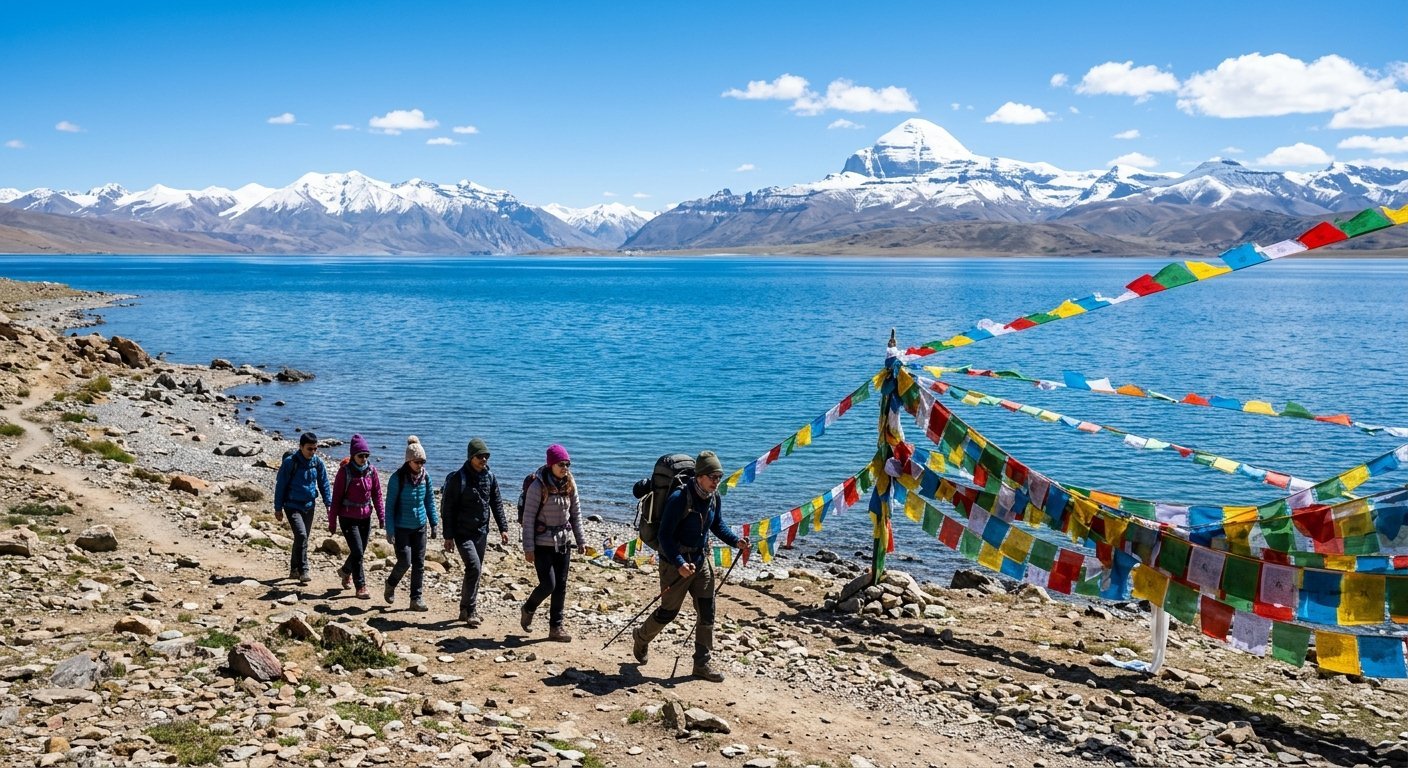
A legitimate Kailash Mansarovar package price should cover your Tibet Group Visa and Group Permit, ground transport from Kathmandu to the Tibet border and back, all vehicle costs inside Tibet including the parikrama route, accommodation in guesthouses and tented camps, three meals daily, oxygen cylinders and first-aid supplies, and on-ground support staff including Sherpas and a tour leader.
That’s baseline. If any of those are listed as “extra,” walk away.
Where packages diverge is preparation. A cheap package gets you to Kailash. A responsible one gets you ready first. We run a one-year spiritual and physical preparation program before departure. That’s not included in competitor pricing because most don’t offer it. It’s built into ours because we’ve seen what happens when pilgrims show up unprepared. Altitude sickness. Panic. Early evacuation. The Yatra ends before it begins.
Food is another divergence point. We serve 100% Sattvic meals throughout the journey. Other operators serve whatever’s available or cheap. At altitude, your digestive system is already under stress. Non-Sattvic food makes it worse. That costs more to arrange, especially in remote Tibet. It’s also non-negotiable.
Batch size matters more than most pilgrims realize. We cap our groups at 10 to 12 people. Larger groups — 20, 30, even 40 pilgrims — bring the per-person cost down through economies of scale. They also dilute the attention each Yatri receives. When someone struggles at 17,000 feet, a small group can pause. A large one can’t.
Hidden costs show up in three places: emergency evacuation insurance, personal gear and trekking equipment, and tips for support staff. Some packages include evacuation coverage. Most don’t. Gear rental can run another $200 to $400 if you don’t already own cold-weather trekking equipment. Tips are customary and expected — budget $100 to $150 for the full journey.
The biggest hidden cost? Changing your dates after booking. Tibet permits are tied to specific travel windows. Miss your window, and you’re either forfeiting your deposit or paying change fees that can run 30% to 50% of the package cost.
Kailash Yatra Package Breakdown by Route and Duration
The route you take changes everything.
Most pilgrims choose between three main itineraries: the Kathmandu route via Rasuwagadhi border (10 to 13 days), the Lhasa route with extra acclimatization days (14 to 16 days), or the Simikot helicopter route (7 to 9 days, premium pricing).
The Kathmandu route is standard. You drive from Nepal through the Rasuwagadhi border into Tibet, acclimatize progressively as you move toward Mount Kailash, complete the three-day parikrama, and return the same way. A 12-day package on this route typically costs between $2,500 and $3,500 per person. This assumes twin-sharing accommodation and a group size of 8 to 12.
Kailash Pilgrim’s 13-day luxury itinerary for 2026 is priced at $3,499 to $3,999 per person on a twin-share basis. That’s mid-to-upper range. What you’re paying for is experienced leadership — me personally leading most batches — comprehensive preparation beforehand, and a safety record that’s held for 28 years.
The Lhasa route adds 3 to 4 days. You fly into Lhasa, spend extra time acclimatizing at 12,000 feet before moving higher, then proceed to Kailash. This route costs $3,800 to $5,500 depending on whether you fly or drive segments within Tibet. It’s better for pilgrims with less baseline fitness or those who want a slower, more thorough acclimatization curve.
The Simikot helicopter route is premium. You helicopter from Kathmandu to Simikot, trek or helicopter further into Tibet, then join the standard Kailash circuit. Total time: 7 to 9 days. Cost: $8,000 to $12,000 per person. This route is for pilgrims with limited time or significant budget flexibility. It’s faster. It’s not easier — the parikrama itself is the same regardless of how you arrive.
One contrarian take: longer isn’t always safer. Some operators stretch itineraries to 16 or 18 days and call it “better acclimatization.” What they’re actually doing is adding rest days that pad accommodation and meal costs. The human body acclimatizes on a curve. After a certain point, extra days at moderate altitude don’t meaningfully improve your performance at extreme altitude. You’re better off with a 12- to 14-day package that includes real pre-departure training than an 18-day package with no preparation program.
Budget Packages vs Premium Packages: What’s the Real Difference?
Budget packages — those $1,800 to $2,200 options — cut costs in five predictable places.
First, batch size. Budget operators run groups of 20 to 40 pilgrims. That’s too many to manage safely at altitude. If three people struggle on the same day, support staff have to choose who gets priority attention.
Second, food quality. Budget packages serve local Tibetan food or basic dal-rice. No Sattvic guarantee. No dietary customization. If you’re vegetarian with specific spiritual food requirements, you’re on your own.
Third, vehicle quality. Budget packages use older Land Cruisers or shared buses. Breakdowns are common. I’ve seen groups stranded for 6 to 8 hours waiting for a replacement vehicle on remote Tibetan roads. At altitude, that’s not just inconvenient — it’s a medical risk.
Fourth, leadership experience. Budget packages are often led by junior guides with 2 to 3 years of experience. They know the route. They don’t know how to read early-stage altitude sickness or make real-time decisions when weather turns.
Fifth, no preparation program. You book, you pay, you show up. If you’re not physically ready, that’s your problem.
Premium packages — $4,000 to $6,000 and above — justify the cost through smaller batch sizes, experienced leadership (ideally someone who’s done the parikrama 10+ times), guaranteed Sattvic meals throughout, newer vehicles with backup transport on standby, and comprehensive pre-departure preparation including fitness coaching, gear evaluation, and spiritual readiness guidance.
The middle tier — $2,500 to $3,500 — is where you find the best value if the operator is credible. You’re paying for the essentials without luxury add-ons you don’t need on a pilgrimage. That’s where Kailash Pilgrim sits. We’ve deliberately priced to be accessible to serious pilgrims without compromising on the safety and spiritual components that actually matter.
Cost Breakdown: Where Your Money Actually Goes
Let’s break down a typical $3,000 package.
Tibet Group Visa and Group Permit: $400 to $600. This is fixed. No operator can negotiate this down. It’s a government fee processed through approved Tibetan travel agencies.
Ground transportation (Nepal and Tibet): $600 to $800. This includes all vehicle costs from Kathmandu to Kailash and back, fuel, driver fees, and vehicle permits for restricted Tibet regions.
Accommodation: $500 to $700. You’re staying in basic guesthouses in towns and tented camps near Lake Mansarovar and during the parikrama. Don’t expect hotels. Expect clean, functional shelter.
Meals: $300 to $400. Three meals daily for 12 to 13 days. If the operator is committed to Sattvic food, costs run higher because ingredients have to be sourced specifically and sometimes transported from Nepal.
Support staff: $400 to $600. This covers Sherpas, porters, cooks, a trek leader, and sometimes a doctor or paramedic. Staff wages, food, and insurance are included.
Emergency supplies and insurance: $200 to $300. Oxygen cylinders, first-aid kits, altitude medication, and group emergency evacuation coverage.
Operator margin and preparation program: $400 to $600. This is where the operator’s profit sits, along with the cost of any pre-departure training, fitness guidance, and ongoing support before you leave.
Total: roughly $2,800 to $4,000 depending on batch size, season, and what’s bundled. Anything priced significantly below $2,500 is cutting one of the above. Anything above $5,000 is either including luxury add-ons (private vehicles, premium hotels in Kathmandu, helicopter segments) or you’re being overcharged.
Hidden Costs Most Pilgrims Miss
The package price isn’t your total spend.
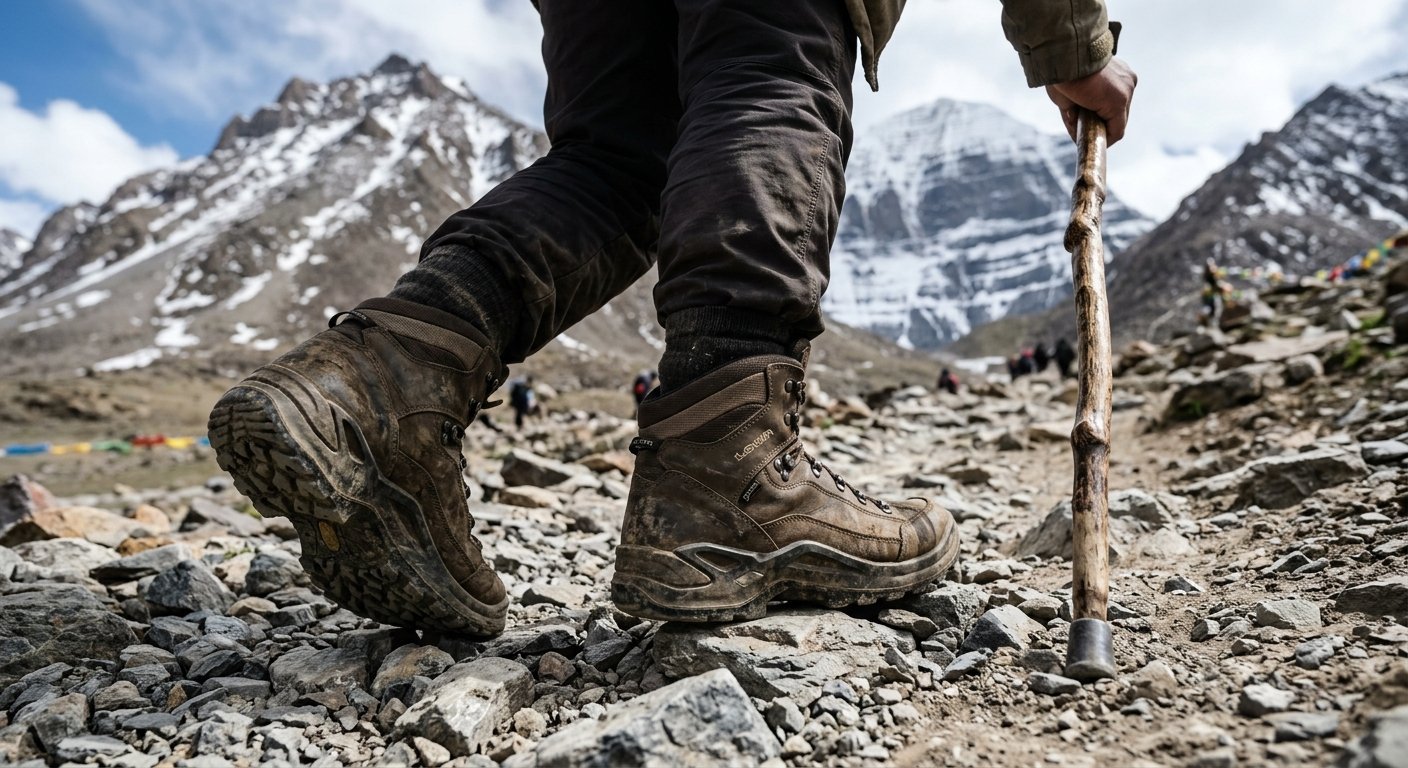
Personal gear: $300 to $600 if you don’t already own cold-weather trekking equipment. You’ll need a -10°C sleeping bag, insulated jacket, trekking poles, good boots, thermal layers, and a daypack. Some operators rent gear. Quality varies. If you’re serious about this pilgrimage, buy your own. You’ll use it properly, and you’ll know it won’t fail at altitude.
Travel to Kathmandu: $400 to $1,200 depending on where you’re flying from. Most packages start and end in Kathmandu. Getting there is on you.
Nepal visa: $50 for most nationalities. Processed on arrival at Tribhuvan International Airport.
Pre-departure medical check and vaccinations: $100 to $200. You’ll need a fitness certificate. Some pilgrims also get altitude sickness prophylaxis medication like Diamox prescribed before departure.
Tips for support staff: $100 to $150. Sherpas, porters, drivers, and cooks rely on tips. Budget for this. It’s not optional.
Emergency contingency fund: $500 minimum. If you need evacuation, medical treatment, or have to extend your stay due to weather delays or road closures, you’ll need accessible cash or a credit card with room.
Single-room supplement: $400 to $800. Most packages price on twin-sharing. If you want a private room where available (not possible during the parikrama itself), you’ll pay extra.
Add it up. A $3,000 package becomes a $4,500 to $5,500 total trip cost once you include everything. Pilgrims who budget only for the package price get caught short. That’s stressful. Stress and altitude don’t mix.
When to Book and How Pricing Changes by Season
Timing changes cost.
Peak season is May to June and September. Weather is most stable. Routes are fully open. Demand is highest. Packages during these months run $3,200 to $4,500 for mid-range operators.
Shoulder season is late April and early October. Weather is less predictable — you might hit snow, you might not. Prices drop 10% to 15%. If you’re flexible and prepared for variable conditions, this is where value sits.
Off-season is July to August (monsoon in Nepal, though Tibet itself is in a rain shadow) and November to March (too cold, many routes closed). Most operators don’t run trips. The few that do charge premium pricing for the logistical difficulty, not discount pricing. Avoid this unless you have a specific reason.
The 2026 Tibetan Horse Year is different. Kailash Mansarovar sees a surge every 12 years during the Horse Year — considered the most auspicious time for parikrama. One circuit during the Horse Year is believed to equal 13 circuits in a regular year. Demand for 2026 packages is already higher than normal. Prices are up 10% to 20% across the board. Availability is tighter.
If you’re planning for 2026, book by mid-2025. Operators cap batch sizes. Permits are limited. Once slots fill, they’re gone.
We started taking 2026 bookings in late 2024. We’re already at 60% capacity for our peak-season batches. That’s earlier fill-rate than any previous year.
Early booking doesn’t usually get you a discount — most operators hold pricing firm. What it gets you is choice of dates and guaranteed placement. Last-minute bookings in peak season either don’t happen or come with a premium because operators are filling last-minute cancellations.
How to Evaluate if a Package is Worth the Price
Price alone tells you nothing.
Start with the operator’s track record. How many years have they been running Kailash Yatras? How many successful parikramas? What’s their safety record — any fatalities, evacuations, or serious incidents?
At Kailash Pilgrim, we’ve led pilgrims since 1996. Zero fatalities. Zero major medical incidents requiring airlift. That’s not luck. That’s preparation, experienced leadership, and knowing when to slow down or turn back.
Ask about the preparation program. If the answer is “we send you a packing list,” that’s not preparation. Real preparation includes fitness coaching, altitude acclimatization guidance, spiritual readiness support, and gear evaluation. If they don’t offer this, the package price should reflect it — budget-tier pricing for budget-tier service.
Ask about batch size. Anything over 15 pilgrims is too large for safe, personalized support at altitude.
Ask who’s leading the trek. Not the company. The actual person. What’s their experience? How many times have they completed the parikrama? If the operator can’t or won’t name the trek leader at the time of booking, that’s a red flag.
Ask about food. Is it Sattvic throughout? Is there menu flexibility for dietary restrictions? Who’s cooking — a dedicated cook traveling with the group, or whoever’s available at each guesthouse?
Ask what happens if you need to evacuate. Is emergency transport included? Is there a doctor or paramedic with the group? What’s the protocol for altitude sickness, injury, or sudden illness?
Ask about vehicle backup. If your Land Cruiser breaks down at 16,000 feet, what’s the plan? Is there a backup vehicle traveling with the convoy, or are you waiting for one to be dispatched from the nearest town hours away?
The operators who answer all of these questions clearly and confidently are worth the price. The ones who deflect, generalize, or say “we’ll handle it if it comes up” aren’t.
One hard truth: the cheapest package is often the most expensive once you factor in risk. A $1,800 package that leads to evacuation, missed parikrama, or a medical emergency that costs $3,000 to $5,000 out of pocket isn’t a bargain. It’s expensive failure.
Kailash Pilgrim’s Pricing and What You’re Actually Paying For
We price transparently because we’ve been doing this long enough to know what corners can’t be cut.
Our 2026 packages run $3,499 to $3,999 per person for the 13-day Kathmandu route with luxury support. That includes everything listed earlier — permit, transport, Sattvic meals, experienced leadership, small batch size, preparation program, and safety support.
What’s different? Three things.
First, leadership. I personally lead most batches. When I don’t, it’s someone who’s completed at least 10 parikramas under my training. You’re not getting a junior guide learning on the job.
Second, preparation. We run a one-year program. Fitness coaching. Spiritual guidance. Gear evaluation. Monthly check-ins. By the time you leave for Kailash, you’re ready — physically, mentally, spiritually. That’s built into the package price. It’s also why our success rate for completing the full parikrama is over 95%. Most operators sit at 70% to 80%.
Third, safety redundancy. We travel with backup oxygen, a paramedic or doctor depending on group size, satellite communication devices, and a backup vehicle. If something goes wrong, we don’t improvise. We execute a plan we’ve tested over 28 years.
Is that worth $1,000 more than a budget package? Yes. If you’re serious about this pilgrimage, if you’re not just ticking a box but seeking a genuine spiritual experience, then the operator you choose shapes whether that happens or not.
We’ve had pilgrims join us after attempting Kailash with cheaper operators and turning back due to altitude sickness or poor support. They pay twice. Once for the failed trip. Once for the successful one. That’s not a bargain.
Frequently Asked Questions
What’s the cheapest way to do the Kailash Mansarovar Yatra?
The cheapest packages start around $1,800 to $2,200, but they cut batch size, food quality, support staff, and preparation. You’ll save money upfront and risk failing the parikrama or needing evacuation. If budget is tight, aim for the $2,500 to $3,000 mid-range packages from credible operators rather than bottom-tier pricing. Cheap on this pilgrimage is expensive.
Does the Kailash Mansarovar Yatra cost include flights?
No. Most packages cover only ground costs from Kathmandu onward. Your flight to Kathmandu and back, Nepal visa, personal gear, and tips are separate. Budget an additional $1,500 to $2,500 beyond the package price for total trip cost. Always ask what’s explicitly included and excluded before booking.
Is the Kailash Yatra trip cost higher in 2026 because of the Horse Year?
Yes. The 2026 Horse Year brings higher demand, and operators have raised prices 10% to 20% across the board. Expect to pay $3,500 to $4,500 for a quality mid-range package versus $3,000 to $3,800 in a normal year. Early booking is critical — availability is filling faster than usual, and last-minute spots will cost even more if they exist at all.
What’s included in a typical Kailash pilgrimage budget breakdown?
A standard package covers Tibet visa and permits ($400–$600), ground transport ($600–$800), accommodation ($500–$700), meals ($300–$400), support staff ($400–$600), and emergency supplies ($200–$300). Add personal gear ($300–$600), flights to Kathmandu ($400–$1,200), tips ($100–$150), and contingency funds ($500+). Total real cost: $4,500 to $6,000 for most pilgrims, not just the package price.
Ready to Book Your Kailash Mansarovar Yatra?
The Kailash Mansarovar Yatra cost isn’t just a number. It’s a decision about how seriously you’re taking this pilgrimage.
You can find cheaper packages. You won’t find ones that prepare you better, support you more carefully, or give you a higher chance of completing the parikrama successfully. At Kailash Pilgrim, we’ve spent 28 years learning what works and what fails at altitude. That knowledge is built into every package we offer.
If you’re planning for 2026 — especially during the auspicious Horse Year — now’s the time to book. Our batches are filling faster than any previous year, and we cap group size to maintain the quality of experience every Yatri deserves.
Reach out to us directly. We’ll walk you through the full cost breakdown, answer every question, and help you decide if our approach matches what you’re looking for. This isn’t a transaction. It’s a partnership toward one of the most transformative journeys you’ll ever take.
Don’t choose based on price alone. Choose based on who you trust to get you there — and back — safely.