
Most pilgrims who reach Mount Kailash dream of completing the parikrama. But there’s another moment—quieter, rarer, more sacred—that very few truly understand. It’s called Charan Sparsh. And if you’re planning a Kailash Mansarovar Yatra without knowing what this means, you’re missing the spiritual heart of the entire journey.
I’m Shalini Patel, founder of Kailash Pilgrim, and I’ve completed over 20 Kailash journeys since 1996. I’ve seen hundreds of devotees stand at the base of the sacred mountain, and I’ve watched the ones who approach with reverence versus the ones who treat it like a trek. The difference? Understanding rituals like Charan Sparsh at Kailash. It’s not just about touching the mountain. It’s about surrendering your ego at the feet of Mahadev himself.
Here’s what you need to know before you go.
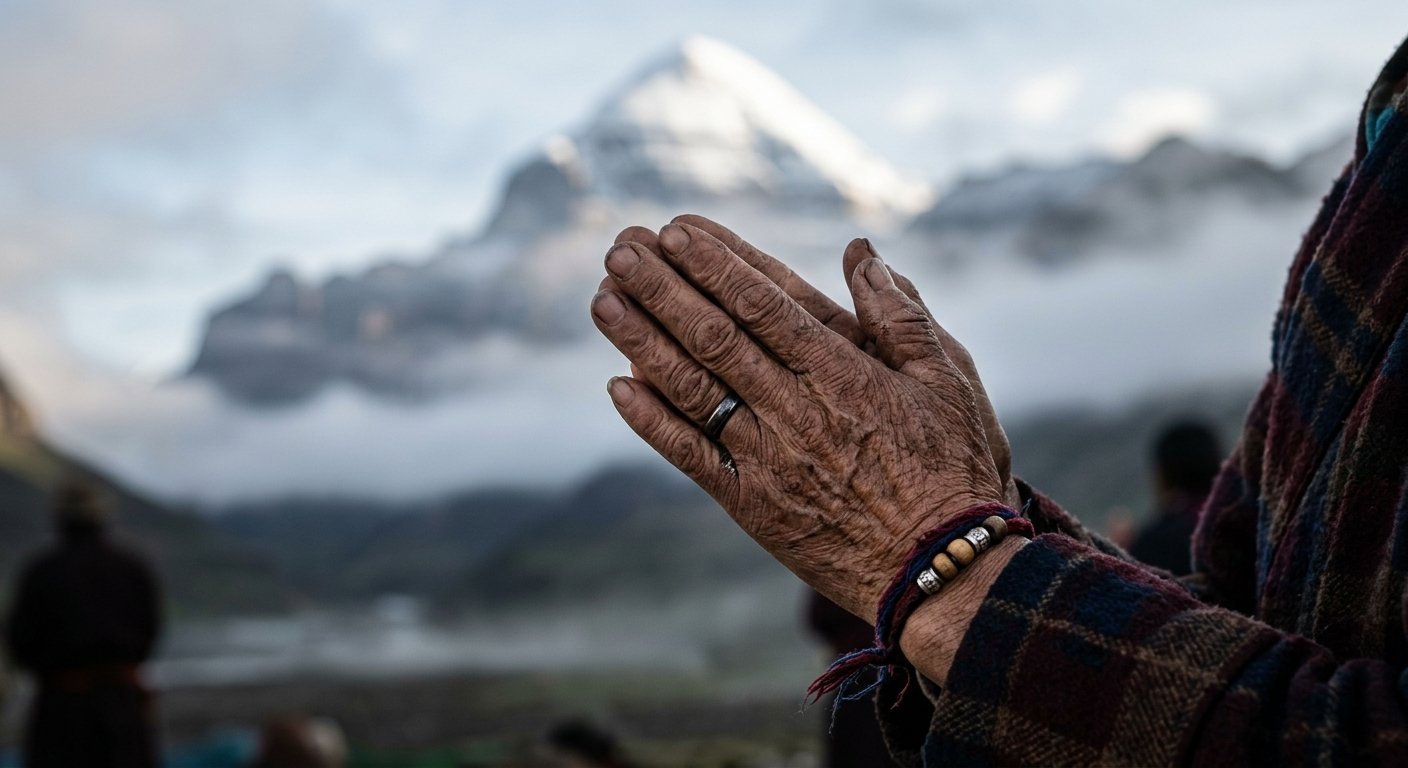
What Is Charan Sparsh at Mount Kailash?
Charan Sparsh literally means “touching the feet” in Sanskrit. In Hindu tradition, it’s an act of deep reverence—bowing down and touching the feet of a deity, elder, or guru as a gesture of humility and devotion. At Kailash, this ritual takes on profound spiritual weight because you’re not bending before a person. You’re bowing at the abode of Lord Shiva.
When pilgrims arrive at the base of Mount Kailash, many perform Charan Sparsh by prostrating themselves fully on the ground, touching the earth with their forehead, palms, and heart. Some pilgrims touch the rocks at the mountain’s base. Others simply bow deeply with folded hands. The physical form varies. The intention doesn’t.
This isn’t a tourist photo moment. It’s an act of surrender. You’re acknowledging that you’ve travelled thousands of kilometers not as a conqueror of altitude, but as a devotee seeking darshan—a glimpse of the divine. That shift in consciousness is what separates a pilgrimage from a trek.
Real devotion doesn’t announce itself. I’ve seen pilgrims weep during Charan Sparsh, not because they planned to, but because something inside them broke open. That’s the power of standing before Kailash with genuine humility.
Why Charan Sparsh Matters More Than You Think
You might wonder why bowing matters at all. After all, you’ve already endured high altitude, visa paperwork, acclimatization schedules, oxygen support, and days of physical strain. Isn’t reaching Kailash enough?
Not quite.
The Kailash sacred tradition teaches that the mountain isn’t just a geographical landmark. It’s a living presence. Lord Shiva resides here in eternal meditation. When you perform Charan Sparsh, you’re not just acknowledging the mountain—you’re acknowledging your own smallness in the face of cosmic divinity.
Here’s what we’ve noticed over two decades at Kailash Pilgrim: the pilgrims who approach the yatra with this mindset handle altitude better. They cope with physical discomfort more gracefully. They return home transformed, not just tired. It’s not magic. It’s perspective. When you stop treating the journey as a personal achievement and start treating it as a devotional offering, everything shifts.
One pilgrim from Melbourne told me after her 2023 yatra: “I thought I was climbing a mountain. I realized halfway through—I was surrendering my ego with every step.” That’s the feet touching ritual significance distilled into one sentence.
Charan Sparsh isn’t a box to tick. It’s the lens through which the entire pilgrimage makes spiritual sense.
The Sacred Tradition Behind the Ritual
Charan Sparsh isn’t new. It’s been part of Hindu devotional culture for thousands of years. In ancient texts, touching the feet of a guru or deity symbolizes the transfer of blessings—the divine energy flows downward, and the devotee receives grace by making themselves lower, humbler.
At Kailash, this tradition carries extra weight. Mount Kailash is considered the axis mundi—the cosmic pillar connecting heaven and earth. It’s the center of spiritual energy in Tibetan Buddhism, Hinduism, Jainism, and Bon traditions. To bow here isn’t just personal devotion. It’s aligning yourself with millennia of spiritual seekers who’ve done the same.
The Mount Kailash pilgrimage itself is built on layers of sacred meaning. The 52-kilometer parikrama around the mountain is said to wash away lifetimes of karma. But the moment you arrive—before you even begin walking—Charan Sparsh grounds you. It says: I’m here not to take, but to receive. Not to conquer, but to surrender.
And that distinction matters more than most people realize when they’re booking their yatra package online.
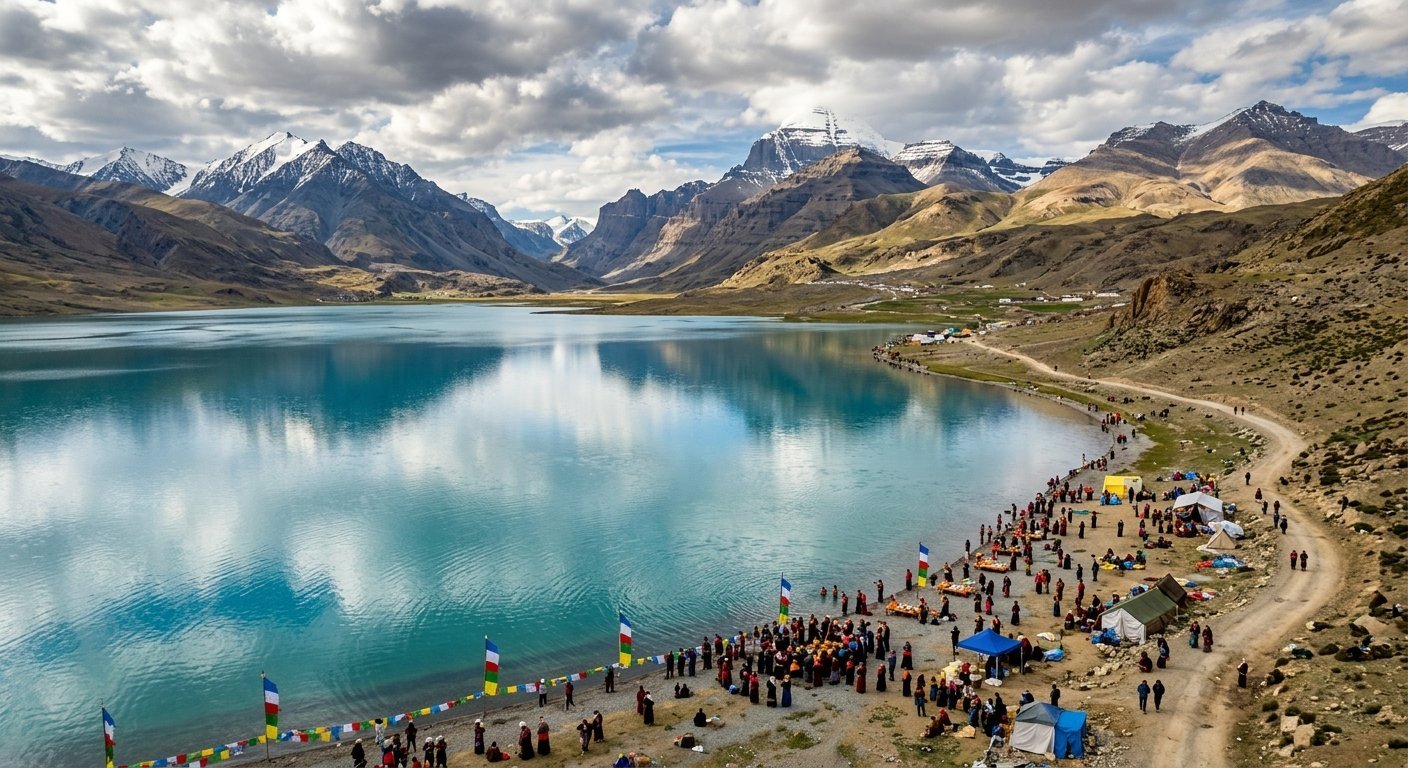
How to Perform Charan Sparsh Properly
There’s no rigid script. Devotion doesn’t work that way. But there are guidelines rooted in tradition that help deepen the experience.
First, approach the base of Mount Kailash or Mansarovar Lake with silence and intention. Don’t rush. Don’t pose for photos first. Breathe. Let the enormity of the place settle into you.
When you’re ready, remove your shoes. Stand barefoot on the sacred ground. Fold your hands in prayer (anjali mudra) and close your eyes. Offer a silent prayer to Lord Shiva—or whatever divine presence you connect with. This isn’t performative. It’s between you and the mountain.
Then, slowly lower yourself to the ground. Some pilgrims do a full prostration—lying flat with forehead, chest, and palms touching the earth. Others kneel and bow deeply, touching their forehead to the ground three times. Both are valid. Choose what feels authentic to your devotion.
If you can, touch the rocks or soil at the mountain’s base. Feel the texture. Recognize that you’re physically connecting with one of the most sacred sites on earth. Stay in that position for as long as it feels right—ten seconds, two minutes, five minutes. There’s no timer.
When you rise, do so slowly. Don’t immediately break back into conversation. Hold the silence a bit longer. Let the spiritual awakening Kailash offers settle into your body before you move forward.
At Kailash Pilgrim, we encourage all our groups to take this time without rushing. We don’t pack the schedule so tightly that Charan Sparsh becomes a checkbox. That defeats the purpose entirely.
Common Misconceptions About Charan Sparsh
Plenty of pilgrims arrive with the wrong expectations. Let’s clear them up.
Misconception one: only certain people can perform Charan Sparsh.
Wrong. Any sincere devotee, regardless of age, gender, or religious background, can bow before Kailash. There’s no caste barrier, no ritual purity test. Devotion is the only requirement.
Misconception two: you must touch the mountain directly.
Not necessary. Some areas at the base are accessible, others aren’t. If you can’t physically reach the rock face, bowing on the ground nearby with full intention carries the same spiritual weight. The mountain doesn’t measure proximity. It measures sincerity.
Misconception three: Charan Sparsh replaces the parikrama.
No. They’re complementary, not interchangeable. The parikrama is the full circumambulation—a multi-day journey of devotion and endurance. Charan Sparsh is the reverent greeting, the spiritual doorway. You do both, not one or the other.
Misconception four: it’s just for Hindus.
Pilgrims from Buddhist, Jain, and Bon traditions also perform similar acts of reverence at Kailash. The form might differ slightly, but the core gesture—humility before the sacred—is universal here.
And here’s the big one that I’ve seen mess people up repeatedly: thinking that Charan Sparsh is optional. Technically, yes, nothing’s mandatory. But skipping it because you’re tired or distracted? You’ll feel the absence. Every single pilgrim I’ve spoken to who rushed past this moment regretted it later.
Preparing Spiritually for Charan Sparsh Before You Leave
Physical preparation gets all the attention. Altitude training, fitness regimens, oxygen support plans—necessary, absolutely. But spiritual preparation? That’s where most pilgrims drop the ball.
You can’t manufacture devotion at 15,000 feet if you haven’t nurtured it at sea level. At Kailash Pilgrim, we offer one full year of pre-yatra spiritual and physical preparation. That’s not a sales pitch—it’s a necessity born from watching underprepared pilgrims struggle, not just physically but emotionally.
Start with daily meditation. Even ten minutes. Sit in silence and visualize yourself at the base of Kailash, bowing before Lord Shiva. Feel the humility in your body before you’re actually there. This mental rehearsal isn’t about perfection—it’s about intention.
Chant the Mahamrityunjaya Mantra regularly. If you’re not familiar, learn it now. By the time you reach Kailash, it should flow naturally from your lips, not from a phone screen. The mantra carries you through altitude sickness, fear, exhaustion—and it makes Charan Sparsh feel like the culmination it’s meant to be.
Read about Kailash. Not just the logistics—understand the mythology. Know why Shiva chose this mountain. Know the stories of Parvati, of the sacred lakes, of the Kailash Mansarovar journey as a cosmic metaphor. When you bow, you’ll be bowing not to a rock, but to the living story.
And here’s the part most tour operators won’t tell you: work on your ego before you go. Seriously. The Charan Sparsh Kailash spiritual experience strips away pretense whether you’re ready or not. Better to start softening your ego now—through service, through humility in daily life—than to have it shattered suddenly at 19,500 feet.
What Happens During Charan Sparsh—Physically and Emotionally
Let me be honest. It’s intense.
Physically, you’re already at extreme altitude. Breathing is harder. Your body is fatigued from days of travel and acclimatization. Bending down, prostrating fully—it’s not comfortable. Some pilgrims feel dizzy when they stand back up. That’s normal. Take your time. Use your Sherpa support if you need help rising.
Emotionally? That’s where it gets unpredictable.
I’ve watched pilgrims who planned to stay composed break into tears the moment their forehead touched the ground. I’ve seen stoic senior citizens from Canada, Australia, Singapore—people who don’t cry easily—sob openly during Charan Sparsh. It’s not weakness. It’s release.
You’re standing at the spiritual center of the universe after months of preparation and years of longing. You’re physically exhausted, emotionally raw from altitude and isolation, and suddenly you’re face-down on the earth in front of the holiest mountain in Hinduism. That combination breaks something open.
And not everyone cries. Some pilgrims feel calm. A few feel nothing immediate—then break down days later during the parikrama. There’s no single “correct” response. The spiritual awakening Kailash offers comes in different forms for different people.
What’s universal? Pilgrims remember Charan Sparsh more vividly than almost any other moment of the yatra. One pilgrim from London told me three years after his journey: “I remember every second of bowing at Kailash. I don’t remember half the parikrama details. But that moment? Crystal clear.”
That’s the mark of something sacred.
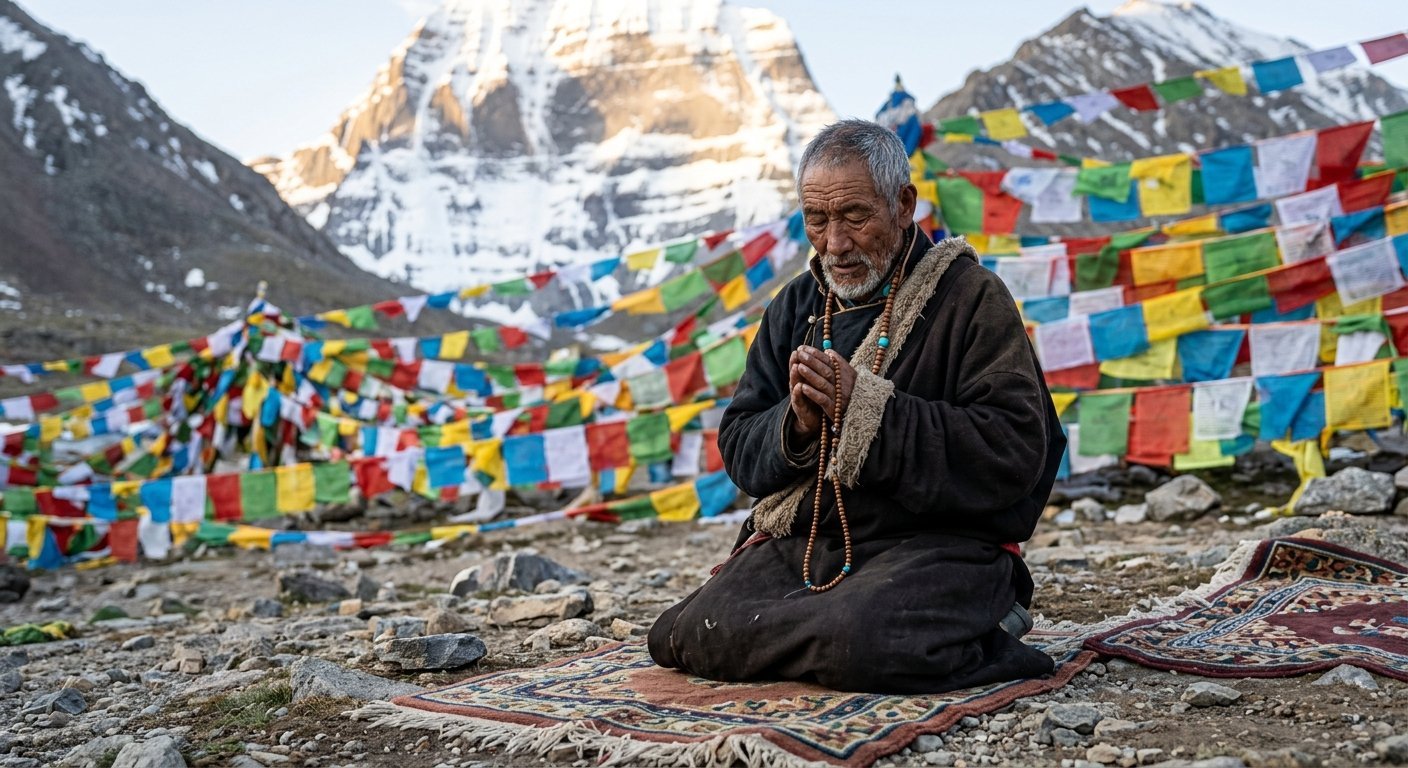
Why Altitude and Timing Affect the Experience
Charan Sparsh usually happens shortly after you arrive at the Kailash region—either at Darchen, the base camp for the parikrama, or at the shores of Mansarovar Lake. That timing isn’t random. It’s strategic.
You’re performing this ritual when you’re still relatively fresh, before the full parikrama exhaustion sets in. But you’ve also travelled far enough that the altitude is hitting you. That combination—weariness plus awe—creates the perfect conditions for ego surrender.
Altitude does strange things to emotions. At 15,000 feet and above, your brain isn’t getting full oxygen. You’re more vulnerable, more open, less defended. Crying comes easier. Laughter too. The barriers you normally keep up? Thinner.
That’s not a bug. It’s a feature of the Kailash sacred tradition. The mountain meets you where you are—physically weakened, emotionally exposed—and asks: are you willing to bow anyway?
We’ve seen pilgrims try to “push through” without acknowledging the altitude. They treat Charan Sparsh like a quick stop, then rush forward. Bad idea. Within hours, they’re struggling—not just physically, but mentally. They lose the thread of why they came.
Take your time. Let the altitude humble you. Let the thin air remind you how small you are. That’s the entire point.
The 2026 Fire Horse Year Connection
If you’re reading this in 2026, you’re in luck. This is the Tibetan Fire Horse Year—an alignment that happens once every twelve years. In Tibetan Buddhism, the Fire Horse Year makes the spiritual merit of any action performed at Kailash exponentially more powerful.
What does that mean for Charan Sparsh? It means the ritual carries extra karmic weight this year. Bowing before Kailash in 2026 isn’t just devotion—it’s devotion amplified by cosmic timing.
Thousands of additional pilgrims will attempt the Kailash Mansarovar Yatra in 2026 because of this alignment. The Chinese and Indian governments are expecting record numbers. That means permits are harder to get, routes are more crowded, and logistics are tighter.
But it also means the spiritual energy around the mountain will be unlike anything you’ve experienced. If you’ve been delaying your yatra, 2026 is the year. And if Charan Sparsh is part of your plan—and it should be—you’ll be performing it during the most auspicious window in over a decade.
At Kailash Pilgrim, we’ve already booked multiple groups for the 2026 season. Every single one includes dedicated time for Charan Sparsh at the base of Kailash and at Mansarovar Lake. We won’t compromise that, even with increased group sizes.
How Senior Citizens and NRIs Can Approach Charan Sparsh
Here’s what we’ve learned after guiding hundreds of senior pilgrims and NRIs from the UK, Australia, USA, Canada, UAE, and Singapore: physical flexibility matters less than devotional intention.
If you can’t do a full prostration, kneel. If kneeling is too hard, bow deeply from a standing position with your hands in prayer. If even bending is difficult, sit on the ground and touch the earth with your palm, then bring that palm to your forehead. Lord Shiva doesn’t judge your joints. He sees your heart.
Senior citizens often worry they’ll “do it wrong” or “look weak” in front of younger pilgrims. Forget that. Everyone at Kailash is struggling in some way—altitude, exhaustion, emotion. No one’s judging your form. And if they are, they’ve missed the point entirely.
For NRIs coordinating the journey from abroad, the key challenge is mental preparation from a distance. You’re not immersed in the daily spiritual culture of India. You’re managing Kailash logistics between work emails and timezone differences. That’s fine—but it means you need to be more intentional about spiritual prep.
Join virtual satsangs if you can. Connect with other pilgrims online before you go. Read about Kailash regularly, not just in the two weeks before departure. By the time you reach the mountain, the Charan Sparsh Kailash spiritual experience should feel like a reunion, not an introduction.
And here’s the practical bit: bring knee pads or a small mat if you think you’ll need cushioning during Charan Sparsh. The ground at Kailash is rocky and unforgiving. No shame in making it easier on your body so your mind can focus on devotion.
What Other Pilgrims Say About Charan Sparsh
I could describe it all day. But let me share what actual pilgrims have said after their yatra.
A devotee from Sydney, age 68, completing his Kailash journey in 2023: “I’ve been doing puja my entire life. Temples, home altars, everything. But bowing at Kailash—different. I felt like I was finally meeting the deity I’d been praying to for seventy years.”
An NRI pilgrim from Toronto, who completed the parikrama in 2022: “I thought Charan Sparsh was symbolic. Like, you bow, you move on. But the moment I touched my head to the ground, everything I’d been carrying—stress, ego, ambition—just lifted. I can’t explain it better than that.”
A senior citizen from London, travelling with her daughter in 2021: “I almost skipped Charan Sparsh because I was embarrassed about my knees. My daughter convinced me to do it sitting. Best decision of the trip. I still feel the calm when I close my eyes and remember it.”
And one more, from a younger pilgrim who went in 2020 before the pandemic shut everything down: “I went to Kailash thinking I’d feel spiritually awakened during the parikrama. That part was brutal—just pain and exhaustion. But Charan Sparsh at the start? That’s when I felt Shiva. That’s when I knew why I came.”
None of these pilgrims are exaggerating. I’ve seen their faces during the ritual, and I’ve heard their reflections afterward. Charan Sparsh hits different because it’s real devotion in a real place, not a rehearsed ceremony in a comfortable temple.
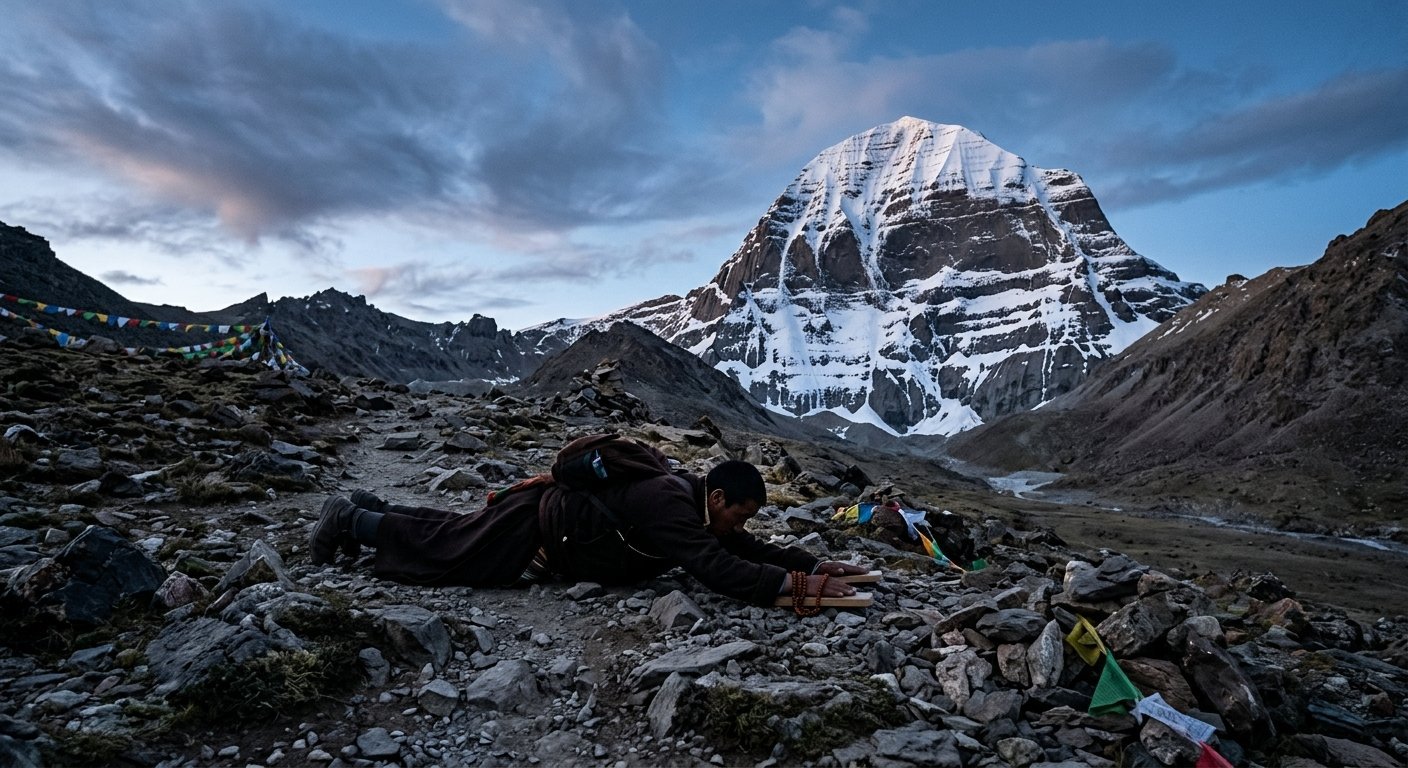
Preparing for the Moment—Practical Tips
Bring a cloth or scarf you can lay on the ground if the surface is too rough. Some pilgrims use a small prayer mat. Don’t overthink it—just something clean that marks the space as sacred for you.
Wear layers you can remove easily. You might feel warm from emotion and exertion even if the air is cold. I’ve seen pilgrims overheat during Charan Sparsh because they were bundled up and didn’t expect the intensity of the moment.
Don’t plan to take photos during Charan Sparsh. Seriously. Let someone else take one from a distance if you want documentation, but don’t hold your phone while you’re bowing. It fractures the focus. And honestly? The best pilgrim photos I’ve seen are the ones where the person is completely absorbed, not posing.
If you’re travelling with family or a group, decide in advance whether you want to perform Charan Sparsh together or alone. Both have value. Together creates shared witnessing; alone creates private intimacy with the divine. Neither is wrong.
And hydrate before the ritual. Altitude plus emotional intensity can cause dizziness. Drink water twenty minutes before you begin, and don’t rush standing back up afterward. Use your trekking poles if you brought them.
One more thing: don’t perform Charan Sparsh while distracted by logistics. If you’re worried about your bus leaving or your permit timing, you’re not present. Trust your tour operator to manage that. At Kailash Pilgrim, we build buffer time into every schedule precisely so pilgrims can be fully present during rituals like this.
Why This Moment Matters for Your Entire Yatra
Here’s the thing most people miss: Charan Sparsh sets the tone for everything that follows.
If you approach it with reverence, you carry that mindset through the parikrama, through altitude sickness, through physical pain. If you skip it or rush it, you’re starting the yatra on a transactional note—like checking items off a list. And that energy stays with you.
I’ve guided groups where a few pilgrims treated Charan Sparsh casually. Without exception, those were the pilgrims who struggled most during the parikrama—not physically, but emotionally. They complained more. They questioned the purpose. They treated the journey like a burden instead of a blessing.
Contrast that with pilgrims who fully surrendered during Charan Sparsh. They still suffered—altitude doesn’t care about devotion—but they suffered with grace. They found meaning in the discomfort. They returned home transformed, not just exhausted.
That’s the difference a single ritual makes when done with full intention.
Frequently Asked Questions
Can non-Hindus perform Charan Sparsh at Mount Kailash?
Yes. Mount Kailash is sacred across multiple traditions—Hinduism, Buddhism, Jainism, and Bon. Pilgrims from all these backgrounds perform acts of reverence at the mountain. The gesture of humility is universal even if the terminology differs. What matters is sincerity, not religious labels.
Is Charan Sparsh mandatory during the Kailash Yatra?
No ritual is technically mandatory. But skipping Charan Sparsh is like travelling to meet someone important and refusing to greet them. You’ll complete the yatra, but you’ll miss the spiritual depth that makes the journey worthwhile. Most devotees consider it essential, not optional.
What if I physically can’t prostrate due to health issues?
Modify the gesture. Bow from a seated position. Touch the ground with your hand and bring it to your forehead. Devotion doesn’t require acrobatics. The mountain recognizes your heart, not your flexibility. Many senior pilgrims with mobility challenges perform Charan Sparsh this way with full spiritual benefit.
How long should I spend performing Charan Sparsh?
As long as feels right—there’s no timer. Some pilgrims spend two minutes; others stay bowed for ten. Don’t rush, but also don’t force yourself to stay longer than feels authentic. Quality of intention matters more than duration. Trust your instinct in the moment.
Ready to Experience Charan Sparsh at Kailash Yourself?
This isn’t something you read about and move on. It’s something you live.
If you’re feeling the pull toward Kailash—and if you’ve read this far, you are—don’t wait another year. The 2026 Fire Horse Year is already filling up. Permits are competitive. The window is closing.
At Kailash Pilgrim, we’ve been guiding devotees through the Charan Sparsh Kailash spiritual experience and the full Mansarovar journey for over twenty years. We don’t rush you. We don’t treat you like a tourist. We prepare you for an entire year before departure—spiritually, physically, logistically—so that when you bow before Mount Kailash, you’re ready.
Contact Kailash Pilgrim today. Let’s talk about your yatra, your concerns, your readiness. Whether you’re a senior citizen from Australia, an NRI coordinating from Canada, or a devotee in India planning your first pilgrimage, we’ll guide you with the same care and expertise we’ve brought to hundreds of pilgrims before you.
Lord Shiva is calling. The mountain is waiting. And Charan Sparsh—the rarest, quietest, most powerful moment of the entire journey—is ready to transform you.
Don’t just read about it. Live it.