
Gauri Kund Kailash, sacred lake, pilgrimage site near Dolma La Pass
Gauri Kund Kailash, Gauri Kund pilgrimage, sacred lake Goddess Parvati, Gauri Kund near Dolma La Pass, Gauri Kund significance Kailash Yatra
Most pilgrims prepare meticulously for the physical challenge of crossing Dolma La Pass during the Kailash Parikrama. What catches many off-guard isn’t the altitude or the climb — it’s the emotional pull of Gauri Kund Kailash, the sacred frozen lake that appears at 18,200 feet, just before the hardest part of the journey.
I’ve walked past Gauri Kund more than twenty times since 1996. Every single time, something shifts. Pilgrims who were chatting moments before go quiet. The energy changes. It’s not about the view or the photo opportunity — though both are remarkable. It’s about what this lake represents in the sacred geography of Kailash and why it matters deeply to anyone who has ever called upon Goddess Parvati for strength.
Here’s what most travel blogs miss: Gauri Kund isn’t just a stop on the route. It’s the spiritual pivot point of the entire parikrama. Understanding why that’s true changes how you approach Day Two of your Kailash Yatra completely.
What Is Gauri Kund and Where Does It Sit on the Kailash Route?
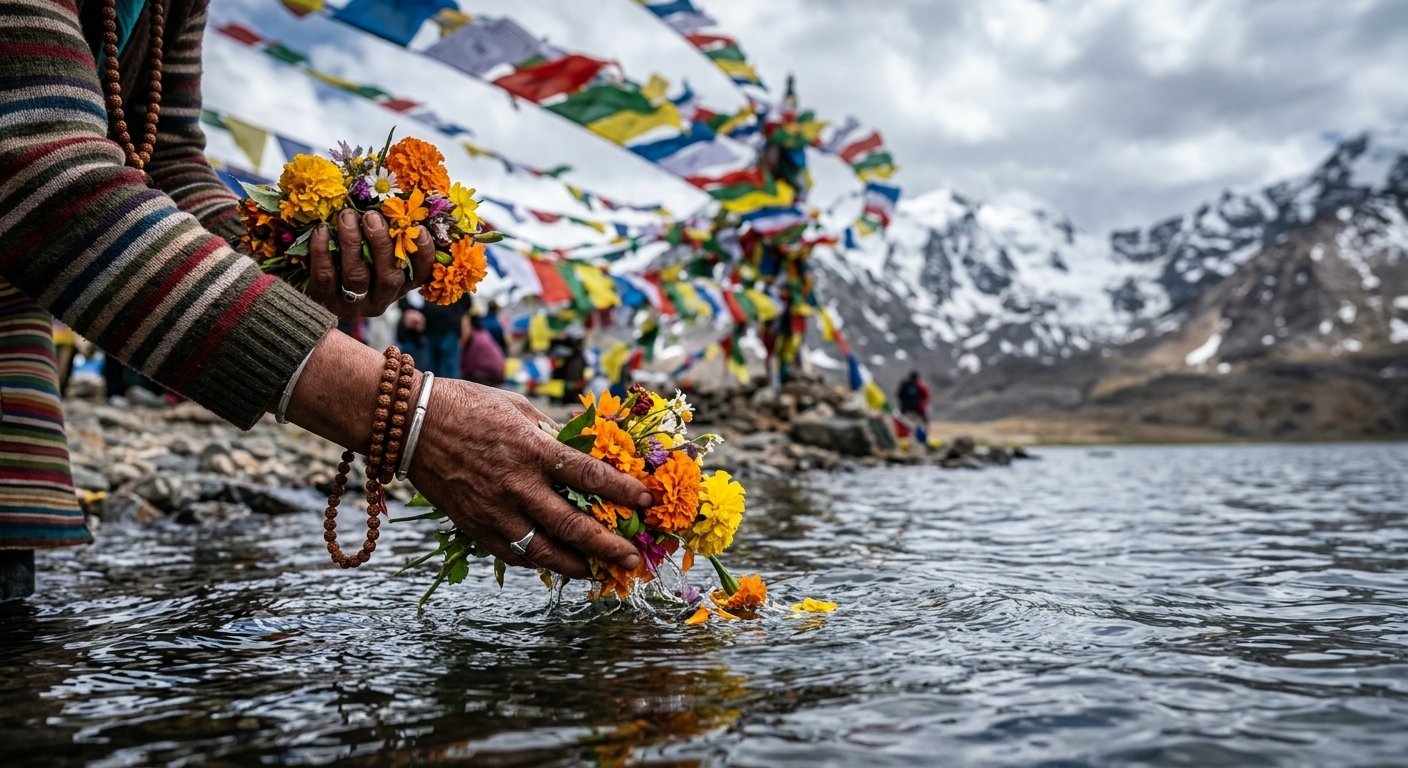
Gauri Kund is a small emerald-green lake — sometimes frozen, sometimes partially thawed depending on the season — located near the base of Dolma La Pass on the second day of the Mount Kailash Parikrama. At roughly 18,200 feet, it sits in a stark, windswept saddle surrounded by prayer flags, stone cairns, and the offerings of thousands of pilgrims who’ve passed this way before you.
The lake is named after Goddess Parvati, whose other name is Gauri — the golden one, the nurturing mother aspect of Shakti. Hindu mythology holds that Parvati bathed in this lake while Lord Shiva meditated on Mount Kailash. It’s believed that the goddess drew strength from these waters during her own spiritual practice, and that same divine energy remains present today.
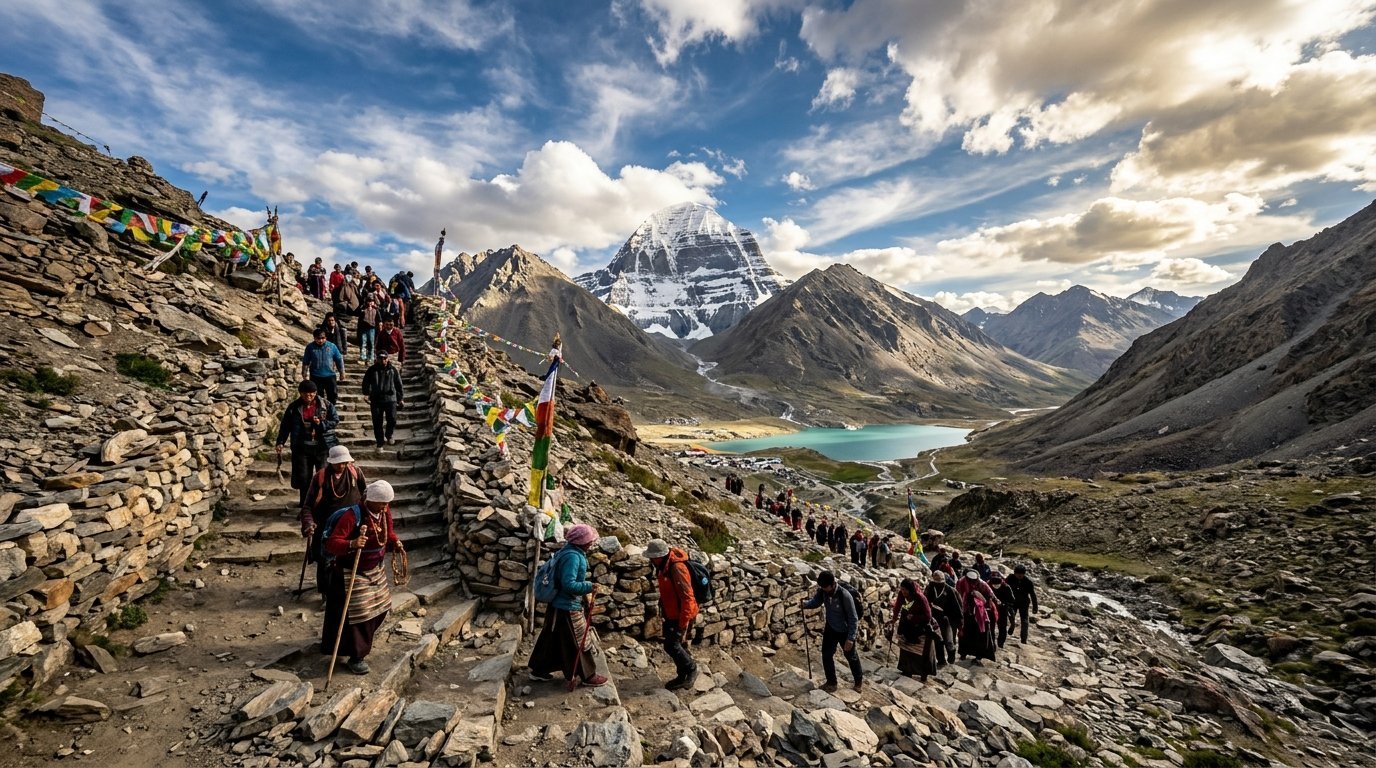
Physically, you reach Gauri Kund after about three to four hours of steady climbing from Dirapuk, the monastery camp where most yatris spend the night before attempting Dolma La. The path is rocky, uneven, and relentless. You’re gaining altitude with every step, and the air is thin enough that conversation becomes difficult.
Then you round a curve, and there it is — still, luminous, utterly quiet despite the wind. Prayer flags snap overhead. The lake reflects the sky and the surrounding peaks in a way that feels almost unreal.
That’s Gauri Kund.
The Mythological and Spiritual Significance of Gauri Kund Kailash
Here’s where things get interesting. Most pilgrimage sites have one story. Gauri Kund has several, and they all point to the same theme: spiritual transformation through surrender and devotion.
The most widely shared legend is this: Goddess Parvati performed intense tapasya — spiritual austerities — to win Lord Shiva’s attention and acceptance. During this period of meditation and self-purification, she bathed daily in the waters of what is now Gauri Kund. The lake became charged with her devotion, her discipline, and her feminine power.
For Shiva devotees, particularly women, this lake holds profound personal meaning. It represents the strength required to endure hardship for a higher purpose. It’s a reminder that devotion isn’t passive — it’s active, deliberate, and often uncomfortable.
Another layer of significance comes from the Tibetan Buddhist tradition. Tibetan pilgrims also revere this lake, calling it a place where the feminine aspect of enlightenment — compassion and wisdom — is especially accessible. They leave offerings, circumambulate the lake when conditions allow, and meditate briefly before continuing the climb.
In my experience leading yatris through this section, I’ve noticed that Gauri Kund acts as a natural emotional release point. The first day of parikrama is often filled with excitement and nervous energy. By the time you reach Gauri Kund on Day Two, the reality of the pilgrimage has set in. You’re tired. Your body aches. The pass looms above you.
This is exactly when pilgrims need the reminder that Gauri Kund offers: you’re not the first to struggle here, and the divine feminine has walked this path before you. There’s real comfort in that.
Gauri Kund Near Dolma La Pass: Why the Location Matters
The positioning of Gauri Kund isn’t random, and it’s not just about mythology. From a practical pilgrimage standpoint, this lake serves as a critical psychological and spiritual checkpoint.
Dolma La Pass, at 18,600 feet, is the highest point of the Kailash Parikrama and the most demanding section for most pilgrims. Altitude sickness, exhaustion, and mental fatigue peak here. The climb from Gauri Kund to the pass takes another 45 minutes to an hour depending on your pace and acclimatization.
By the time you reach Gauri Kund, you’ve already climbed for hours. You can see the pass above — strings of prayer flags marking the summit, other pilgrims moving slowly upward like ants on a ridge. It looks impossibly far.
That’s the moment Gauri Kund does its work.
Pilgrims stop. They rest. They drink water, catch their breath, and refocus. Many perform a small ritual — washing their face or hands in the lake if it’s not fully frozen, leaving an offering, saying a prayer. Some chant the Parvati mantra. Others just sit in silence.
What I’ve learned over 28 years is this: the pilgrims who take ten minutes at Gauri Kund to reset — mentally, emotionally, spiritually — have an easier time reaching Dolma La than those who push straight through. The lake gives you permission to pause. It reminds you that strength isn’t about speed.
Contrast that with pilgrims who treat it as just another photo stop. They rush. They don’t engage with the significance. And I’ve watched them struggle on the final ascent, not because they lacked fitness, but because they missed the spiritual gear shift that Gauri Kund offers.
The location matters because it’s placed exactly where you need it most — not at the summit, where the hard part is over, but before the hardest climb, when you still have a choice about how you show up.
What to Expect When You Visit Gauri Kund During Kailash Yatra
Let’s talk practicalities, because most first-time pilgrims don’t know what to expect and end up either unprepared or disappointed.
Condition of the Lake
Gauri Kund is a high-altitude glacial lake. Depending on the season and weather, it can be completely frozen, partially frozen with a centre of liquid water, or mostly thawed with ice around the edges. In early summer (May through June), you’re more likely to see liquid water. By late September and into the Horse Year pilgrimage season of 2026, it’s often partially or fully frozen.
Don’t expect a pristine, untouched body of water. You’ll see offerings left by previous pilgrims — coins, fabric, incense sticks, small statues. Some people find this distracting. I see it as proof of devotion.
Crowds and Timing
On most pilgrimage days, you’ll reach Gauri Kund between 9 a.m. and noon, depending on when you left Dirapuk and your walking pace. If you’re doing the parikrama during the 2026 Tibetan Horse Year — considered the most auspicious time for Kailash pilgrimage in 12 years — expect more people.
Kailash Pilgrim operates with small private batches specifically to avoid the worst of the crowding. When we reach Gauri Kund, our yatris have space to sit, reflect, and perform their rituals without being rushed by a large group pushing from behind.
That said, you’re never completely alone. Tibetan pilgrims, Indian groups, and international trekkers all pass through. Respect the space. Don’t shout or rush others. This isn’t a trekking checkpoint — it’s a living shrine.
Rituals and Offerings
You don’t need to perform any specific ritual at Gauri Kund Kailash, but most pilgrims choose to do something. Common practices include:
Washing hands or face in the lake water (if accessible) as a symbolic purification.
Circumambulating the lake clockwise, even if just once or twice due to terrain.
Leaving a small offering — flowers, coins, or a written prayer tied to the prayer flags.
Chanting a mantra, often the Parvati or Shiva mantra, or simply sitting in silent prayer.
We provide guidance on appropriate offerings before you leave for Day Two. Avoid leaving non-degradable items, plastic, or food waste. Respect for the site matters more than the size of the offering.
Physical State When You Arrive
Be honest — you’ll likely be tired, slightly breathless, and maybe a little lightheaded from the altitude. That’s normal at 18,200 feet. Sit down. Don’t fight it. The pause is part of the experience.
Carry water and a small snack in an easily accessible pocket. Drink before you feel thirsty. Altitude suppresses your thirst response, and dehydration makes everything harder.
If you’re feeling dizzy or nauseous, tell your guide immediately. Gauri Kund is not the place to hide symptoms. The climb to Dolma La gets steeper and more exposed from here. Safety comes first, always.
How Gauri Kund Pilgrimage Fits into the Larger Kailash Parikrama Journey
Understanding where Gauri Kund sits in the arc of the entire Kailash Yatra helps you appreciate it properly. The parikrama isn’t a linear trek — it’s a three-day spiritual arc with distinct emotional and symbolic phases.
Day One: Anticipation and Devotion
The first day, from Darchen to Dirapuk, is relatively gentle. You’re walking along the valley floor with Mount Kailash’s north face visible for much of the route. Energy is high. The mood is devotional but still outward-focused — pilgrims chat, take photos, and settle into the rhythm of walking.
By the time you reach Dirapuk monastery and camp for the night, you’re tired but satisfied. The hard part still lies ahead.
Day Two: The Test — Gauri Kund and Dolma La
Day Two is where the parikrama earns its reputation. You wake before dawn, sometimes as early as 3 a.m., to begin the long climb toward Dolma La. The ascent is slow, steep, and relentless. Conversation drops off. Everyone is locked into their own experience, their own breath, their own prayer.
Gauri Kund appears at the midpoint of this climb — physically and emotionally. It’s the pause before the final push. The reminder that this journey isn’t about conquering a mountain; it’s about surrendering to something greater than yourself.
From Gauri Kund, you climb another 400 feet to Dolma La Pass, where Tibetan pilgrims leave clothing or personal items to symbolize leaving behind the old self. Then you descend — steeply — toward Zuthulpuk, the final night’s camp.
Day Three: Completion and Gratitude
The third day, from Zuthulpuk back to Darchen, is a gentle descent. The mood shifts again — quieter, more reflective. You’ve done the thing you came to do. Gauri Kund, in hindsight, feels like the emotional turning point of the entire experience.
Many pilgrims tell me afterward that they remember Gauri Kund more vividly than the pass itself. The pass is triumph. Gauri Kund is transformation.
Preparing for the Gauri Kund Section: What Kailash Pilgrim Yatris Should Know
At Kailash Pilgrim, we don’t send yatris to Gauri Kund unprepared. Our one-year preparation program includes specific guidance for Day Two, because this is where most pilgrims face their biggest physical and mental test.
Altitude Acclimatization
You can’t fake acclimatization. The week before you attempt the parikrama, we build in rest days at progressively higher camps. By the time you reach Dirapuk at 16,400 feet, your body has had time to adjust. That makes the climb to Gauri Kund Kailash at 18,200 feet challenging but manageable.
Skipping acclimatization is the single biggest mistake I see with independent trekkers and large tour groups. They rush. They assume fitness alone will carry them. Then they hit Gauri Kund feeling wrecked, and the climb to Dolma La becomes dangerous.
We don’t rush. Ever. Your safety and your experience matter more than the schedule.
Gear and Layering
Weather at Gauri Kund changes fast. You might start the climb in calm, cold air and arrive at the lake in wind and blowing snow. Layering is critical. We provide a detailed gear checklist well before departure, and we do a personalized gear evaluation for every yatri before the trip begins.
Must-haves for the Gauri Kund section: insulated jacket, windproof outer layer, warm gloves, a hat that covers your ears, and trekking poles. The terrain is uneven, and poles reduce the strain on your knees and help with balance.
Mental Preparation
This is harder to quantify but just as important. Day Two is long. You’ll be walking for eight to ten hours, much of it uphill. Expect discomfort. Expect doubt. That’s normal.
The pilgrims who do best are the ones who’ve mentally prepared for suffering — not in a negative way, but in a realistic one. You’re not on vacation. You’re on pilgrimage. The difficulty is part of the offering.
We talk about this openly during the preparation phase. We share experiences from past yatris, including the hard moments. Knowing what’s coming reduces anxiety and helps you stay grounded when the climb gets tough.
The Difference Between Visiting Gauri Kund as a Trekker vs. a Pilgrim
Here’s a hard truth: not everyone who reaches Gauri Kund experiences it the same way. The lake doesn’t discriminate — it’s there for everyone — but what you bring to the moment changes what you take away.
Trekkers often approach Gauri Kund as a rest stop. They sit, drink water, snap a few photos, and move on. There’s nothing wrong with that. But they miss the layer of meaning that makes the stop transformative.
Pilgrims, on the other hand, arrive with intention. They know the mythology. They’ve thought about what Goddess Parvati’s devotion represents. They pause not because they’re tired, but because the place calls for it.
The trekker sees a pretty lake at high altitude. The pilgrim sees a living shrine.
This distinction matters because it affects how you prepare, how you behave at the site, and how you remember the experience afterward. If you’re reading this article, you’re likely leaning toward the pilgrim mindset. That’s good. Lean further.
At Kailash Pilgrim, we lead with that mindset from day one. Our yatris aren’t customers — they’re devotees on a sacred journey. Ms. Shalini Patel, who has completed more than 20 Kailash Parikramas since 1996, approaches every trip with the same reverence as her first. That tone shapes the entire experience, including how our groups engage with Gauri Kund.
Gauri Kund Significance in the 2026 Tibetan Horse Year Pilgrimage
The year 2026 marks the Tibetan Horse Year, which occurs once every 12 years. Tibetan Buddhist tradition holds that circumambulating Mount Kailash during the Horse Year carries the spiritual merit of 12 ordinary parikramas. For Hindus, the year amplifies the power of darshan and pilgrimage.
What this means practically: more pilgrims. Higher demand. Greater need for experienced guidance.
Gauri Kund will see more visitors in 2026 than in any recent year. That makes choosing the right tour operator even more critical. Large groups create bottlenecks, rush sacred moments, and increase the risk of accidents on narrow, high-altitude trails.
Kailash Pilgrim operates with small private batches — typically 10 to 15 yatris per group. This ensures that when you reach Gauri Kund, you have space and time. You’re not herded. You’re not rushed. You can sit, breathe, and actually experience the place.
We’ve already seen a surge in inquiries for the 2026 season. If you’re serious about the pilgrimage, now is the time to commit. Permits are limited. Quality operators book out months in advance.
How to Honor Gauri Kund Properly During Your Kailash Yatra
Respect isn’t complicated, but it’s often forgotten in the excitement of the trek. Here’s what honoring Gauri Kund looks like in practice.
Move Quietly
Lower your voice. This is a place of prayer and reflection, not a viewpoint. Save the loud conversations and group photos for later.
Leave Appropriate Offerings
If you leave something, make sure it’s biodegradable or traditionally acceptable — flowers, clean fabric, coins. Avoid plastic, food wrappers, or anything that doesn’t belong in a sacred space.
Don’t Rush Others
If someone is sitting in prayer or performing a ritual, give them space. Wait your turn. Patience is part of the practice.
Follow Your Guide’s Instructions
Experienced guides know the etiquette and the terrain. If your guide from Kailash Pilgrim suggests a particular approach or timing, trust it. We’ve been here before. Many times.
Take Responsibility for Your Trash
Carry out everything you carry in. Gauri Kund is not a place to lighten your load by leaving garbage behind. Respect the site. Respect the mountain.
Frequently Asked Questions
What is Gauri Kund and why is it significant during Kailash Yatra?
Gauri Kund Kailash is a sacred emerald-green lake at 18,200 feet near Dolma La Pass on the Kailash Parikrama route. It’s believed to be the place where Goddess Parvati bathed during her spiritual austerities, making it a powerful site for devotees seeking blessings and inner strength before the most challenging section of the pilgrimage.
Can you touch or drink the water at Gauri Kund?
You can touch the water and many pilgrims wash their hands or face as a symbolic purification, but drinking it isn’t recommended due to the risk of waterborne illness at high altitude. The spiritual significance comes from the ritual contact, not consumption.
How long should you spend at Gauri Kund during the parikrama?
Most pilgrims spend 10 to 20 minutes at Gauri Kund. This gives enough time to rest, perform a small ritual, and mentally prepare for the final climb to Dolma La Pass. Rushing through defeats the purpose; lingering too long in the cold and wind can sap energy you’ll need ahead.
Is Gauri Kund accessible for all pilgrims on the Kailash Yatra?
Gauri Kund sits on the main parikrama trail and is accessible to anyone physically capable of completing the Kailash circuit. However, the altitude and the climb leading to it require good acclimatization and preparation. Kailash Pilgrim’s one-year prep program ensures yatris arrive ready for this section safely.
Begin Your Kailash Pilgrimage with Experienced Guidance
Gauri Kund is one moment in a journey that will challenge and change you. Reaching it safely, prepared, and with the right mindset requires more than booking a tour — it requires a guide who understands what this pilgrimage truly means.
Kailash Pilgrim has led devotees to Mount Kailash and Gauri Kund for more than 28 years. Ms. Shalini Patel’s 20+ completed parikramas inform every detail of our preparation program, our route planning, and our on-ground support. We don’t rush. We don’t compromise. We treat every yatri with the care this sacred journey deserves.
The 2026 Tibetan Horse Year is approaching. Spaces are limited. If the call to Kailash has reached you, don’t wait. Start your preparation now. Contact Kailash Pilgrim to learn more about our private batch Kailash Yatra packages and begin the journey that leads, eventually, to that quiet, powerful moment at the edge of Gauri Kund.