Complete Guide to Kailash Mansarovar Yatra Preparation and What to Expect
I’ve led pilgrims through twenty-three Kailash Mansarovar journeys since 1996. Every single one taught me something new. But here’s what never changes — the pilgrims who prepare properly have transformative experiences. The ones who show up unprepared spend half the journey fighting their bodies instead of opening their hearts.
This isn’t Goa. It’s not even regular trekking. The Kailash Mansarovar Yatra demands respect, preparation, and honest self-assessment. You’ll reach altitudes where your body works twice as hard to do half as much. You’ll walk terrain that tests every muscle group. And if you’re spiritually ready but physically unprepared, you’ll miss the very darshan you came for.
This Guide to Kailash Mansarovar Yatra walks you through everything — from the ideal preparation timeline and physical training that actually works to the gear you truly need versus what’s just marketing noise. You’ll also get a realistic day-by-day understanding of what the journey feels like, helping you prepare mentally, physically, and spiritually for this once-in-a-lifetime pilgrimage.
Why Most Pilgrims Underestimate Kailash Mansarovar Preparation
Here’s the uncomfortable truth. Most people book the yatra thinking devotion alone will carry them through. It won’t.
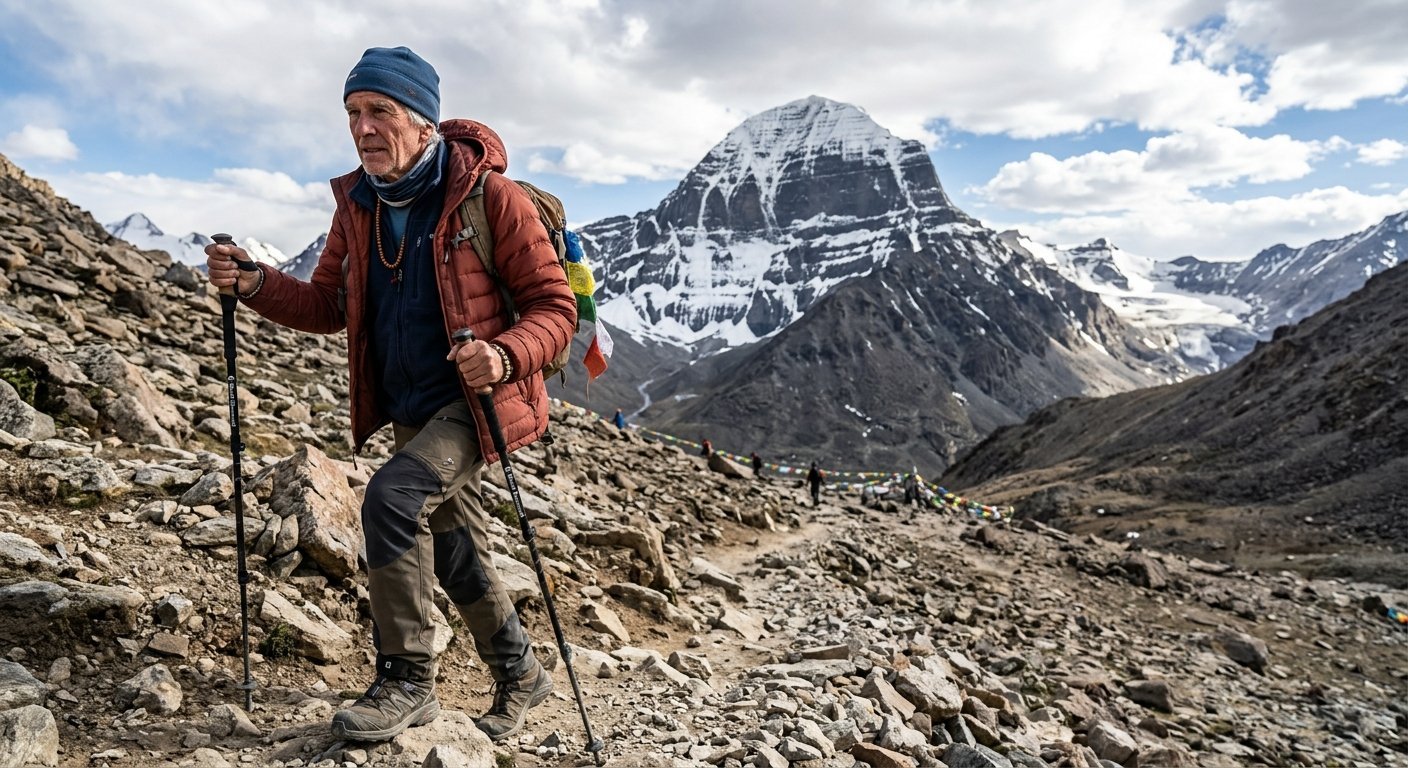
I’ve watched fit 40-year-olds struggle more than prepared 65-year-olds. The difference wasn’t age. It was preparation. The older pilgrims trained for months. They understood altitude. They conditioned their cardiovascular systems and built leg strength specifically for ascent and descent. The younger ones assumed general fitness would translate.
It doesn’t.
Kailash sits at 6,638 meters. The parikrama circuit takes you above 5,600 meters at Dolma La Pass. At that elevation, oxygen is roughly 50 percent of what you breathe at sea level. Your heart rate spikes. Simple tasks — tying your shoes, climbing stairs, even speaking full sentences — become work.
Most pilgrims booking from Australia, UK, or Singapore live at sea level. Your body has never experienced this stress. Without proper Kailash Mansarovar preparation, altitude sickness isn’t a possibility. It’s a probability. And when it hits during parikrama, you’re not just uncomfortable. You’re potentially ending your journey early.
At Kailash Pilgrim, we require a full year of preparation. Not because we’re strict. Because we’ve seen what happens without it. The pilgrims who follow our protocol complete the yatra. The ones who skip steps either struggle badly or don’t finish.
Understanding the Kailash Yatra Requirements Before You Book
Let’s talk logistics first. You can’t just show up at Mount Kailash. The permits alone require coordination across multiple government bodies. The Mount Kailash pilgrimage operates under strict Chinese-controlled access through Tibet.
You’ll need your passport with at least six months validity. You’ll need a Chinese group visa — individual tourist visas don’t work here. You’ll need a Tibet Travel Permit, an Alien’s Travel Permit, and a Military Permit for restricted border zones. If you’re an NRI in the UK or Australia, add another layer — coordinating these documents across time zones and consulates while you’re working full-time.
This is where most people hit their first wall. The paperwork isn’t impossible, but it’s tedious and unforgiving. One missing signature, one expired document, and your entire journey delays. We’ve had pilgrims show up in Kathmandu only to discover their permits weren’t properly processed. They watched the group leave without them.
Kailash Pilgrim handles this entire process. We’ve done it hundreds of times. We know which offices move fast and which ones need follow-up. We know the backup contacts when the standard channels stall. For NRIs especially, this service isn’t optional. It’s the difference between boarding the flight and scrambling at the consulate.
Beyond permits, you’ll need medical clearance. If you’re over 60 or have any history of cardiac issues, respiratory conditions, or high blood pressure, you’ll need a physician’s written approval. Some operators skip this. We don’t. Because the last place you want to discover a heart condition is at 5,600 meters with limited rescue options.
Physical Training That Actually Prepares You for the Mansarovar Lake Trek
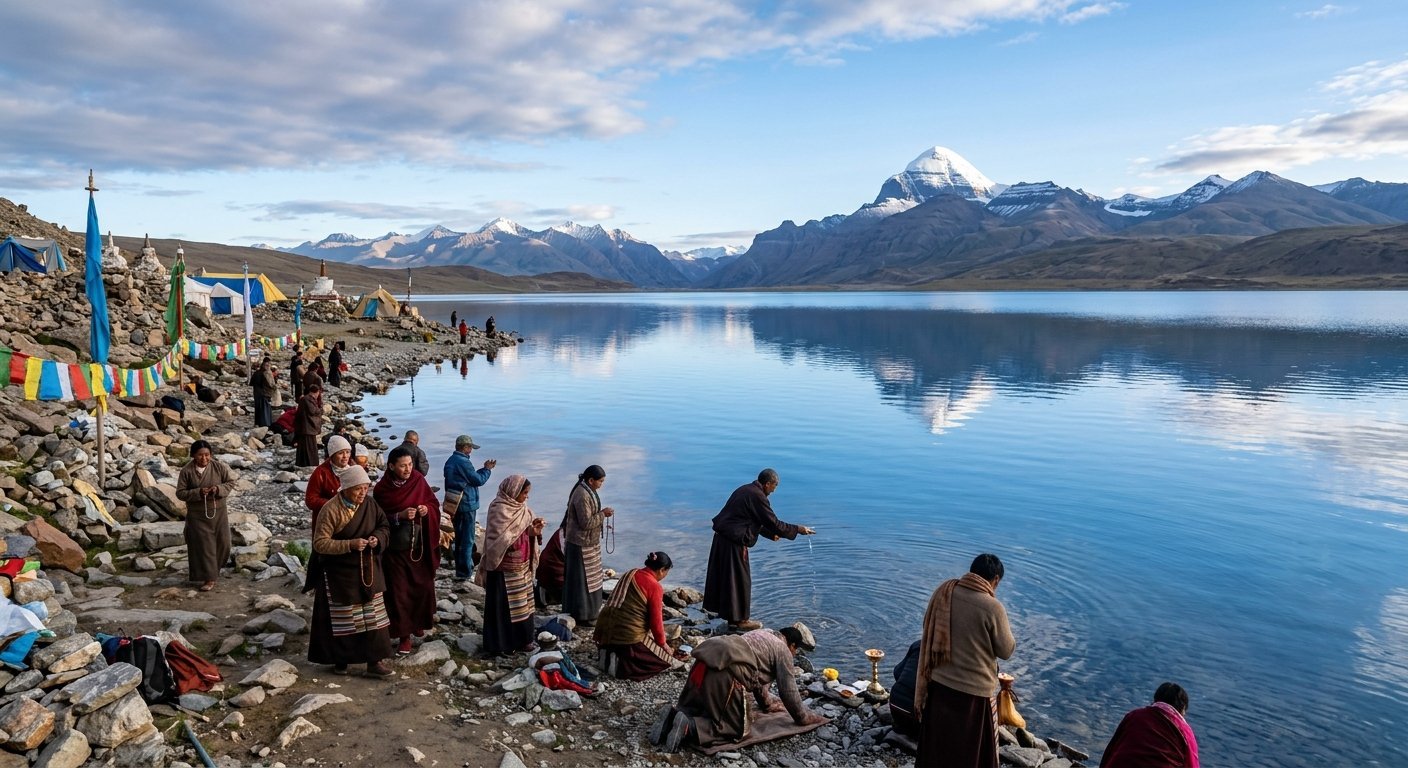
Training for Kailash isn’t about gym muscles. It’s about cardiovascular endurance and leg durability. You need your heart and lungs to function efficiently on minimal oxygen. You need your quads, calves, and ankles to handle steep descents on loose rock without buckling.
Start twelve months out. Not three months. Not six weeks. Twelve months.
Here’s the training protocol we give every pilgrim, and it’s built from watching what works and what fails.
Months 12-9: Build your base. Walk daily. Start with 30 minutes at a comfortable pace. Increase to 60 minutes by month nine. Flat terrain is fine at this stage. You’re conditioning your cardiovascular system and getting your body used to sustained movement. If you’re sedentary now, this phase alone will feel like work. That’s the point.
Months 9-6: Add elevation and load. Find hills. Find stairs. Start carrying a daypack with 5 kilograms. Walk uphill for 45 minutes, three to four times per week. Your legs should feel it the next day. If they don’t, increase the incline or the weight. By month six, you should comfortably handle 90 minutes of continuous uphill walking with 7-8 kilograms on your back.
Months 6-3: Simulate altitude stress. This is where most preparation plans fail. You can’t replicate thin air at sea level, but you can stress your cardiovascular system similarly. Add interval training. Walk fast for five minutes, slow for two.
Repeat for an hour. Add long weekend walks — four to five hours with elevation gain. If you live near mountains, use them. If you don’t, find the steepest hills available and do laps.
Months 3-1: Peak conditioning and taper. You should be walking 10-12 kilometers with elevation gain at least twice a week. One long walk per week — 15-20 kilometers. Then, two weeks before departure, taper. Reduce intensity but maintain frequency. You want your body rested but not detrained.
Here’s what we learned the hard way. Early on, we had pilgrims who trained hard right until departure. They arrived exhausted. Their bodies were in breakdown mode, not performance mode. The taper matters.
One more thing nobody tells you. Practice walking downhill. Uphill gets the attention, but downhill wrecks your knees if you’re not conditioned. The descent from Dolma La is steep, long, and relentless. Your quads will scream if you haven’t trained them to absorb repeated impact.
Route Options for the Kailash Mansarovar Yatra in 2026
You have three main routes. Each has trade-offs.
Kathmandu to Kailash by road is the classic route and the one we recommend for most pilgrims. You fly into Kathmandu, spend a day acclimatizing, then drive through the Nepal-Tibet border at Gyirong. The drive takes several days with overnight stops at progressively higher altitudes — Nyalam at 3,750 meters, Saga at 4,640 meters, then Mansarovar at 4,590 meters.
This gradual ascent is your best defense against altitude sickness. Your body gets time to adjust. By the time you reach Mansarovar, you’ve already spent three to four days above 3,500 meters. The parikrama becomes manageable.
The downside? It’s longer. You’ll spend 14-16 days total. If you’re flying from Australia or the UAE with limited leave, that’s a big ask. But here’s the reality — rushing Kailash doesn’t work. The pilgrims who try to compress the timeline either suffer badly or miss the depth of the experience.
Helicopter Yatra packages get you there faster. You fly directly from Kathmandu to Simikot, then helicopter to the Tibetan plateau. You cut several days of road travel. The problem? You skip acclimatization. You go from 1,400 meters in Kathmadu to 4,500+ meters in hours.
Even with supplemental oxygen, many pilgrims struggle. I’ve seen helicopter groups where half the pilgrims couldn’t complete parikrama because their bodies never adjusted.
If you’re under 50, exceptionally fit, and have prior high-altitude experience, the helicopter route can work. For seniors or first-time high-altitude travelers, it’s a risk.
Aerial Darshan packages are the third option. You don’t trek. You fly over Mount Kailash and Mansarovar Lake, receive darshan from the air, and return. This is for pilgrims with serious mobility limitations or health conditions that make the trek impossible. It’s spiritually meaningful, but it’s not parikrama. If your body can handle the trek, do the trek. The circumambulation is the pilgrimage.
For 2026, there’s one more consideration. This is a Fire Horse Year in the Tibetan calendar — an auspicious alignment that occurs once every twelve years. Traditionally, completing parikrama during a Fire Horse Year carries 13 times the spiritual merit. Demand is already higher than usual. Routes are filling faster. If you’re planning for 2026, book now. Permit allocations are limited, and once they’re gone, they’re gone.
What to Pack for the Mount Kailash Pilgrimage
Packing for Kailash is a balancing act. You need enough to handle extreme weather and altitude, but you can’t carry a full suitcase on parikrama. Most of your luggage stays in the vehicle. You’ll carry only a daypack during the actual trek.
Here’s what actually matters.
Clothing layers. Mornings at Mansarovar start below freezing. Afternoons can hit 20°C in the sun. You’ll experience all four seasons in a single day. Base layers — thermal tops and bottoms, merino wool preferred. Mid-layers — a fleece or lightweight down jacket. Outer layer — a windproof, waterproof shell. Don’t cheap out on the shell. Wind at altitude cuts through inferior fabrics like they’re not there.
Bring two sets of base layers so you can wash and rotate. Bring trekking pants that dry quickly. Bring a warm hat and sun hat. Bring gloves — both liner gloves and insulated shells. Your hands will freeze at Dolma La.
Footwear. This is non-negotiable. You need broken-in trekking boots with ankle support and aggressive tread. The terrain is loose rock, scree, and ice. Boots that aren’t broken in will give you blisters by day two. Blisters at altitude don’t heal well. They get worse. We’ve had pilgrims unable to complete parikrama because they wore new boots.
Bring trekking sandals for camp. Your feet need to breathe after 6-8 hours in boots. Bring extra socks — at least four pairs of good-quality merino or synthetic blend. Cotton socks are useless. They hold moisture and cause blisters.
Altitude essentials. Sunglasses with UV protection — the sun at 5,000+ meters is brutal. Sunscreen, SPF 50+. Lip balm with SPF. A headlamp with extra batteries. Trekking poles — these aren’t optional. They reduce knee strain on descents by 25 percent. You’ll use them every day.
Bring a hydration system or water bottles with insulation. Water freezes overnight. Bring electrolyte powder — staying hydrated at altitude is harder than you think.
Medications and first aid. We provide group medical support, but you should carry personal basics. Diamox for altitude sickness — discuss dosage with your physician before departure. Ibuprofen for headaches and muscle pain. Anti-diarrheal medication. Throat lozenges — the dry air shreds your throat. Any prescription medications you normally take, plus extras in case of delays.
Bring blister treatment — moleskin or specialized blister bandages. Bring hand warmers — the disposable kind. They’re lifesavers at Dolma La.
What not to bring. Heavy books. Multiple pairs of shoes. Excessive toiletries. Hairdryers. Anything you’d feel upset about losing. Space is limited. Weight matters. Every kilogram you carry adds strain.
One thing pilgrims always ask about — sleeping bags. If you’re booking with Kailash Pilgrim, we provide high-altitude sleeping bags rated to -15°C. You don’t need to bring your own unless you want a personal bag for comfort. If you’re booking independently, verify what your operator provides. Cheap sleeping bags fail at altitude. You won’t sleep, and poor sleep makes altitude sickness worse.
Day-by-Day Reality: What the Kailash Parikrama Actually Feels Like
Let me walk you through what a typical road-route Kailash Mansarovar Yatra actually looks like. Not the brochure version. The real version.
Days 1-2: Kathmandu. You arrive, rest, recover from travel. We do a group briefing, final gear check, and a visit to Pashupatinath Temple. This is spiritual preparation. You’re transitioning from tourist to pilgrim.
Day 3: Drive to Gyirong. You cross into Tibet. The landscape changes immediately. Less green, more raw. You overnight at Gyirong around 2,800 meters. Some pilgrims feel mild altitude effects here — slight headache, disrupted sleep. It’s normal. Hydrate heavily.
Day 4: Drive to Saga. Long drive, stunning scenery. You’re climbing steadily. Saga sits at 4,640 meters. This is where altitude starts to assert itself. You’ll notice your heart rate is elevated just sitting still. Breathing feels slightly labored. Sleep is lighter. Don’t panic. This is acclimatization happening.
Day 5: Drive to Mansarovar. You reach the lake. This is the moment that shifts everything. The first sight of Mansarovar is overwhelming. It’s not just beautiful — it’s sacred in a way photographs can’t capture. You’ll do parikrama of the lake, take a holy dip if weather permits. The water is shockingly cold. Pilgrims cry. Not from cold. From the weight of arrival.
You’ll overnight at Chui Gompa or a nearby guesthouse. Altitude here is 4,590 meters. You’re sleeping higher than most mountain peaks. Expect a rough night. Headaches are common. Nausea happens. This is your body adjusting. Diamox helps. So does sleeping slightly propped up.
Day 6: Drive to Darchen. Darchen is the starting point for Kailash parikrama. It’s a small, functional town at 4,675 meters. You’ll see Mount Kailash from here — the south face. It’s impossibly massive. Photos don’t do it justice. You’ll rest, do final prep. Tomorrow the trek begins.
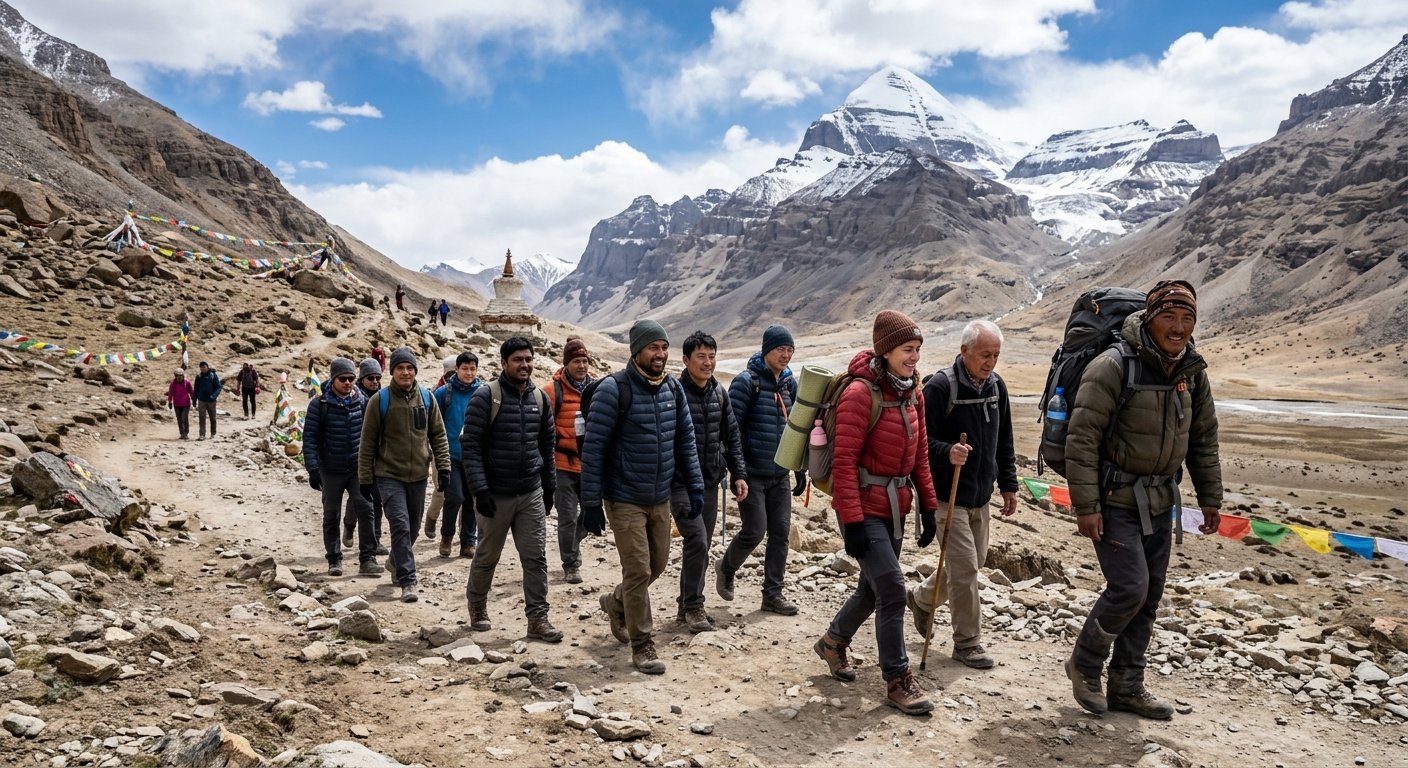
Day 7: Darchen to Dirapuk. Parikrama day one. You walk roughly 20 kilometers over 6-8 hours. The trail is gradual but relentless. You’re walking on rocky paths, crossing streams, gaining elevation slowly. The altitude makes everything harder. Conversations are short. Everyone is breathing hard.
You’ll reach Dirapuk Monastery by late afternoon. The north face of Kailash dominates the view. This is the face most pilgrims dream about. You’ll sit there, exhausted, staring at it. Some pilgrims can’t speak. The presence is that strong.
You sleep in basic guesthouses. Shared rooms, shared bathrooms. Heat is minimal. Toilets are squat-style and often outside. This isn’t comfort travel. Pack wet wipes and hand sanitizer.
Day 8: Dirapuk to Zuthulpuk via Dolma La. This is the hardest day. Period. You climb to Dolma La Pass at 5,630 meters — the highest point of parikrama. The ascent is steep, the air is thin, and every step is work. You’ll stop frequently. Your legs will burn. Your lungs will scream.
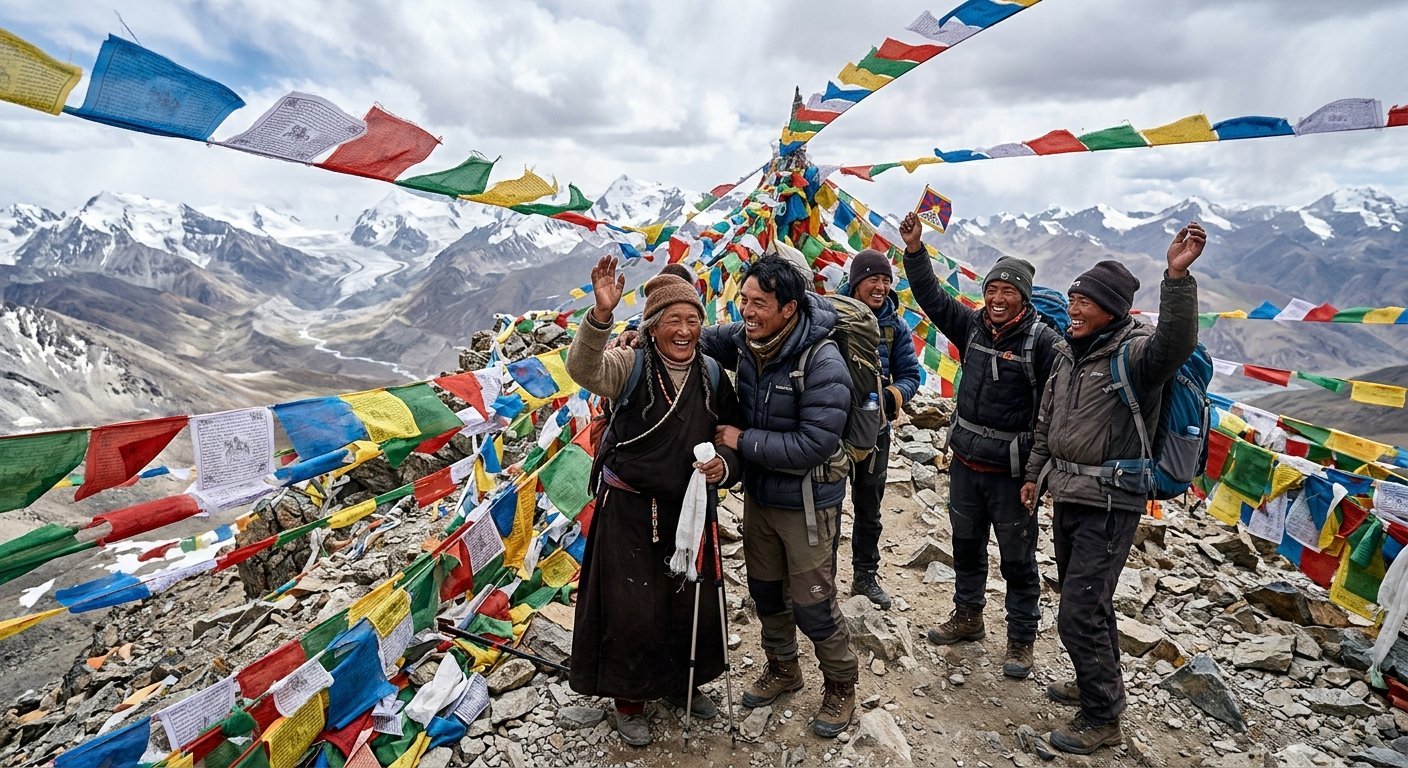
At the top, you’ll see prayer flags stretching in every direction. Pilgrims leave offerings. Some cry. Some pray. Some just stand there, stunned that they made it.
Then comes the descent — sharp, rocky, and hard on your knees. Trekking poles are essential. You’ll walk another 10 kilometers to Zuthulpuk, reaching camp completely spent. This is the day that breaks people or transforms them. There’s no middle ground.
Day 9: Zuthulpuk to Darchen. The final stretch. Roughly 14 kilometers, mostly downhill and flat. You’re exhausted but lighter. Parikrama is nearly complete. By the time you reach Darchen, the weight of what you’ve done starts to settle in. You circumambulated the abode of Lord Shiva. You did it.
Days 10-14: Return journey. You reverse the route — Mansarovar, Saga, Gyirong, Kathmandu. The drive feels longer because you’re tired. But you’re also different. Every pilgrim I’ve guided says the same thing. They left something at Kailash and brought something else back.
How Kailash Pilgrim Supports Seniors and NRI Pilgrims
Here’s where operator choice matters. A lot.
Most commercial tour operators treat Kailash like adventure tourism. They pack groups, minimize costs, rush timelines. If you can’t keep up, that’s your problem. That approach works fine for 30-year-old trekkers. It fails badly for 65-year-old devotees.
At Kailash Pilgrim, we built our entire model around seniors and NRIs because that’s who we are. I’m 50+. I understand what a 60-year-old body needs. I understand what it’s like coordinating international logistics from Melbourne while managing work and family. I’ve done this yatra twenty-three times, and I still prepare for months before each one.
We cap groups at 12-15 pilgrims. Small groups move at human pace. If someone needs to rest, we rest. If someone is struggling with altitude, we adjust. We carry supplemental oxygen, pulse oximeters, and a full medical kit. Our support team includes trained altitude specialists who monitor every pilgrim daily.
We also provide Sherpa support during parikrama. Each pilgrim can hire a personal Sherpa to carry their daypack, assist on difficult sections, and provide experienced guidance. For seniors, this isn’t luxury. It’s the difference between completing parikrama and turning back.
For NRIs, we handle the entire pre-departure process — permits, visas, coordination with consulates in Sydney, London, Dubai, Toronto. We provide preparation guidance starting twelve months before departure, including training plans, altitude conditioning advice, and gear recommendations. We stay in contact through WhatsApp groups so you’re never navigating this alone.
We also understand the spiritual aspect matters more than the Instagram photo. This isn’t a bucket-list trek. It’s a sacred journey. We incorporate morning prayers, visits to monasteries, and time for meditation and reflection. The pace is contemplative, not rushed.
One more thing we do differently. We conduct pre-yatra preparation sessions in person where possible — in Melbourne, Sydney, London. We meet pilgrims face to face, assess fitness levels honestly, and adjust plans if needed. If someone isn’t ready, we tell them. Not to discourage them. To protect them. Kailash will still be there next year. Your health might not be if you push too hard.
Understanding Altitude Acclimatization and Medical Safety
Altitude sickness is real, common, and potentially deadly if ignored. Let’s talk about it honestly.
Acute Mountain Sickness (AMS) is the mild form. Symptoms include headache, nausea, dizziness, fatigue, and trouble sleeping. Most pilgrims experience some level of AMS at Mansarovar or during parikrama. It’s uncomfortable but manageable with rest, hydration, and Diamox.
High Altitude Pulmonary Edema (HAPE) and High Altitude Cerebral Edema (HACE) are the severe forms. HAPE is fluid in the lungs — you’ll hear crackling when breathing, have a persistent cough, feel extreme shortness of breath. HACE is fluid in the brain — severe headache, confusion, loss of coordination, hallucinations. Both are medical emergencies. Both require immediate descent and evacuation.
I’ve seen HAPE once in 23 journeys. The pilgrim ignored early warning signs — worsening breathlessness, cough, fatigue. By the time he admitted he was struggling, he was in crisis. We had oxygen, we had medications, but the only real solution was descent. We evacuated him immediately. He survived, but he could have died.
Here’s how we prevent this. We acclimatize slowly — the gradual road route gives your body time. We monitor every pilgrim with pulse oximeters twice daily. Oxygen saturation below 85 percent is a red flag. We increase oxygen support, reduce activity, and if it doesn’t improve, we make the hard call to evacuate.
We also enforce hydration discipline. At altitude, your body dehydrates faster. You need 4-5 liters of water daily. You won’t feel thirsty. Drink anyway. Dehydration makes altitude sickness worse.
We teach pilgrims the “climb high, sleep low” principle. During acclimatization days, we do short hikes to higher elevations, then return to lower camps to sleep. This trains your body to function in thin air without the prolonged stress of sleeping high too soon.
And we carry contingency plans. We have oxygen concentrators, portable hyperbaric chambers, and established evacuation protocols with helicopter services in Tibet. In two decades, we’ve evacuated three pilgrims. All survived because we acted fast.
One thing I’ll say plainly. If you have a history of cardiac issues, uncontrolled hypertension, severe asthma, or chronic respiratory conditions, consult a high-altitude medicine specialist before booking. Some conditions are absolute contraindications. Kailash won’t compromise for your devotion. Neither will your body.
The 2026 Fire Horse Year: Why This Pilgrimage Is Different
Every twelve years, the Tibetan calendar enters the Fire Horse Year — a rare astrological alignment considered especially auspicious for Kailash Mansarovar Yatra. The next one is 2026.
Tibetan Buddhist tradition holds that completing parikrama during a Fire Horse Year multiplies the spiritual merit thirteen-fold. Whether you subscribe to that belief literally or metaphorically, the effect is real. Pilgrims from across the world time their journey for this alignment. Demand surges.
In 2014, the last Fire Horse Year, permits were oversubscribed by April. Groups that waited until summer to book couldn’t get allocation. The same will happen in 2026. Possibly worse, because travel has rebounded post-pandemic and spiritual tourism to sacred sites is at an all-time high.
For 2026, Kailash Pilgrim is already accepting bookings, and we’re seeing unprecedented early interest. NRIs from Australia, the UK, and Canada are locking in spots a year ahead. If you’re considering 2026, don’t wait. Permits are finite. Once Tibet authorities hit their limit, the door closes.
There’s also alignment with Mahakumbh in 2025. Many pilgrims are planning both — Mahakumbh in early 2025, then Kailash in 2026. If that’s your plan, start preparing now. The physical conditioning for Kailash takes a year. You can’t compress that.
Frequently Asked Questions
How difficult is the Kailash Mansarovar Yatra for someone with no trekking experience?
It’s challenging but achievable if you prepare properly. The parikrama covers 52 kilometers over three days with the highest point at 5,630 meters. You don’t need technical climbing skills, but you do need cardiovascular fitness, leg strength, and altitude tolerance.
Start training twelve months before departure with progressive walking, elevation gain, and load-bearing practice. Pilgrims in their 60s and 70s complete this journey regularly — the difference is preparation, not age. Work with an experienced operator who provides medical support, acclimatization protocols, and Sherpa assistance. Don’t attempt this without proper conditioning.
What is the best time of year for the Mount Kailash pilgrimage?
May through September is the standard season when weather is most favorable and permits are issued. May and June offer clearer skies but colder temperatures, especially at night. July and August are warmer but bring occasional rain. September is ideal — stable weather, moderate temperatures, and fewer crowds.
Avoid attempting Kailash outside this window. Winter conditions make the route dangerous, and permits aren’t issued. For 2026, consider that Fire Horse Year demand will be highest in peak months of June and July. If you have schedule flexibility, late May or September may offer better availability.
Do I need to be Hindu or Buddhist to undertake the Kailash Yatra?
No. Mount Kailash is sacred to Hindus, Buddhists, Jains, and Bon practitioners alike. Pilgrims of all faiths and none are welcome. What matters is respect for the sacred nature of the journey.
This isn’t adventure tourism or a trophy trek — it’s a pilgrimage to one of the world’s most holy sites. Approach it with reverence regardless of your religious background. Operators like Kailash Pilgrim welcome pilgrims from all traditions, and the spiritual experience transcends specific doctrines. The mountain doesn’t ask what you believe. It asks what you’re willing to bring to the experience.
How much does the Kailash Mansarovar Yatra typically cost for NRIs from Australia or the UK?
Full-service packages typically range from AUD 7,000 to AUD 12,000 or GBP 4,000 to GBP 7,000 depending on route, group size, and support level. This includes permits, visas, domestic flights, ground transportation, accommodation, meals, medical support, and guide services.
Helicopter routes cost more but save time. Road routes are longer but allow better acclimatization. International flights to Kathmandu are separate. Budget another AUD 1,500-2,500 for flights from Australia or GBP 500-800 from the UK.
Factor in travel insurance with high-altitude coverage, personal gear purchases, tips for support staff, and contingency funds. Total cost including everything typically runs AUD 10,000-15,000 for most NRI pilgrims booking comprehensive packages.
Begin Your Sacred Journey With Proper Guidance
The Kailash Mansarovar Yatra isn’t something you do on impulse. It’s a commitment — to preparation, to respect for the mountain, to honest assessment of your capabilities. But when you do it right, when you arrive prepared and supported, the experience changes you.
I’ve walked this path twenty-three times, and it still moves me. I still feel the presence of Mahadev at Mansarovar. I still struggle at Dolma La. I still come home different than when I left.
At Kailash Pilgrim, we’ve built everything around making this journey accessible and safe for seniors and NRIs who feel the divine calling but need expert guidance to answer it. We handle the logistics you can’t manage from Sydney or London.
We provide the medical and altitude support that keeps you safe. We move at a pace that honors your body while respecting the sacred nature of parikrama.
If you’re planning for 2026, especially for the Fire Horse Year, reach out now. Permits are limited, and the window is closing. Visit kailashpilgrim-com-385998.hostingersite.com.au to learn more about our packages, our preparation support, and our approach to this sacred journey. Or contact Ms. Shalini Patel directly — she personally leads select journeys and can assess whether you’re ready and what you need to prepare.
Kailash is calling. The question is whether you’ll be ready to answer.