
You can’t fake your way up Mount Kailash.
The altitude doesn’t care about your devotion. The terrain won’t bend to your intentions. And no amount of spiritual preparation will carry you through 52 kilometres of high-altitude parikrama if your body isn’t ready for it.
I’m Shalini Patel, and I’ve completed the Kailash Mansarovar Yatra over 20 times since 1996. Here’s what I’ve learned from every single trip: the pilgrims who struggle aren’t the ones with less faith. They’re the ones who started their Kailash Mansarovar fitness preparation too late, or with the wrong approach entirely.
Most people think three weeks of morning walks will do it. They show up at Mansarovar confident and excited, then struggle on day one of the parikrama. By the time they reach Dolma La Pass at 5,630 metres, some can’t continue. I’ve seen it happen dozens of times, and it’s heartbreaking every single time.
The physical preparation for this journey isn’t optional. It’s foundational. Your spiritual readiness matters deeply, but your body has to be the vehicle that gets you there. This guide walks you through the exact training program we recommend at Kailash Pilgrim — the same one that’s helped hundreds of yatris complete the parikrama safely over 28 years.
Start six months before departure. Not six weeks. Six months minimum.
Why Physical Fitness Actually Matters for High Altitude Pilgrimage
The Kailash Mansarovar Yatra isn’t a typical trek. You’re spending consecutive days between 4,500 and 5,600 metres above sea level. At that altitude, your body gets roughly 50% of the oxygen it’s used to at sea level.
Every single physical task becomes harder. Walking uphill. Carrying your pack. Even digesting food takes more energy than normal.
Here’s what most people miss: altitude doesn’t just make you tired. It makes your heart work harder, your lungs work faster, and your muscles fatigue quicker. If you arrive without a strong cardiovascular base, your body spends all its energy just trying to function. There’s nothing left for the parikrama itself.
I learned this the hard way on my second yatra in 1998. A group member who’d trained only on flat roads around his city struggled terribly on the inclines. His cardio was decent, but his legs had no hill strength. We had to slow the entire group’s pace, and he spent two full days recovering at Diraphuk before attempting Dolma La. He made it, but barely. That experience changed how we design our preparation advice.
Strength and endurance aren’t the same thing. You need both. Cardio gets your heart and lungs ready. Strength training prepares your legs, core, and back for hours of walking with weight on uneven ground. Skip either one, and you’re setting yourself up for trouble.
The other piece nobody talks about: mental resilience comes from physical confidence. When you know your body can handle the distance, the altitude, and the load, your mind stays calmer. Panic and doubt drain energy faster than the trek itself.
Step 1: Build Your Cardiovascular Base (Months 6 to 4 Before Departure)
Start here. Before anything else.
Your goal for the first two months is simple: build aerobic endurance without injuring yourself. Don’t jump into intense workouts. Don’t try to prove anything. Just put in consistent, moderate effort five to six days a week.
Walk for 45 minutes to an hour at a comfortable pace. You should be able to hold a conversation without gasping for air. If you can’t talk, you’re going too hard too soon.
After two weeks, add one longer walk per week — 90 minutes to two hours. Pick a route with some gentle inclines if possible, but don’t obsess over hills yet. The priority right now is time on your feet, not intensity.
By the end of month one, you should be walking six days a week. Five shorter sessions and one longer weekend session. Your body will adapt faster than you expect, but only if you stay consistent.
Here’s the mistake I see constantly: people start strong, go hard for a week, then burn out or get injured. They lose two weeks recovering, restart from scratch, and never build momentum. Steady always beats sporadic.
In month two, start increasing your pace slightly. Not every walk — just two or three per week. You’re aiming for a brisk pace where talking gets harder but still possible. Your heart rate should be elevated but controlled.
Add light jogging if your knees and joints can handle it. Even 10 to 15 minutes mixed into a walk helps. But if running causes pain, skip it entirely. Walking uphill is just as effective and far safer for most people over 40.
By the end of month two, your cardiovascular system should feel noticeably stronger. Stairs won’t wind you. Long walks won’t exhaust you. That’s your foundation.
Step 2: Add Strength Training for Legs and Core (Months 5 to 3 Before Departure)
Cardio alone won’t cut it. You need leg strength to handle continuous uphill and downhill walking, and core strength to carry a backpack without wrecking your posture.
Start with bodyweight exercises three times per week. Don’t skip this step and jump straight to weighted exercises. Master the movement patterns first.
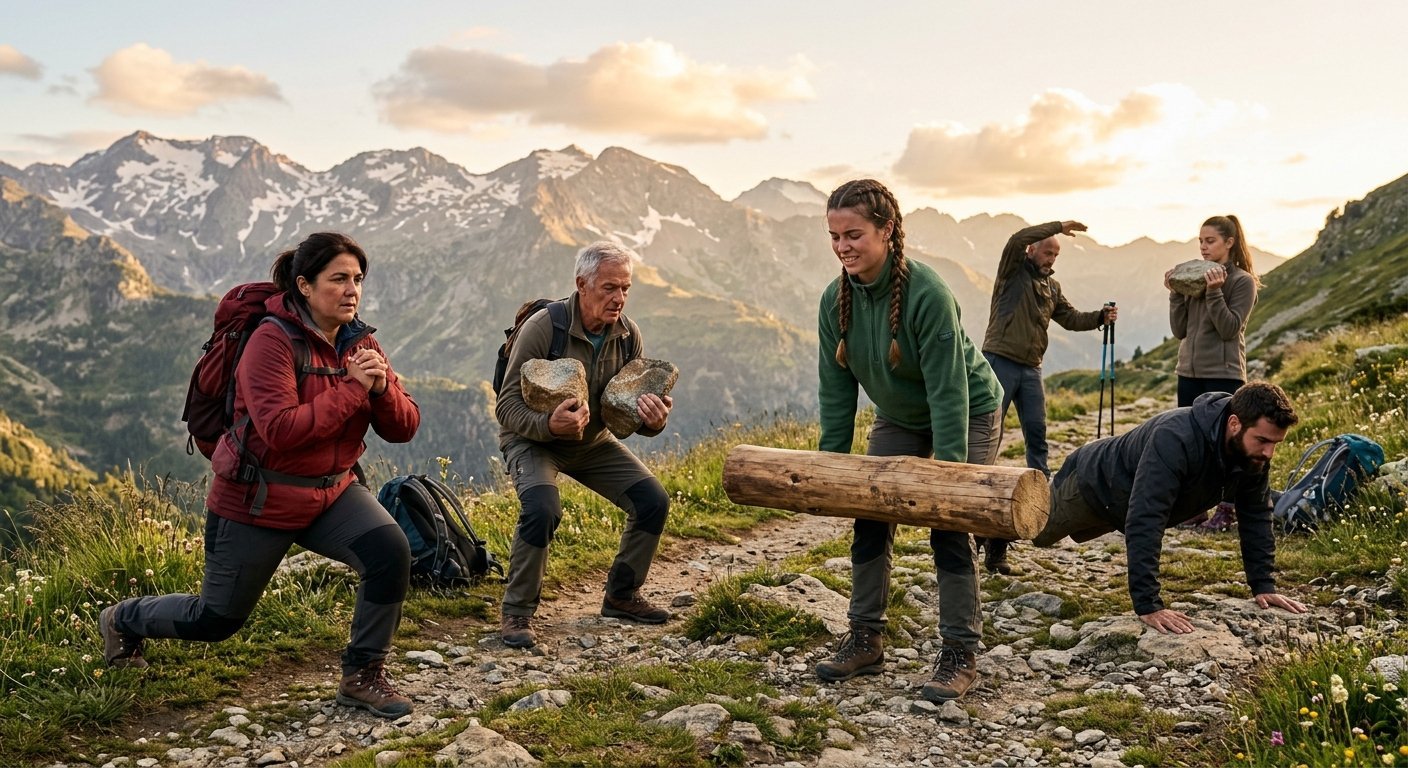
Squats are non-negotiable. Start with three sets of 15 bodyweight squats. Focus on form — knees tracking over toes, back straight, depth as low as comfortable. If your form breaks down, stop the set.
Lunges build single-leg strength, which matters more than people realise. The terrain around Kailash is uneven. You’ll constantly step up onto rocks, down into dips, and across loose ground. Lunges prepare you for that. Do three sets of 10 per leg, alternating.
Planks strengthen your core without stressing your back. Hold a plank for 30 seconds, rest, repeat three times. Add five seconds each week. By month four, you should be able to hold a solid plank for 90 seconds or more.
Step-ups are the single best exercise for trekking. Find a sturdy bench or step about knee height. Step up, step down. Three sets of 15 per leg. Add a light backpack after two weeks. This directly mimics what you’ll do on the parikrama.
One session per week, add weighted exercises if you have access to a gym. Goblet squats with a kettlebell or dumbbell, Romanian deadlifts with light weight, and weighted step-ups all build the kind of strength you’ll actually use.
Push-ups strengthen your upper body and core simultaneously. Even if you can only do five, start there. Work up to three sets of 10 to 15. You’ll be surprised how much upper body endurance matters when using trekking poles for hours.
Here’s what you’re watching for: muscle soreness is fine. Joint pain is not. If your knees, hips, or ankles hurt during or after a workout, reduce intensity immediately. Strength training should make you stronger, not injured.
Step 3: Train With a Loaded Backpack (Months 4 to 2 Before Departure)
This is where most preparation programs fail. People train without weight, then suddenly carry 8 to 10 kilograms during the yatra. Their back, shoulders, and hips aren’t ready. They develop pain within hours.
Start adding weight to your walks in month four. Begin with just 3 to 4 kilograms in a backpack. Walk your usual route. Pay attention to how the weight shifts your posture and balance.
Every week, add another kilogram. By month three, you should be comfortably walking 6 to 8 kilometres with 8 kilograms on your back. That’s the minimum you’ll carry during parikrama — water, snacks, extra layers, personal items.
One walk per week, push it further. Carry 10 kilograms and walk for two hours. This slightly overprepares you, which means the actual yatra feels manageable instead of maxed out.
Watch your posture obsessively. The backpack should sit high on your back with the weight on your hips, not your shoulders. Adjust your straps until it feels stable. If you feel strain in your lower back, the pack is too low or too heavy.
Walk on uneven ground whenever possible. Parks with trails. Dirt paths. Anywhere that isn’t flat pavement. You need your ankles and stabiliser muscles ready for rocky, uneven terrain.
I’ve guided groups where people trained only on treadmills or smooth tracks. The moment they stepped onto the rocky path near Yam Dwar, they struggled with balance. Uneven ground requires different muscles and coordination. Train on the surface you’ll actually face.
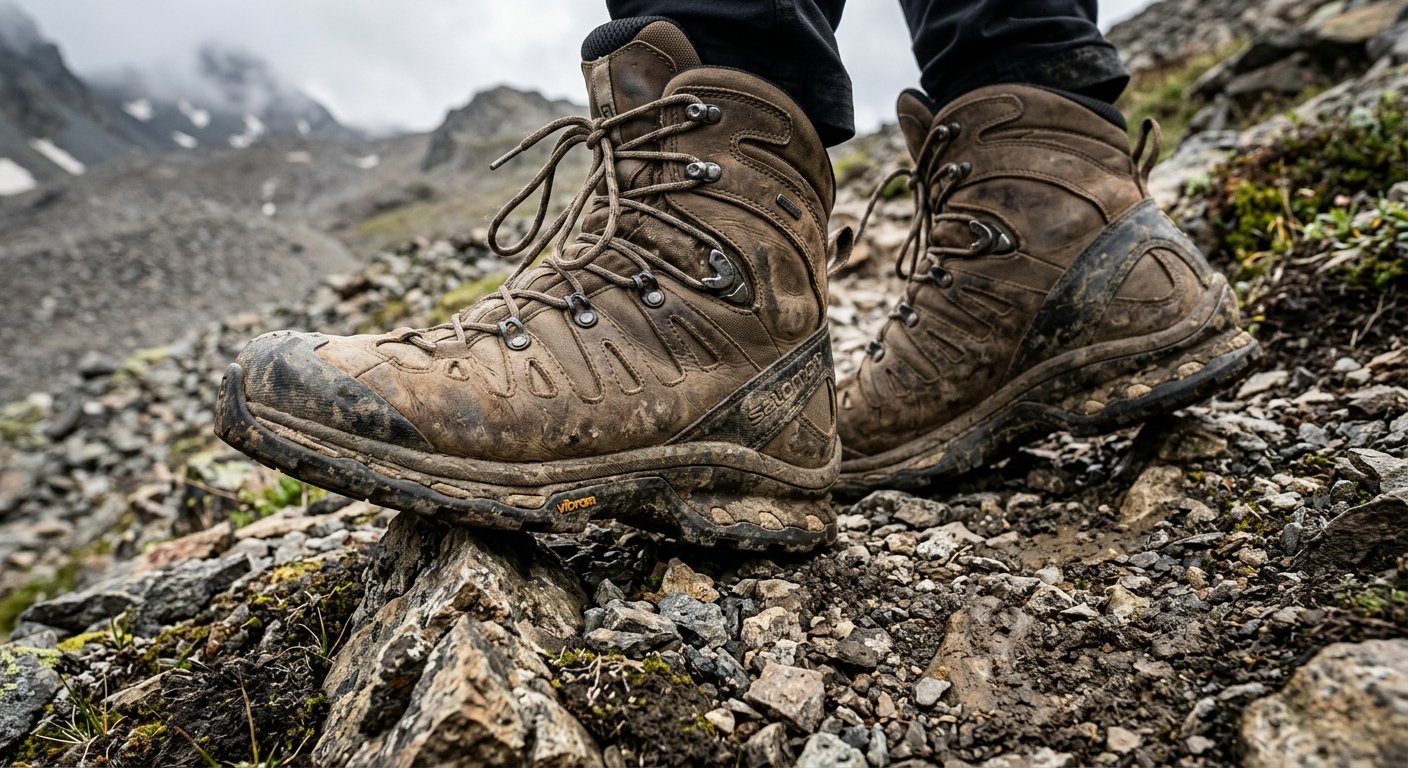
One more thing: test your actual trekking boots during these walks. Break them in completely. Blisters on day one of parikrama are entirely preventable, but only if you’ve walked 50-plus kilometres in your boots beforehand.
Step 4: Incorporate Hill and Stair Training (Months 3 to 1 Before Departure)
Flat-ground fitness doesn’t translate to uphill endurance. You need hill-specific conditioning, and the last three months are when you build it.
If you live near hills, walk them twice a week. Start with moderate inclines, 20 to 30 minutes uphill. Don’t sprint. Keep a steady, sustainable pace. Breathe deeply and rhythmically.
No hills nearby? Use stairs. Find a building, stadium, or public staircase. Walk up for 20 minutes continuously, then walk back down. Your quads will burn. That’s the point.
Downhill training matters just as much as uphill. The descent from Dolma La to Zuthulphuk is brutal on your knees and quads. If you haven’t trained for downhill, you’ll be in serious pain by the bottom. Walk down hills slowly and with control. Let your legs absorb the impact, not your joints.
Add weighted hill walks in month two of this phase. Carry your 8-kilogram pack uphill for 45 minutes. This is the closest training you can get to the actual parikrama without being at altitude.
One mistake I see often: people train uphill speed. They want to prove they can power up a slope fast. That’s not what Kailash requires. The parikrama is about sustained moderate effort for hours, not short bursts. Train your pace, not your sprint.
By month one before departure, you should be able to walk uphill with a loaded pack for 60 to 90 minutes without needing frequent breaks. Your breathing should be heavy but controlled. Your legs should feel worked but not destroyed.
Step 5: Simulate Multi-Day Trekking (Month 1 Before Departure)
The parikrama isn’t one hard day. It’s three consecutive days of long walking at altitude. Your body needs to know what back-to-back effort feels like.
In the final month, do at least two back-to-back training weekends. Walk 8 to 10 kilometres with your loaded pack on Saturday. Then do it again on Sunday. Don’t rest between.
You’re teaching your body to recover quickly and perform while slightly fatigued. This is exactly what happens during the yatra. Day two of parikrama is harder than day one because your legs are already tired.
Watch how your body responds. Do your feet develop hot spots? Does your pack rub anywhere? Are you hydrating enough? These are the details you fix now, not in Tibet.
If possible, do one weekend where you walk three days in a row. It’s tough, but it’s the best preparation for the real thing. By day three, you’ll know your weak points. Address them.
Sleep matters during this phase. Your muscles repair while you sleep. If you’re not getting seven to eight hours, your training will suffer and your risk of injury goes up.
Nutrition matters too. Eat enough protein to support muscle recovery. Stay hydrated during and after every training session. The habits you build now carry over to the yatra itself.
Step 6: Focus on Breathing and Altitude Training for Kailash Yatra (Months 2 to Departure)
You can’t simulate real altitude at sea level, but you can train your lungs and breathing patterns.
Practice slow, deep breathing during every walk. Inhale for four counts, exhale for six counts. This controlled breathing helps you stay calm when your body is working hard, and it’s exactly what you’ll rely on at high altitude.
If you have access to a pool, swim laps once or twice a week. Swimming builds lung capacity and teaches breath control under exertion. It’s one of the best cross-training activities for high altitude trekking fitness.
Breath-holding exercises help too, but don’t overdo them. Inhale fully, hold for 10 seconds, exhale slowly. Repeat 10 times. This strengthens your diaphragm and improves oxygen efficiency.
Some pilgrims ask about altitude simulation masks. Honestly, they’re not necessary. Real altitude acclimatization happens on the ground in Tibet, not in training. What you can control is your lung strength and breathing technique — that’s where your focus should be.
The final two weeks before departure, ease off heavy training. Walk daily, but lighter and shorter. Let your body rest and repair. You want to arrive in Nepal or Tibet fresh, not exhausted from overtraining.
Common Training Mistakes That Hurt Pilgrims on Kailash Parikrama
Starting too late is the biggest one. I’ve met pilgrims who decided to join the yatra six weeks before departure and tried to cram six months of training into one. Their bodies weren’t ready. Some completed parikrama but suffered the entire way. Others couldn’t finish.
Training only indoors is another trap. Treadmills and gyms are useful, but they don’t prepare you for wind, cold, uneven ground, and the mental challenge of walking for hours outside. Get outside for at least half your training.
Ignoring strength work is common, especially among older pilgrims. They assume cardio is enough. It’s not. Weak legs and core lead to poor posture, back pain, and increased injury risk on rough terrain.
Overtraining in the final month is surprisingly frequent. People panic and double their effort right before departure. They arrive injured or exhausted. The last month should taper intensity, not increase it.
Not testing gear during training is inexcusable. Your boots, backpack, trekking poles, and layers should all be broken in and tested during training walks. Don’t discover a problem on day one of parikrama.
Skipping rest days burns people out. Your body builds strength during recovery, not during the workout itself. Train hard, but rest smart. Five to six training days per week is plenty. More isn’t better.
What to Watch for as You Train: Signs You’re on Track or Need to Adjust
Good signs: You’re completing training sessions feeling worked but not wrecked. Your resting heart rate is dropping. You recover faster between sessions. Stairs and hills that used to wind you now feel manageable. Your sleep quality improves.
Warning signs: Joint pain that doesn’t go away after rest. Constant fatigue even on rest days. Loss of appetite or poor sleep. Persistent muscle soreness beyond normal post-workout ache. Any sharp pain during exercise.
If you see warning signs, back off immediately. Take three to five days of complete rest. If pain persists, see a physiotherapist or sports doctor. Pushing through injury will only make it worse and could force you to cancel the yatra entirely.
Track your progress somewhere simple — a notebook or phone app. Log your daily walk distance, time, weight carried, and how you felt. Patterns become obvious when you write them down.
One metric I always tell pilgrims to watch: perceived exertion. If a walk that felt hard two months ago now feels moderate, you’re improving. If the same distance feels harder over time, something’s wrong — you’re either overtraining, not recovering, or developing an injury.
Your Final Month Checklist Before Departure
By now, you should be walking 8 to 10 kilometres comfortably with 8 to 10 kilograms on your back. You should be able to do this on consecutive days without major soreness.
Your boots should be fully broken in. No rubbing, no blisters. If they’re not comfortable now, get new boots immediately and start breaking them in. You have one month left.
Your backpack should sit properly and feel stable even when moving quickly or stepping over obstacles. Adjust straps now, not in Tibet.
Test all your clothing layers during a long cold-weather walk. Make sure nothing chafes, restricts movement, or causes discomfort after three hours of walking.
Confirm you can maintain steady deep breathing during exertion. Practice this every single training walk for the next month.
Do at least one final back-to-back weekend walk in week three of the final month. Then rest for the final 10 days. Light walks only. Let your body fully recover before departure.
Get a health check if you’re over 50 or have any pre-existing conditions. Make sure your doctor confirms you’re cleared for high-altitude trekking.
Frequently Asked Questions
Can I complete Kailash Mansarovar Yatra if I’m over 60 years old?
Yes, absolutely. Age isn’t the barrier — fitness is. I’ve guided pilgrims in their late 60s who trained properly and completed parikrama without major difficulty. Start training at least eight months before departure, focus heavily on joint health and flexibility, and consult your doctor before beginning any high-intensity program. Older pilgrims often do better than younger ones because they pace themselves better and don’t try to rush.
How do I train for altitude if I live at sea level?
You can’t replicate real altitude, but you can arrive as fit as possible so your body adapts faster once you’re there. Focus on maximum cardiovascular conditioning and lung capacity work through swimming, cycling, and long walks. Practice controlled breathing during all training. The fitter your heart and lungs are at sea level, the better they’ll perform at altitude. Our preparation program includes gradual acclimatization stops in Tibet before parikrama begins.
What if I can’t walk hills because my area is completely flat?
Use stairs. Find a tall building, stadium, or public stairwell and walk up and down repeatedly. Stair training is actually more intense than most hills, so it’s excellent preparation. You can also increase the incline on a treadmill if you have gym access. The key is training your legs and cardiovascular system for sustained uphill effort under load.
Should I train differently if I’m doing the helicopter route versus overland?
The helicopter route is shorter but still demanding. You’ll still spend days at high altitude and complete the 52-kilometre parikrama. Your training program should be identical — six months of cardio, strength work, weighted walks, and hill training. The only difference is you’ll have slightly less time to acclimatize, which means arriving in peak physical condition matters even more.
Start Your Kailash Mansarovar Fitness Preparation Today With Expert Guidance
Physical readiness isn’t separate from spiritual preparation. It’s part of it. Your body is the vehicle for this sacred journey, and preparing it properly is an act of devotion in itself.
At Kailash Pilgrim, we’ve helped hundreds of pilgrims prepare for and complete the Kailash Mansarovar Yatra safely over 28 years. We don’t just hand you a packing list and wish you luck. Our one-year preparation program includes detailed fitness guidance, monthly check-ins, and personalized advice based on your age, current fitness level, and health conditions.
The 2026 Tibetan Horse Year is a once-in-12-years opportunity to complete this parikrama. It’s also the Mahakumbh of Mount Kailash. Thousands of pilgrims will make the journey. The ones who prepare properly will have a transformative experience. The ones who don’t will struggle.
Start your training today. Six months from now, you’ll be grateful you did. Contact Kailash Pilgrim to learn more about our preparation program and join a small private batch led by experienced guides who’ve completed this journey over 20 times. Your physical preparation for Mansarovar trek conditioning begins now, not when you arrive in Tibet.
50-60 characters
Kailash Mansarovar Fitness Preparation: Training Guide
140-160 characters
Complete step-by-step fitness training guide for Kailash Mansarovar Yatra. Build strength, endurance & altitude readiness in 6 months. Start today.