You’re reading tour operator websites. Everyone quotes different numbers. Some packages look cheap. Others sound suspiciously expensive. And you’re sitting there wondering — what does this pilgrimage actually cost, and what am I really paying for?
Let me cut through the confusion. I’m Shalini Patel, founder of Kailash Pilgrim. I’ve completed the Kailash Mansarovar Yatra 28 times since 1996. I’ve seen NRIs overpay for services they never received, and I’ve watched pilgrims underspend and suffer consequences at 19,000 feet. There’s a right way to budget for this journey, and it has nothing to do with finding the cheapest operator.
The Kailash Mansarovar Yatra cost for NRIs in 2026 ranges between USD 4,500 and USD 12,000 depending on the route you take, the level of medical support you need, and whether you’re traveling during the Fire Horse Year peak season. But here’s what most operators won’t tell you — the package price is only about 70% of your total spend. The real cost includes pre-yatra preparation, medical clearances, altitude gear, travel insurance that actually covers high-altitude evacuation, and the time you’ll need off work. This article breaks down every expense you’ll face, the pricing traps NRIs fall into, and what actually justifies a higher package cost versus what’s just markup.
Why NRI Packages Cost More Than Domestic India Packages — And Why That’s Not Always Wrong
First thing you’ll notice: the same yatra costs more if you book from Australia, the UK, or the USA. That feels unfair. Sometimes it is. But not always.
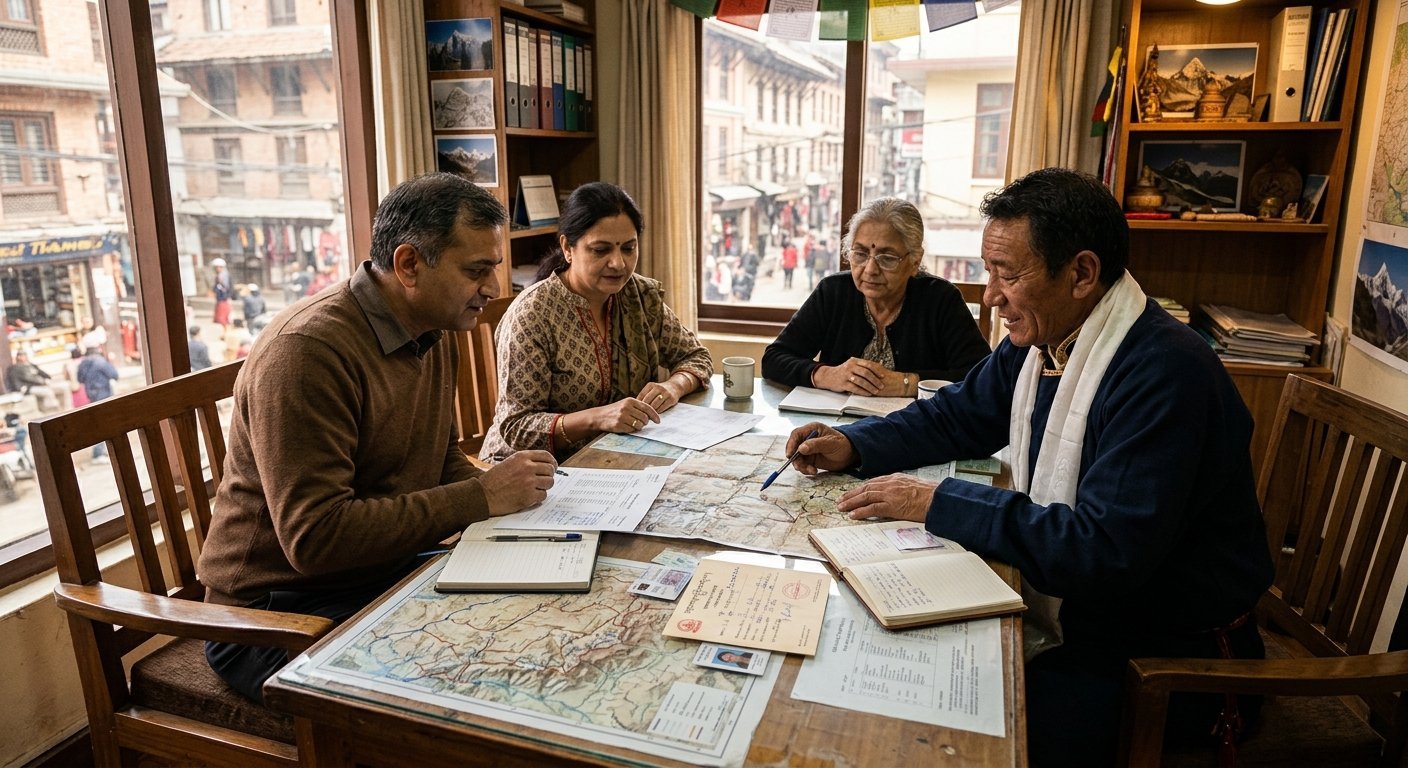
NRI packages genuinely include coordination work that domestic packages don’t. You need visa facilitation from your home country. You need Tibet permit coordination that accounts for different passport processing times. You need someone managing international flight connections, often through multiple time zones. You need 24/7 WhatsApp support when you’re messaging from Sydney at midnight, which is morning in Kathmandu. You need currency conversion handled cleanly, travel insurance liaising with international providers, and often dietary accommodations that domestic group tours don’t bother with.
At Kailash Pilgrim, about 85% of our clients are NRIs. The price difference between our NRI packages and domestic packages is about USD 800 to USD 1,200. That’s not profit padding. That’s administrative reality. We employ dedicated coordinators who handle international documentation, maintain relationships with consulates in five countries, and provide pre-departure calls across six time zones.
But here’s where the trap opens: some operators charge NRIs double the domestic rate and deliver identical service. They bank on the fact that you can’t easily verify what’s standard. One NRI client came to us after paying USD 9,000 for a package that was listed at INR 2,80,000 (roughly USD 3,400) on the operator’s India site. Same dates. Same itinerary. Same inclusions. That’s not international coordination cost. That’s exploitation.
Ask bluntly: what exactly am I getting for the price difference between your NRI package and your India package? If the operator can’t list specific services, walk away.
The Real Cost Breakdown: Road Route vs Helicopter Route vs Fire Horse Year Premium
Let’s talk numbers. Not ranges. Actual breakdowns.
Road Route (Kathmandu to Kailash): USD 4,500 to USD 6,500 for NRIs in 2026. This is the classic overland journey. You’re looking at 12 to 14 days total. This includes ground transport in Nepal and Tibet, permits, basic accommodation (guesthouses, not luxury lodges), group meals, Sherpa support, and oxygen cylinders. It does not include your international flight to Kathmandu, pre-yatra medical tests, altitude medication, or travel insurance.
What drives the price up within that range? Group size, mostly. A 15-person group can offer this at USD 4,500. A 6-person group needs to charge USD 6,000 because transport and guide costs are fixed. Departure month matters too. May and June are peak. Some operators charge USD 500 to USD 800 more during those windows.
Helicopter Route (Kathmandu to Hilsa, then road to Kailash): USD 7,500 to USD 9,500. You skip the long overland drive to the Tibet border. A helicopter drops you at Hilsa or Simikot. This cuts about three days of rough roads. It sounds like pure luxury, but here’s the friction we’ve seen: helicopter routes are weather-dependent. Flights get delayed or canceled regularly during monsoon edges in late June and early July. One group we coordinated in 2024 spent two extra days in Kathmandu waiting for weather clearance. Those hotel nights, meals, and rebooking fees? Not included. They paid another USD 400 per person.
If you’re over 65, have any cardiac history, or simply can’t handle 10-hour drives on unpaved roads at altitude, the helicopter route isn’t luxury. It’s medical sense. But factor in contingency budget for delays.
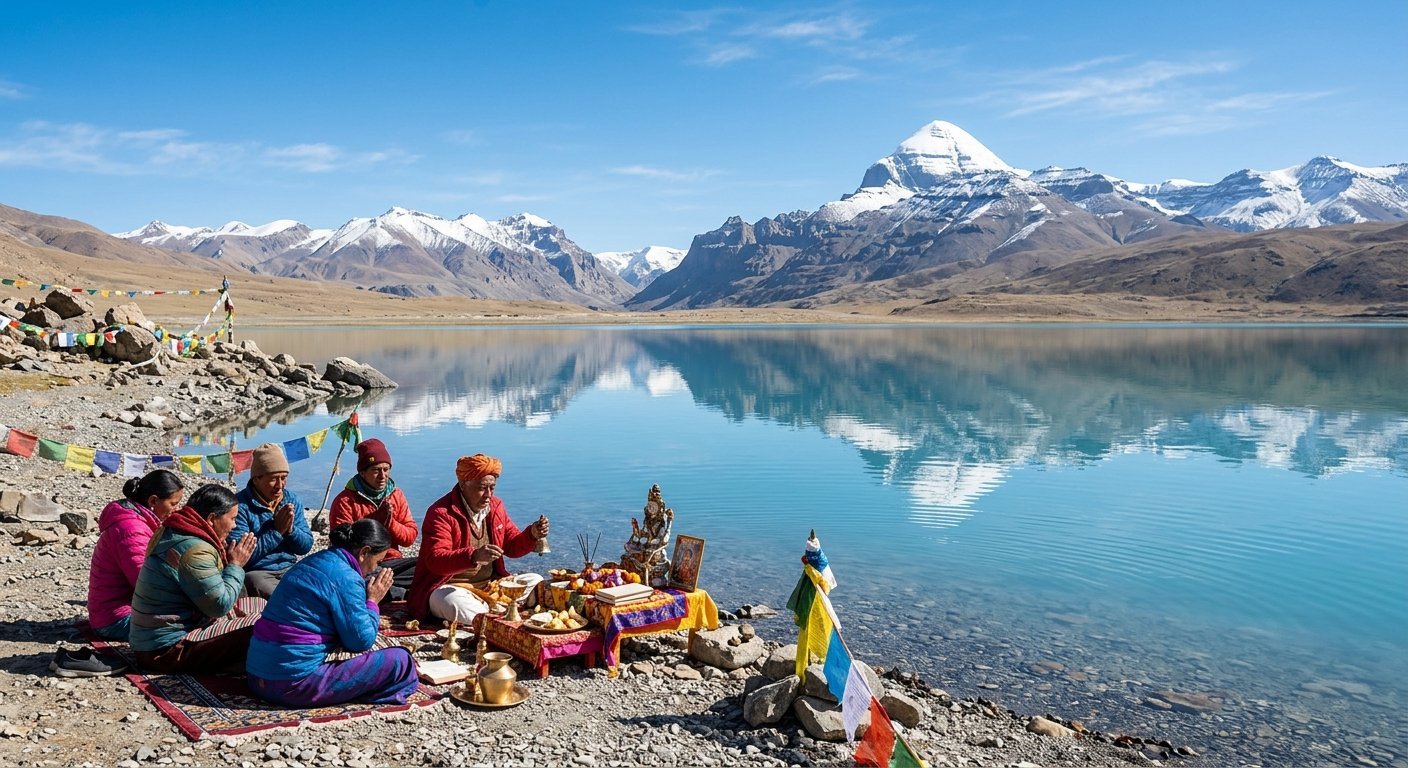
2026 Fire Horse Year Packages: USD 9,000 to USD 12,000. This is the Tibetan Fire Horse Year — it happens once every 12 years. Pilgrimage during this year is considered 12 times more spiritually potent. Demand is insane. We’ve already had 60% more inquiries than a normal year. Prices reflect that demand, but also the reality that permits are harder to get, group sizes are bigger, and infrastructure in Tibet gets strained. Operators who run Fire Horse packages are booking Tibetan transport and hotels a year in advance, often paying premiums themselves.
Is the spiritual significance real? That’s between you and your faith. Is the price markup justified? Partly. Some operators are adding USD 2,000 just because they can. Others are genuinely passing on increased ground costs. Ask for the cost breakdown in writing.
What’s Included in the Package Price — And What Gets Conveniently Left Out
This is where NRIs get burned. You see “all-inclusive package” and assume it means all-inclusive. It doesn’t.
Standard inclusions across most legitimate operators: Tibet Travel Permit, Nepal visa facilitation (note: facilitation, not the visa fee itself), all ground transport from Kathmandu onward, group accommodation, group meals (usually vegetarian, sometimes bland), Sherpa or Tibetan guide support, basic oxygen cylinder access, and a Chinese-government-approved Tibetan liaison officer.
What’s almost never included but should be in your budget:
International flights to and from Kathmandu. Budget USD 800 to USD 2,000 depending on where you’re flying from. Australia to Kathmandu round-trip generally sits around USD 1,200 to USD 1,600. UK or USA routes can run higher if you’re booking late.
Travel insurance with high-altitude evacuation coverage. Standard travel insurance caps out at 6,000 meters. Kailash parikrama reaches 5,630 meters at Dolma La Pass, but you’re spending days above 4,500 meters. You need specialized insurance. Budget USD 250 to USD 400. Companies like World Nomads and IMG offer high-altitude add-ons. Read the fine print. Some exclude “non-guided trekking.” If your operator doesn’t provide a certified guide at Dolma La, your evacuation claim could be denied.
Altitude medication. Diamox (acetazolamide) is standard. Your doctor might also prescribe dexamethasone as emergency backup. Budget USD 50 to USD 100 for medications, plus the consultation fee. Some NRIs assume they can buy this over the counter in Kathmandu. You can. But quality is hit-or-miss, and you don’t want to be experimenting with medication the day before you cross into Tibet.
Pre-yatra medical tests. You’ll need an ECG, chest X-ray, and full blood panel. Some operators require a cardiologist clearance if you’re over 60. Budget USD 200 to USD 300 if you’re doing this in Australia or the UK. It’s cheaper in India, but you need time to get it done during a pre-yatra visit.
Personal trekking gear. Good-quality trekking boots, layered thermals, a down jacket rated for minus 15°C, a sleeping bag liner (guesthouses provide blankets but not always clean ones), UV-protection sunglasses, high-SPF sunscreen, a headlamp, and a trekking pole. Budget USD 300 to USD 600 if you’re starting from zero. Don’t cheap out on boots. Blisters at 5,000 meters turn into open wounds.
Tips for Sherpas, drivers, and guides. This is culturally expected. Budget USD 150 to USD 200 total across the journey. Some group tours collect this as a pool. Others leave it to individuals.
One Kailash Pilgrim client from Melbourne called me frustrated in 2025. She’d paid USD 5,500 for a package listed as “all-inclusive.” When she landed in Kathmandu, she discovered she had to pay separately for her sleeping bag rental, oxygen mask (as opposed to cylinder access), and premium room upgrades because the “included” accommodation was dormitory-style. She spent another USD 900 on-ground. That’s not a deal. That’s bait-and-switch.
Ask your operator for a written list of exclusions. If they hesitate, that’s your red flag.
How Group Size and Departure Month Swing Your Final Cost
You’d think a yatra is a yatra. Same route, same destination, same permits. Why does one group pay USD 5,000 and another USD 7,500?
Group size is the silent cost driver. A 20-person group shares fixed costs — buses, permits, guide salaries, liaison officers. Per-person cost drops. A 6-person group pays nearly double per person for identical logistics.
At Kailash Pilgrim, we run groups of 10 to 15. That’s the sweet spot. Small enough for personalized attention and flexible pacing. Large enough to keep costs reasonable. I’ve seen operators pack 35 people into a single group to maximize profit. That’s not a pilgrimage. That’s a convoy. You lose the spiritual intimacy. You’re stuck to a rigid schedule. And if someone in a 35-person group falls sick, the entire group waits or that person gets left behind with minimal support.
Departure month matters more than most NRIs realize. May and early June are peak season. Weather is stable. Permits are available. But prices are highest. Late June and July edge into monsoon risk on the Nepal side. August is considered off-season — fewer groups, lower prices, but weather unpredictability. September is beautiful and underrated. Prices drop about 15% compared to May. Crowds thin. But you’re racing against early snow in high passes.
2026 Fire Horse Year throws the normal calendar out. Every month from April through September will see elevated demand. We’re already seeing April and May packages priced like premium months. If your dates are flexible, consider late August or early September. You’ll save USD 1,000 to USD 1,500, and the pilgrimage experience is often better because you’re not stuck in a queue of 12 groups at Mansarovar.
Hidden Costs That Catch NRIs Off Guard After They’ve Paid the Deposit
This is the section most operators hope you skip.
Visa fees. Your package includes visa facilitation. It does not include the visa fee itself. Nepal visa for most NRI passport holders: USD 50 for 30 days. Tibet permit is bundled into package costs, but if you’re traveling on certain passports (particularly Pakistani or Bangladeshi origin), processing can cost an extra USD 200 to USD 300. Operators should tell you this upfront. Many don’t.
Currency conversion losses. You’re paying in USD or AUD or GBP. Your operator is settling costs in Nepali Rupees and Chinese Yuan. If they’re using unfavorable conversion rates or adding conversion fees, you’re losing 3% to 5% quietly. One client paid USD 6,000. The operator converted at a rate that was 4% worse than the mid-market rate. That’s USD 240 gone. Ask what exchange rate they’re using and whether conversion fees apply.
Single occupancy supplement. Most packages assume twin-sharing rooms. If you’re traveling solo and want your own room, expect to pay USD 500 to USD 800 extra across the journey. Some operators charge up to USD 1,200. That’s excessive unless you’re getting genuinely premium accommodation.
Medical evacuation if insurance doesn’t cover it. Helicopter evacuation from Mansarovar or Dolma La to Kathmandu can cost USD 10,000 to USD 25,000. If your insurance denies the claim (and they will if you didn’t read the exclusions), you’re paying out of pocket. One of our 2023 clients had a cardiac episode at Dolma La. His insurance covered it because he’d bought high-altitude coverage and we provided documented proof of guided support. The family later told me that without coverage, the evacuation bill was USD 18,000. Budget for the right insurance. It’s not optional.
Contingency days in Kathmandu. Weather delays. Permit processing delays. Road blockages. You might need extra nights in Kathmandu on either end. Budget USD 100 to USD 150 per extra day for hotel, meals, and incidentals. We always tell clients to keep three buffer days in their schedule. Most don’t listen. Then they’re rebooking international flights at penalty rates.
Oxygen mask and cylinder refills beyond the quota. Most packages include limited oxygen cylinder access — maybe two or three refills during the high-altitude portions. If you’re struggling and need more, you’re paying per refill. Budget USD 30 to USD 50 per cylinder. Operators don’t mention this because they assume you won’t need it. But about 30% of our NRI clients over 60 do.
What Actually Justifies a Higher Package Price — And What Doesn’t
Not all USD 7,000 packages are created equal. Some are worth it. Some are robbery.
Justified higher cost:
Smaller group size. If the operator caps groups at 10 to 12 people and provides two guides instead of one, you’re paying for safety and attention. That’s worth USD 800 to USD 1,000 extra.
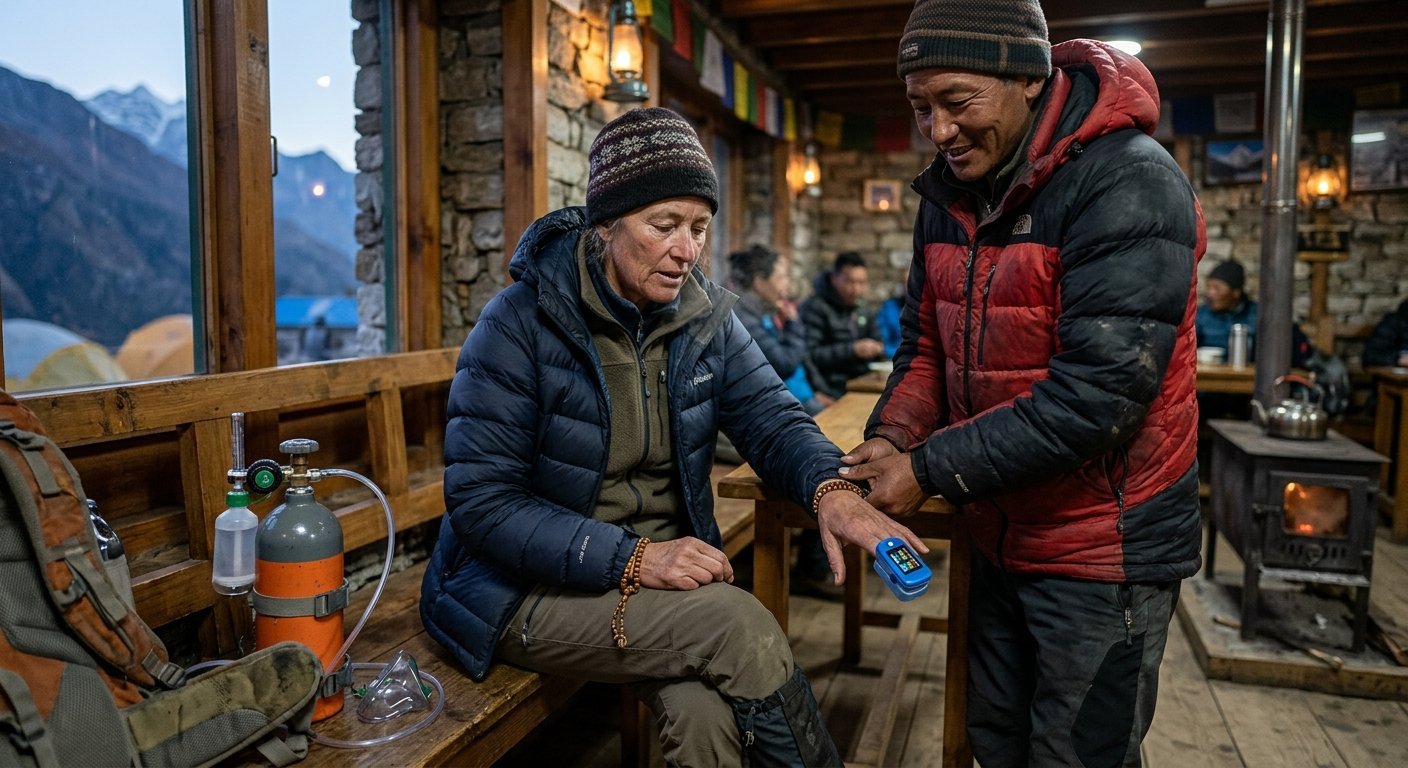
Medical preparedness. If the package includes a qualified paramedic or a doctor traveling with the group, portable oxygen concentrators (not just cylinders), a pulse oximeter check twice daily, and a clear evacuation protocol, that’s worth USD 1,200 to USD 1,500 premium. I’ve been on yatras where operators had zero medical support. Someone developed pulmonary edema at 5,200 meters. We lost eight hours stabilizing them with our oxygen supplies while waiting for help. That person survived because we had equipment and training. Their operator didn’t.
Pre-yatra preparation program. Kailash Pilgrim runs a 12-month prep program — physical training guidance, altitude acclimatization advice, spiritual prep sessions, diet recommendations, and monthly check-ins. That’s built into our package cost. It raises the price by about USD 600. But our clients arrive ready. Their success rate at completing the parikrama is above 90%. Operators who just hand you an itinerary and say “see you in Kathmandu” have completion rates closer to 70%. The difference is preparation.
Acclimatization days built into the itinerary. Cheap packages rush you. You land in Kathmandu, drive to the Tibet border the next day, and you’re at 4,500 meters within 48 hours. That’s how people get altitude sickness. Quality packages build in acclimatization stops — an extra day in Nyalam, a gradual ascent profile, rest days before Dolma La. That adds two to three days to the itinerary. It raises the cost by USD 700 to USD 1,000. It also dramatically cuts your health risk.
Unjustified markup:
“Luxury” accommodation claims. Some operators charge USD 9,000 and promise luxury lodges. There are no luxury lodges between Saga and Darchen. You’re staying in guesthouses. They might be cleaner. They might have attached bathrooms. But they’re not luxury. If an operator is charging USD 3,000 more than competitors and citing luxury accommodation as the reason, ask for photos and guest reviews. You’ll usually find it’s the same guesthouses everyone uses.
“Exclusive” permits. Some operators claim they have special access or exclusive permits that justify higher costs. Unless you’re booking a private chartered journey with Tibetan government VIP coordination (which costs upwards of USD 30,000), permits are permits. They’re processed through the same channels. This is marketing fluff.
Celebrity endorsements or influencer partnerships. If the package cost is inflated because a yoga guru or spiritual influencer is “leading” the yatra, evaluate carefully. Are they actually trekking with you every day, or are they showing up for a photoshoot at Mansarovar? We’ve seen operators add USD 2,000 to package costs for a celebrity name. The celebrity spent two days with the group and flew back. That’s not leadership. That’s branding.
How to Evaluate a Package Quote — What to Ask Before You Pay Anything
You’ve received three quotes. They all look reasonable. How do you pick?
Here’s the checklist I use when NRIs ask me to review a competitor’s quote:
Ask for the day-by-day itinerary with altitude levels. If the operator can’t provide altitude details for each stop, they’re not thinking about acclimatization. Red flag.
Ask what the group size cap is. If they say “we adjust based on demand,” that means they’ll pack as many people as possible. You want a hard cap. 15 maximum.
Ask who the ground operator is in Tibet. Most operators don’t run logistics themselves. They contract a Tibetan ground operator. You want the name. You want to verify that operator’s track record. If your operator won’t tell you, they’re either hiding something or they don’t know themselves.
Ask what happens if you need to leave the group due to illness. What’s the evacuation protocol? Who pays for it? What support do you get? If the answer is vague, you’re on your own.
Ask how many times the owner or lead coordinator has personally completed the yatra. This is the trust question. If the person selling you the package has never been to Kailash, you’re buying from a reseller. At Kailash Pilgrim, I’ve done this journey 28 times. I know every guesthouse. I know which Tibetan drivers are safe and which aren’t. I know what can go wrong and how to fix it. That knowledge is built into our service. It’s not in a brochure.
Ask for two references from NRI clients who’ve completed the yatra in the past year. Legitimate operators will connect you. Shifty ones will make excuses.
Ask what’s excluded in writing. If they won’t put exclusions in the contract, don’t sign.
Total Budget Reality Check: What an NRI Should Actually Set Aside for Kailash Mansarovar Yatra in 2026
Let’s build the real number. Not the package cost. The total cost.
Base package (road route, mid-tier operator): USD 5,500
International flight (Australia to Kathmandu return): USD 1,400
Travel insurance with high-altitude coverage: USD 350
Pre-yatra medical tests and consultations: USD 250
Altitude medication: USD 80
Trekking gear (boots, thermals, jacket, accessories): USD 450
Visa fees: USD 50
Tips for guides and support staff: USD 180
Contingency buffer (extra hotel nights, meals, transport): USD 400
Total: USD 8,660
That’s your realistic budget for a standard road-route yatra in 2026 as an NRI. If you’re going helicopter route, add USD 2,500. If you’re going Fire Horse Year peak season, add another USD 1,500 to USD 2,000.
Most NRIs I talk to initially budget USD 6,000. They’re shocked when the real number is closer to USD 9,000. But here’s the thing: this is not a holiday. This is a once-in-a-lifetime pilgrimage. Underspending is dangerous. I’ve watched people skip travel insurance to save USD 300. I’ve seen someone wear cheap boots to save USD 100 and end up with blisters so bad they couldn’t complete the parikrama. Penny-pinching on Kailash is not frugality. It’s risk.
If USD 9,000 feels unaffordable right now, wait. Save longer. Go in 2027 or 2028 when you’re financially comfortable. A stressed, under-resourced yatra is not a spiritual experience. It’s survival mode.
Why Kailash Pilgrim’s Pricing Model Works Differently — And What You’re Actually Paying For
I’m not going to pretend we’re the cheapest option. We’re not.
Our 2026 NRI packages range from USD 6,200 to USD 8,500 depending on route and departure month. That’s about USD 800 to USD 1,200 higher than some competitors. Here’s why.
You’re paying for preparation. Every client gets access to our 12-month prep program. You’re assigned a prep coordinator who checks in monthly. You get altitude training plans tailored to your fitness level. You get diet and supplement advice. You get spiritual preparation resources if you want them (some clients do, some don’t). By the time you land in Kathmandu, you know what to expect. We’ve never had a client arrive confused or underprepared. That’s not luck. That’s process.
You’re paying for group size discipline. We cap every group at 12 people. We’ve turned down bookings when we hit that cap, even during Fire Horse Year when we could easily fill 25-person groups. Smaller groups move at human pace. If someone needs an extra rest stop, we stop. If someone wants 10 more minutes at Mansarovar for personal prayer, we give it. You’re not on a factory schedule.
You’re paying for real medical support. Every Kailash Pilgrim group travels with a certified paramedic and a portable oxygen concentrator in addition to backup cylinders. We do pulse oximeter checks twice daily at altitude. We have an evacuation protocol that’s been tested. We’ve coordinated three medical evacuations in the past five years. All three clients survived and recovered because we acted fast and had the right equipment.
You’re paying for continuity. I personally meet with every group in Kathmandu before departure. I brief you on what’s coming. I answer questions. I’m reachable on WhatsApp 24/7 during your yatra. When something goes wrong — and something always goes wrong, weather or permits or someone’s health — you’re not dealing with a call center. You’re dealing with someone who’s been there 28 times and knows how to solve it.
Is that worth USD 1,000 more than a budget operator? That’s your call. But I’ll tell you this: we’ve had clients switch to us after a failed attempt with a cheaper operator. They paid twice. Once for the cheap package that didn’t get them to the parikrama. Once for our package that did. That’s not a saving. That’s a loss.
Common NRI Pricing Mistakes — What I’ve Seen People Regret
Mistake one: Booking the first quote that looks decent. You’re NRIs. You’re busy. Someone emails you a package that seems reasonable. You book. Three months later you find the same itinerary USD 1,500 cheaper or USD 800 more expensive with better inclusions. Get at least three quotes. Compare line by line.
Mistake two: Treating this like a vacation package. This is not Bali. You can’t show up unprepared and wing it. The cheapest package is often cheap because it cuts preparation, cuts medical support, and cuts acclimatization time. Those cuts don’t show up in the brochure. They show up at 5,400 meters when you’re struggling to breathe.
Mistake three: Skipping travel insurance to save USD 300. I’ve said it already. I’ll say it again. High-altitude evacuation without insurance can cost USD 20,000. Buy the insurance.
Mistake four: Assuming all Sherpa support is equal. Some packages list “Sherpa support” and you assume that means experienced guides who know the route and can help in emergencies. Sometimes it means a young Tibetan porter who’s done the route twice and has no medical training. Ask specifically: what are the qualifications of your support staff?
Mistake five: Ignoring the foreign exchange risk. If you’re paying in installments over six months and the operator invoices you in USD while settling costs in NPR or CNY, exchange rate fluctuations can add or subtract hundreds of dollars from your final cost. Clarify upfront whether your quoted price is locked or subject to forex adjustment.
Mistake six: Not reading cancellation terms. Life happens. Health changes. Family emergencies arise. If you cancel four months before departure, how much deposit do you lose? If you cancel two weeks out, do you lose everything? Some operators refund 50% if you cancel 90 days out. Others refund nothing. That needs to be in writing before you pay a dollar.
Frequently Asked Questions
What is the average Kailash Mansarovar Yatra cost for NRIs in 2026?
The average cost ranges from USD 5,500 to USD 8,500 for road-route packages. Helicopter packages run USD 7,500 to USD 9,500. Fire Horse Year premium packages can reach USD 12,000. Your total budget including flights, insurance, gear, and contingencies should be USD 9,000 to USD 11,000.
Does the package price include international flights and visa fees?
No. Almost no operator includes international flights to Kathmandu or visa fees in the package price. Nepal visa costs about USD 50. Your operator should facilitate the Tibet Travel Permit, but that cost is usually bundled into the package separately. Always ask for a written list of inclusions and exclusions before booking.
Why do some NRI packages cost USD 3,000 more than domestic India packages?
Legitimate price differences cover international coordination — visa facilitation from your home country, international travel insurance liaising, multi-time-zone support, and sometimes dietary accommodations. A fair markup is USD 800 to USD 1,200. Anything beyond USD 1,500 needs detailed justification. Some operators exploit NRIs by charging double for identical service — ask exactly what the price difference covers.
Is travel insurance with high-altitude coverage really necessary?
Yes. Standard travel insurance excludes high-altitude trekking above 6,000 meters or caps coverage at lower elevations. Kailash parikrama reaches 5,630 meters at Dolma La Pass. Helicopter evacuation from that altitude to Kathmandu can cost USD 10,000 to USD 25,000. Budget USD 250 to USD 400 for proper coverage. Companies like World Nomads and IMG offer high-altitude add-ons. Without it, you’re gambling with your financial future and potentially your life.
Ready to Plan Your Kailash Mansarovar Yatra Without the Pricing Guesswork?
You’ve read the breakdown. You know the real costs now. You know the traps. You know what questions to ask.
If you’re an NRI planning Kailash Mansarovar Yatra in 2026 — especially if this is your first time or you’re over 60 or you’re concerned about altitude and safety — reach out to Kailash Pilgrim. We don’t do hard sells. We do honest conversations. You’ll talk to me directly, Shalini Patel. I’ll walk you through our package options, answer your questions, and tell you straight whether our approach fits what you need.
We’ve guided hundreds of NRIs from Australia, the UK, Canada, and the USA safely to Kailash and back. Our pricing is transparent. Our preparation process is proven. Our medical support is non-negotiable. And our groups are small enough that you’re treated like a pilgrim, not a ticket number.
Visit kailashpilgrim-com-511751.hostingersite.com/ or WhatsApp us at . Let’s talk about your yatra — the costs, the logistics, the preparation, and what it actually takes to make this journey successful.