
Most yatris overpack the wrong things and underpack the right ones. They bring three spare kurtas and no proper liner gloves. This Kailash Yatra packing list comes from my own bag over 20+ parikramas since 1996, and from watching hundreds of yatris unpack at Darchen and quietly realise what they forgot.
I’m Shalini Patel, and I lead every batch at Kailash Pilgrim. I’ll be direct here, because bad packing doesn’t just cause discomfort at 5,000 metres. It can end your parikrama.
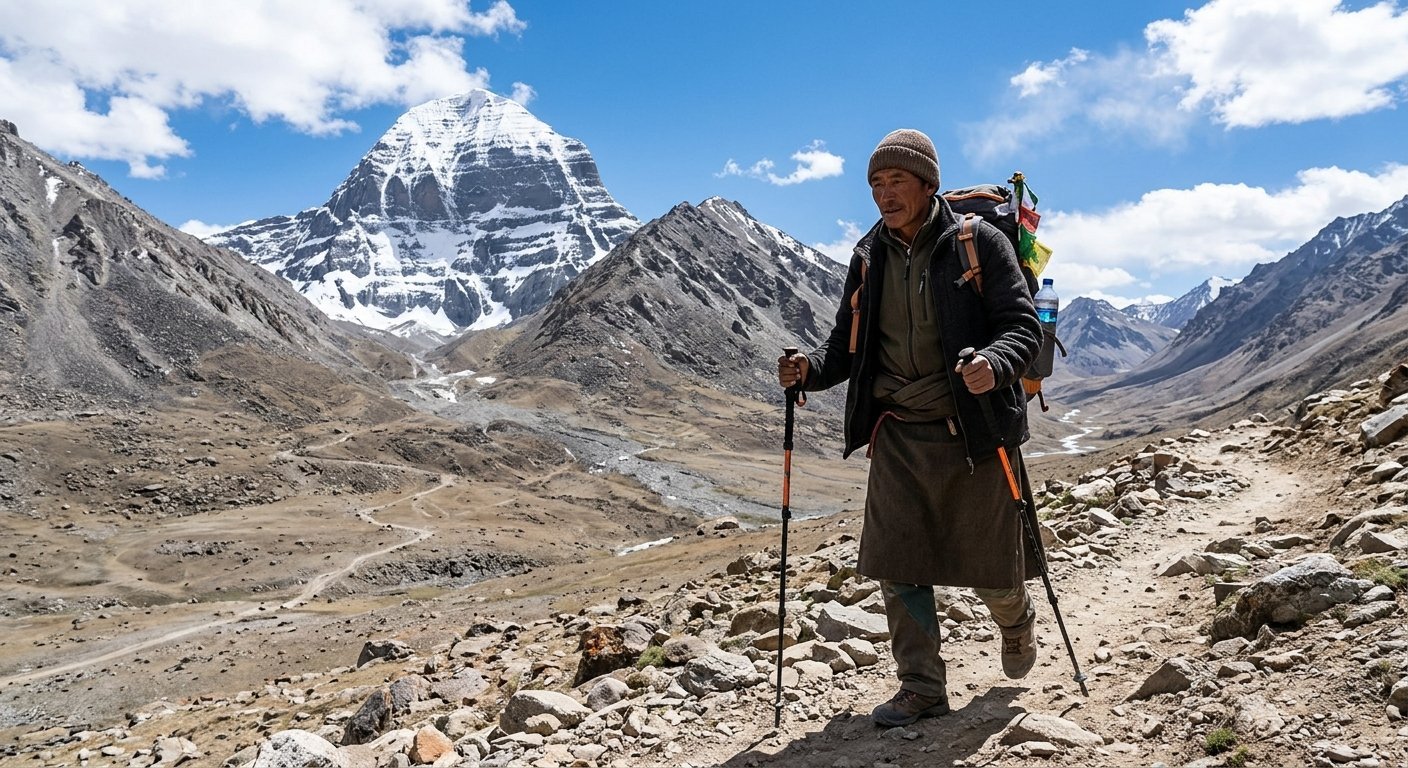
What Should Be on Your Kailash Yatra Packing List?
Pack for cold, thin air, dust, sun and basic lodging. Nothing else matters much. Everything you carry should do one of those jobs, or it stays home.
The Kailash Mansarovar Yatra essentials fall into five groups: layered clothing, footwear, health items, sacred and personal items, and documents. Lake Mansarovar sits at roughly 4,590 metres. The Dolma La pass on the parikrama crosses about 5,600 metres. Weather can swing from harsh sun to sleet within an hour, so your bag has to handle all of it.
Here’s the short version before we go deeper.
| Category | Core items | Common mistake |
|—|—|—|
| Clothing | Thermal base layers, fleece, down jacket, windproof shell | Cotton thermals that stay wet |
| Footwear | Broken-in trekking boots, wool socks, camp shoes | New boots on day one |
| Health | Personal medicines, sunscreen, lip balm, electrolytes | Relying on one pill for everything |
| Personal | Headlamp, power bank, water bottle, rosary, prayer items | Heavy ritual items you won’t use |
| Documents | Passport, permit copies, insurance, photos | Passport with too little validity |
Your travel documents and Tibet permits are handled with our team, but the passport validity and photo requirements are yours. Check the official Ministry of External Affairs guidance at [kmy.gov.in](https://kmy.gov.in) if you’re considering the government route, and ask us about the private route for batches through Nepal.
How Do You Layer Clothes for the Kailash Parikrama?
Use three layers: a wicking base, a warm middle, and a windproof outer shell. You’ll add and remove them all day, so each piece has to be light and easy to pull on with cold hands.
Your Kailash Yatra Packing List for Clothing
Start with merino or synthetic thermals, two sets. Cotton is the classic error. We had a yatri from Melbourne who wore cotton thermals on the first parikrama day, sweated on the climb, and shivered through the afternoon descent. She finished, but she’d have enjoyed it far more if the base layer had dried.
For the middle, bring a fleece and a light insulated jacket. For the outer, a down jacket rated for well below freezing and a waterproof, windproof shell. Add two pairs of trekking trousers and one pair of waterproof overtrousers. Skip jeans entirely. They’re heavy, they stay wet, and they’re miserable at altitude.
Head and hands matter more than people think. Carry a woollen cap that covers the ears, a sun hat with a brim, a neck gaiter, thin liner gloves and thick insulated mittens. You’ll wear the liners when you need your fingers for a phone or a zip. The mittens do the real work at the pass.
Sun is the quiet danger here. UV is fierce at this height, even on cold days. Pack sunglasses with side protection (glacier-grade is ideal), SPF 50 sunscreen and a lip balm with SPF. Snow-blind eyes and cracked lips are a miserable way to spend a pilgrimage.
Footwear: The Boots Decide Everything
Buy your boots at least three months before departure and walk in them. Real walking, not a few laps around the house. Our one-year preparation programme has yatris break in their boots over weekend hikes, and the blister complaints on the trail drop sharply because of it.
Choose waterproof, ankle-supporting trekking boots with a stiff sole. Bring wool-blend socks, at least four pairs, plus thin liner socks if you blister easily. Add light camp shoes or sandals for the evening, because your feet need to breathe after a long day.
Which Health Items and Gear Matter Most at High Altitude?
Carry your own prescription medicines, a small first aid kit and a way to stay hydrated. Everything else is comfort. These are what to pack for the Kailash Yatra if you want the body side covered.
Here’s the thing: a medical kit is not a substitute for acclimatisation. Our itinerary builds in rest days because the body needs time, not tablets. Please talk to your own doctor well before departure about altitude medication, particularly if you have heart, blood pressure, diabetes or breathing conditions. I’m a pilgrim guide, not a physician, and nobody at a tour company should replace your doctor’s advice.
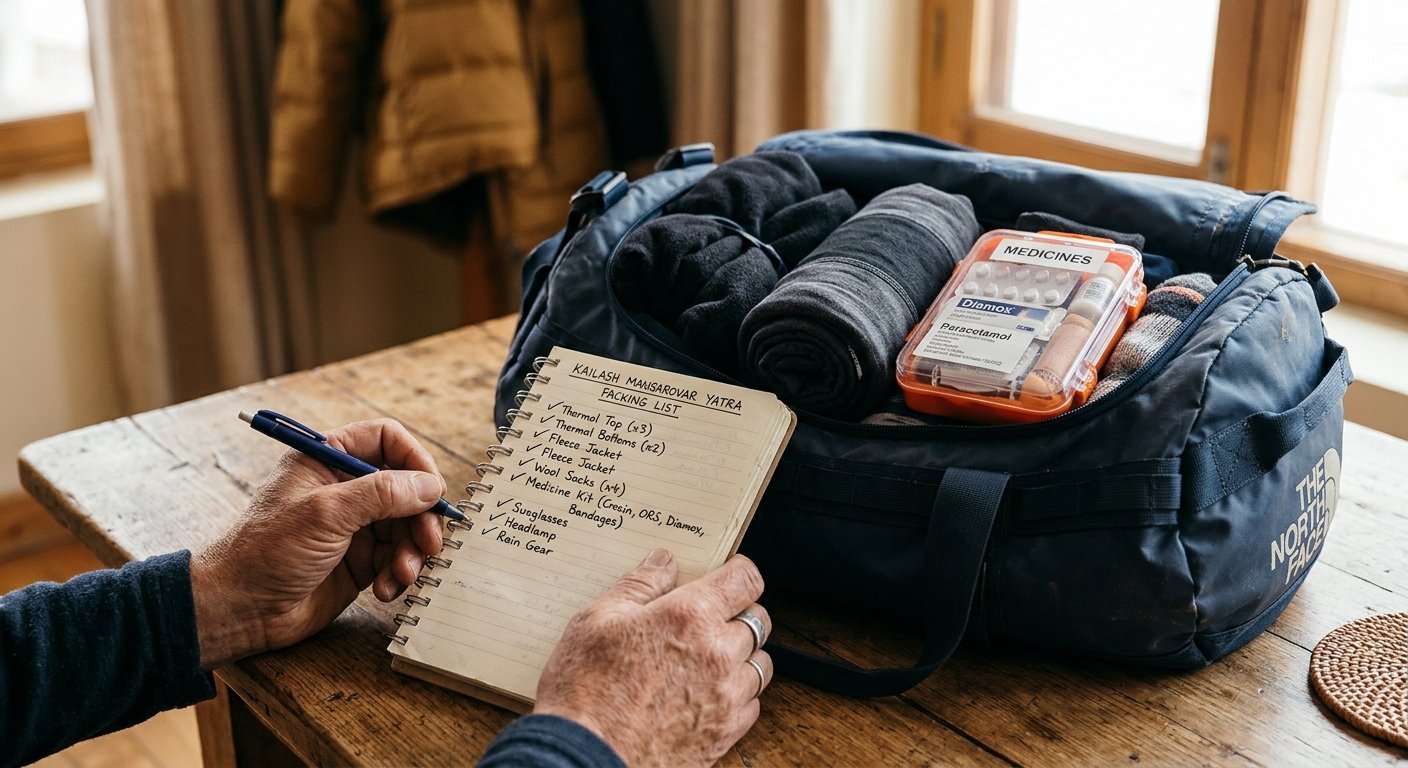
Pack your regular medicines in double the quantity you expect to need, split across two bags. Add paracetamol, an antacid, oral rehydration salts, throat lozenges, a basic antiseptic, blister plasters and any stomach medicine your doctor recommends. Dry air strips your throat and nose, so a saline nasal spray earns its space.
Gear that actually earns its weight:
- A 1 to 1.5 litre insulated water bottle, since plain bottles freeze
- A headlamp with spare batteries, because lodging power cuts are normal
- Trekking poles, collapsible, which save knees on the descent from the pass
- A 30 to 40 litre daypack with a rain cover
- A power bank, kept inside your jacket at night so cold doesn’t drain it
- Waterproof pouches or dry bags for documents and electronics
- A sleeping bag liner for lodging bedding
Food is the other worry I hear constantly. Our meals are 100% Sattvic, prepared by our on-ground teams, so you won’t go hungry. Still, carry a small stash of your own: dry fruits, roasted chana, dates, glucose biscuits and something sweet. At altitude, appetite disappears right when your body needs fuel. A familiar snack in your pocket is worth more than a heavy meal you can’t finish.
What Should You Leave at Home?
Leave behind anything heavy, new, fragile or decorative. That includes extra clothes, big toiletry kits, and anything you haven’t tested on a hike.
My contrarian view: most Kailash Yatra travel tips online push you to buy more gear. Wrong direction. The yatris who struggle usually carry too much, not too little. Porters and horses carry your main bag on the parikrama, but weight limits are tight, and your daypack is on your own back at 5,000 metres.
Common things to leave out:
- Jeans, formal wear and more than two changes of casual clothes
- Heavy perfumes and strong-smelling toiletries
- Full-size shampoo and large cosmetics. Use travel sizes and wet wipes
- Expensive jewellery
- Large ritual items. Carry a small rosary and a compact photo of your deity instead
- A drone, since Tibet has strict rules on cameras and drones that your guide will brief you on
A mistake I made early on, around my second or third yatra, was carrying a bulky camera setup. I took maybe a dozen photos and felt the weight on every step. Now I carry a phone and a small power bank. The mountain doesn’t need documenting that much. It needs your attention.
Last, ask for a gear check. Kailash Pilgrim reviews each yatri’s list personally, because what works for a fit 45-year-old from Sydney differs from what a 62-year-old from Pune needs. Nothing beats a second pair of experienced eyes on your bag before you fly.
Frequently Asked Questions
How much luggage can I carry on the Kailash Mansarovar Yatra?
Limits depend on the route and transport, and they’re stricter than most people expect. We confirm exact weight allowances at the pre-departure briefing, and a good rule is to pack, weigh, then remove a third of what you packed. Your daypack should stay light enough to carry comfortably for several hours.
Can I buy gear in Kathmandu instead of carrying it from home?
Yes, for basics such as down jackets, gloves, trekking poles and sleeping bag liners. Quality varies, so buy only from reputable shops and check the stitching and zips. Boots are the exception. Never buy them last minute, because an untested fit is the surest way to get blisters.
Do I need special clothes for Lake Mansarovar versus the parikrama?
The same layering system works for both. Mansarovar is slightly lower and often feels milder in the sun, but the wind off the lake is sharp. The parikrama is colder and more exposed, particularly at the pass, so keep your down jacket and mittens within reach there.
When should I start preparing and packing?
Start training about a year ahead, buy boots and key gear three to four months out, and do the final pack two weeks before departure. This timeline matches our one-year preparation programme, which includes fitness, acclimatisation habits and gear checks.
Get Your Kailash Yatra Packing List Reviewed by Someone Who’s Walked It
If you want a second opinion on what you’re carrying, Kailash Pilgrim will go through your Kailash Yatra packing list with you, item by item, before you buy anything. We do this for every yatri in our small private batches, including NRIs travelling from Australia and families joining from India. For the 2026 Horse Year, batches are filling, so start early. Reach out through the Kailash Pilgrim website, tell us your age, fitness level and travel dates, and we’ll send a tailored checklist and talk you through the rest.