

I’ll never forget the Australian surgeon who joined us in 2019. Fit. Confident. Ready to tick the Kailash box off his bucket list. On day two of the parikrama, just past Dirapuk, he sat down on a boulder and said, “I thought I was prepared. I wasn’t prepared for this.” He wasn’t talking about the altitude. He was talking about everything else—the wind, the relentless sameness of the terrain, the mental endurance it takes to keep walking when your lungs are screaming.
That’s the thing about the Kailash Parikrama trekking guide you find online. Most tell you the distance. They tell you the elevation. They don’t tell you what it actually feels like to walk 52 kilometers at 5,000 meters, or how your body will betray you in ways you didn’t expect, or why the third day breaks more people than the first.
This isn’t another generic route description. This is what two decades of leading pilgrims around Mount Kailash has taught me—the friction points, the mental walls, the small decisions that make or break your kora. If you’re planning the Kailash Kora trek for 2026, especially if this is your first high-altitude pilgrimage, you’re in the right place.
What the Kailash Parikrama Actually Involves
The Mount Kailash circumambulation is a 52-kilometer walking circuit around the sacred mountain, completed over three days. Most trekkers start at Darchen (4,575m), cross the Dolma La pass (5,630m) on day two, and return to Darchen on day three. The route is both a physical test and a spiritual practice—Buddhists walk clockwise, Bon practitioners walk counter-clockwise, and Hindus consider it among the most sacred journeys a devotee can undertake.
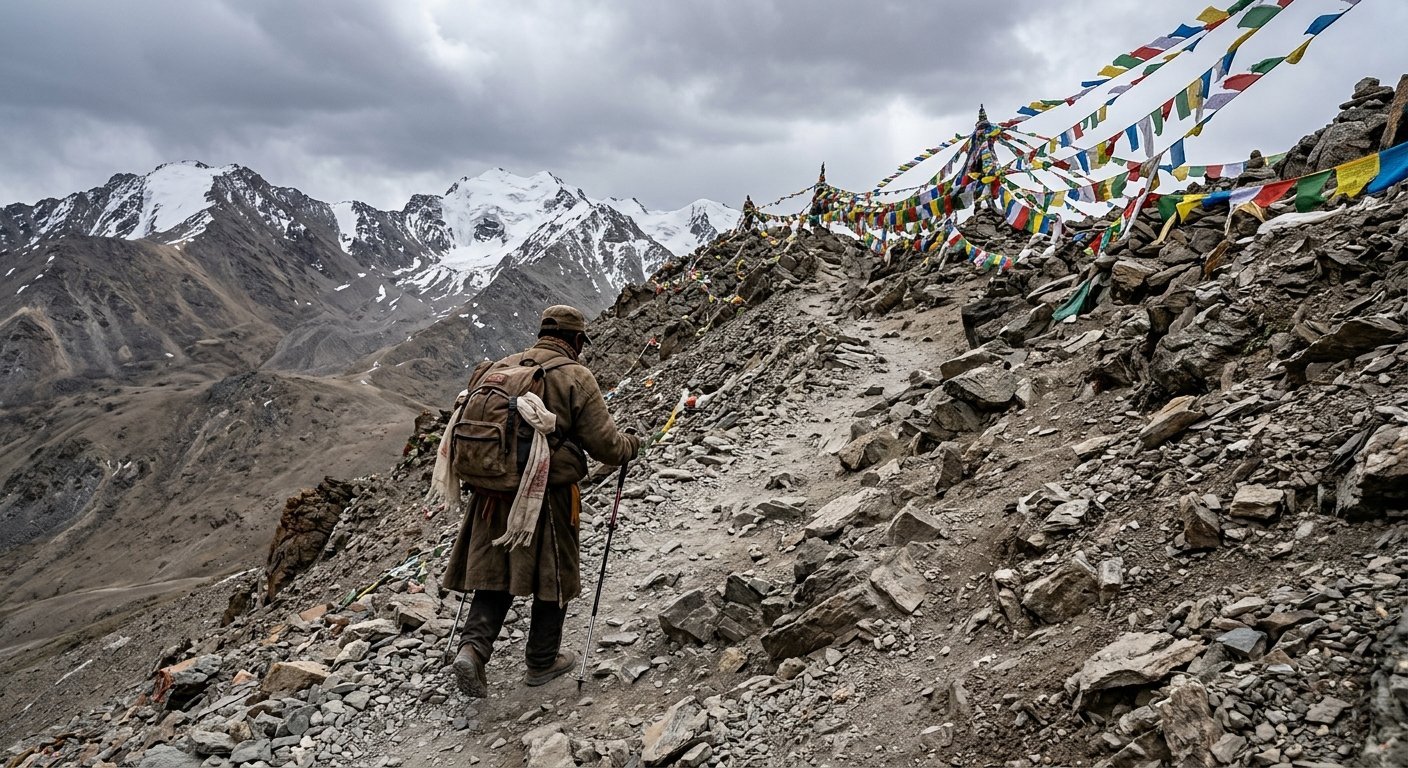
You’re not walking through forests or meadows. This is high-altitude desert. Barren. Windswept. Beautiful in a way that doesn’t comfort you. The terrain alternates between rocky trails, loose scree, and flat valley sections where the wind slaps you sideways. There are no trees. Very little grows here. The air holds about 50% of the oxygen you’re used to at sea level.
Here’s what the guidebooks miss—this trek isn’t technically difficult. There’s no climbing. No fixed ropes. No ice axes. But the altitude makes everything harder. Your heart rate spikes. Your breath shortens. Your mind fogs. And when you hit the Dolma La on day two, where most people struggle, you’re already carrying the fatigue from day one. That’s the real challenge.
At Kailash Pilgrim, we’ve seen strong trekkers falter and frail grandmothers complete the kora with grace. Fitness helps. But mental preparation and proper acclimatization matter more. That Australian surgeon? He finished. But only after we adjusted his pace, managed his oxygen support, and reminded him that this isn’t a race.
Day-by-Day Parikrama Walking Guide: What Each Stage Demands
Let me walk you through what each day actually looks like—not just the stats, but the reality of it.
Day 1: Darchen to Dirapuk (20 kilometers, 6-8 hours)
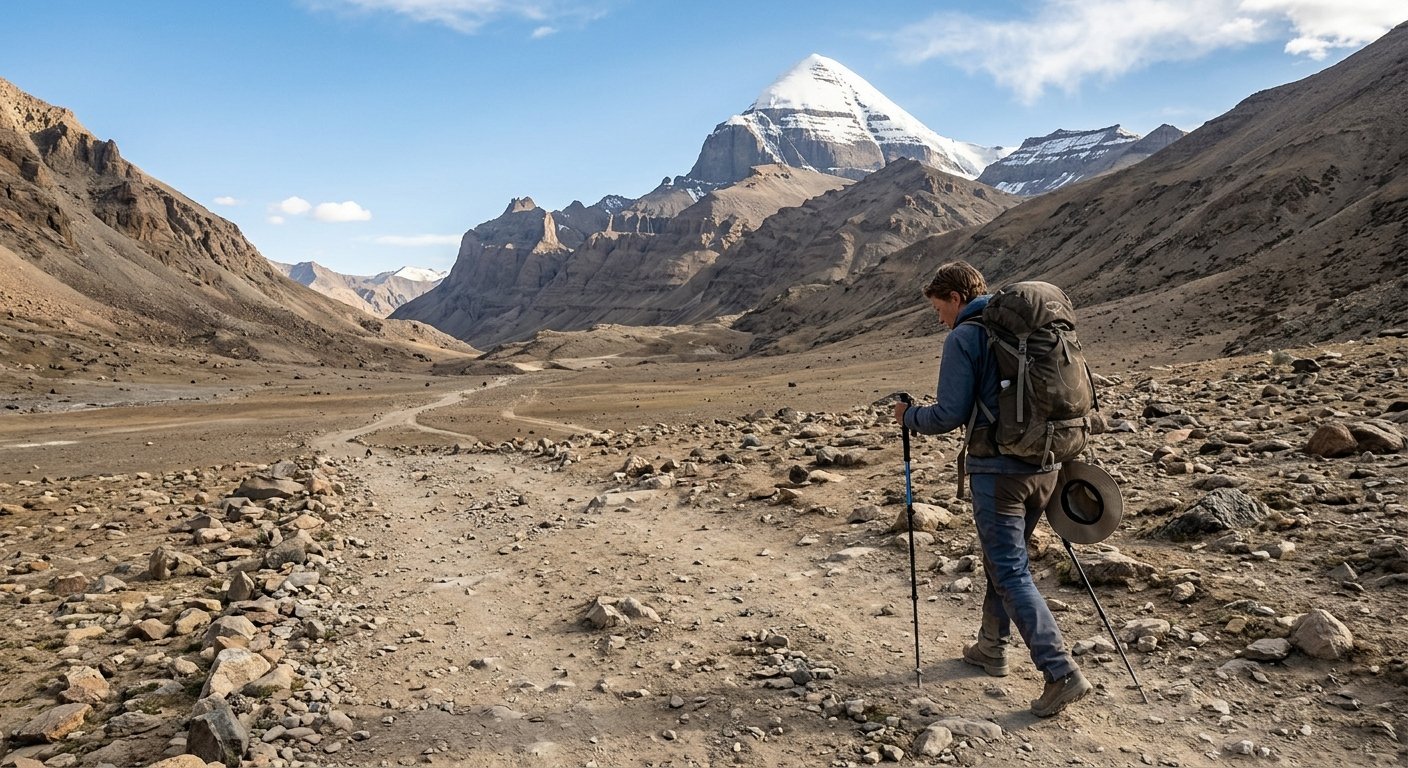
You’ll start early from Darchen, usually around 6 or 7 AM. The first few kilometers are deceptively easy—a wide valley trail with the north face of Kailash appearing and disappearing behind ridges. Your energy is high. Everyone’s chatting, taking photos, feeling strong.
Around the 8-kilometer mark, the novelty wears off. The trail gets rockier. The incline is gradual but relentless. This is where I watch people’s faces change. The excitement fades. The breathing gets louder. Someone always asks, “How much further?” and the answer—still 12 kilometers—lands like a punch.
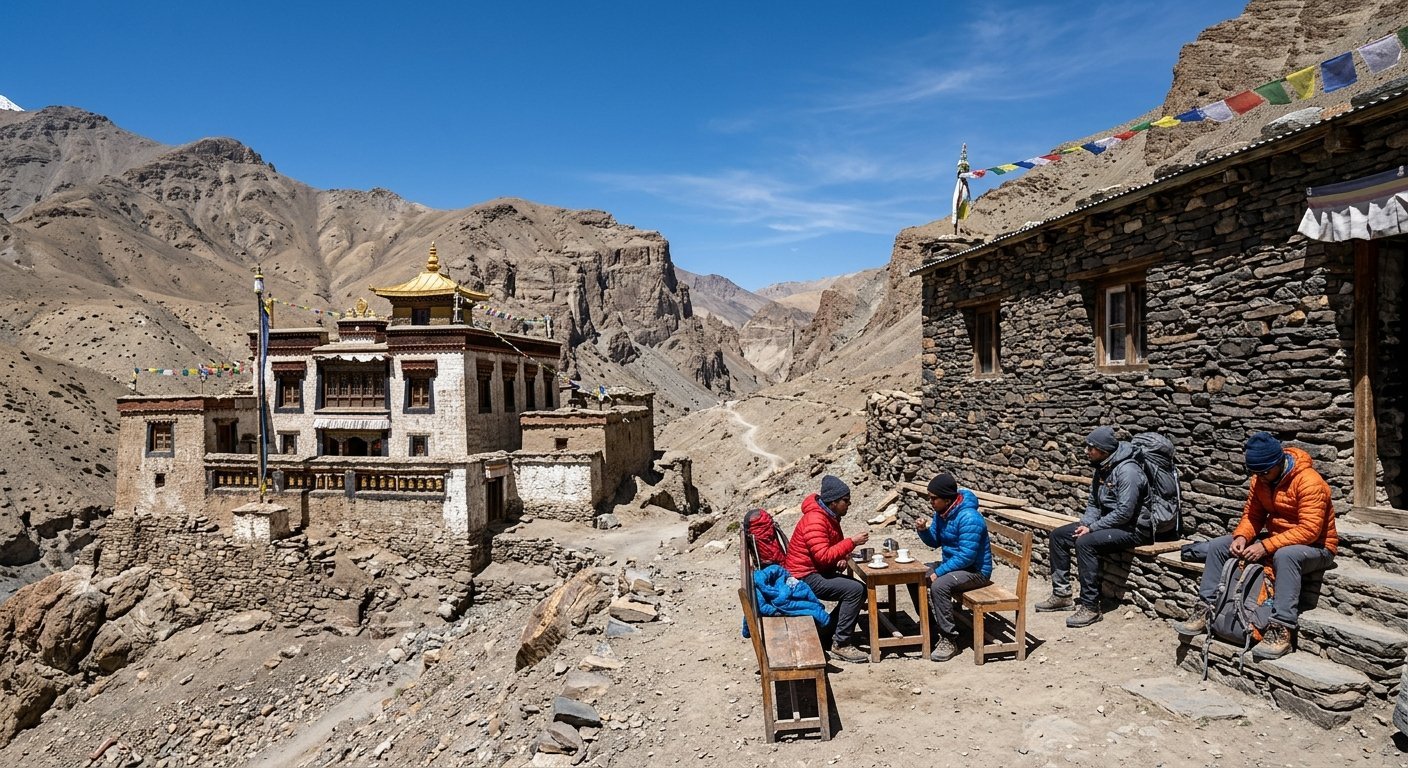
You’ll pass Choku Gompa around midday, a good place to rest and take in the western face of Kailash. From here to Dirapuk, the trail flattens slightly, but the altitude is doing its work. Headaches start. Appetites disappear. By the time you reach Dirapuk Monastery and the guesthouse where you’ll sleep, you’re not just tired—you’re altitude-tired, which is a different beast.
Dirapuk sits at 5,080 meters. Most people sleep poorly here. The air is thin. You’ll wake up multiple times, gasping slightly, wondering if you made a mistake. You didn’t. This is normal. Drink water. Don’t force food if you can’t. Rest as much as you can, because tomorrow is the hard one.
Day 2: Dirapuk to Zutulpuk via Dolma La (22 kilometers, 8-10 hours)
This is the day that humbles everyone. You’ll wake tired. Breakfast feels impossible. But you start early anyway, because the climb to Dolma La takes 4 to 5 hours, and you want to reach it before afternoon winds pick up.
The ascent is unforgiving. Steep switchbacks over loose rock. Altitude sickness symptoms—nausea, dizziness, pounding headache—can hit hard here. I’ve seen pilgrims stop every ten steps to breathe. I’ve seen people cry. I’ve also seen 70-year-olds with walking sticks outlast marathon runners. It’s not about strength. It’s about pace and acclimatization.
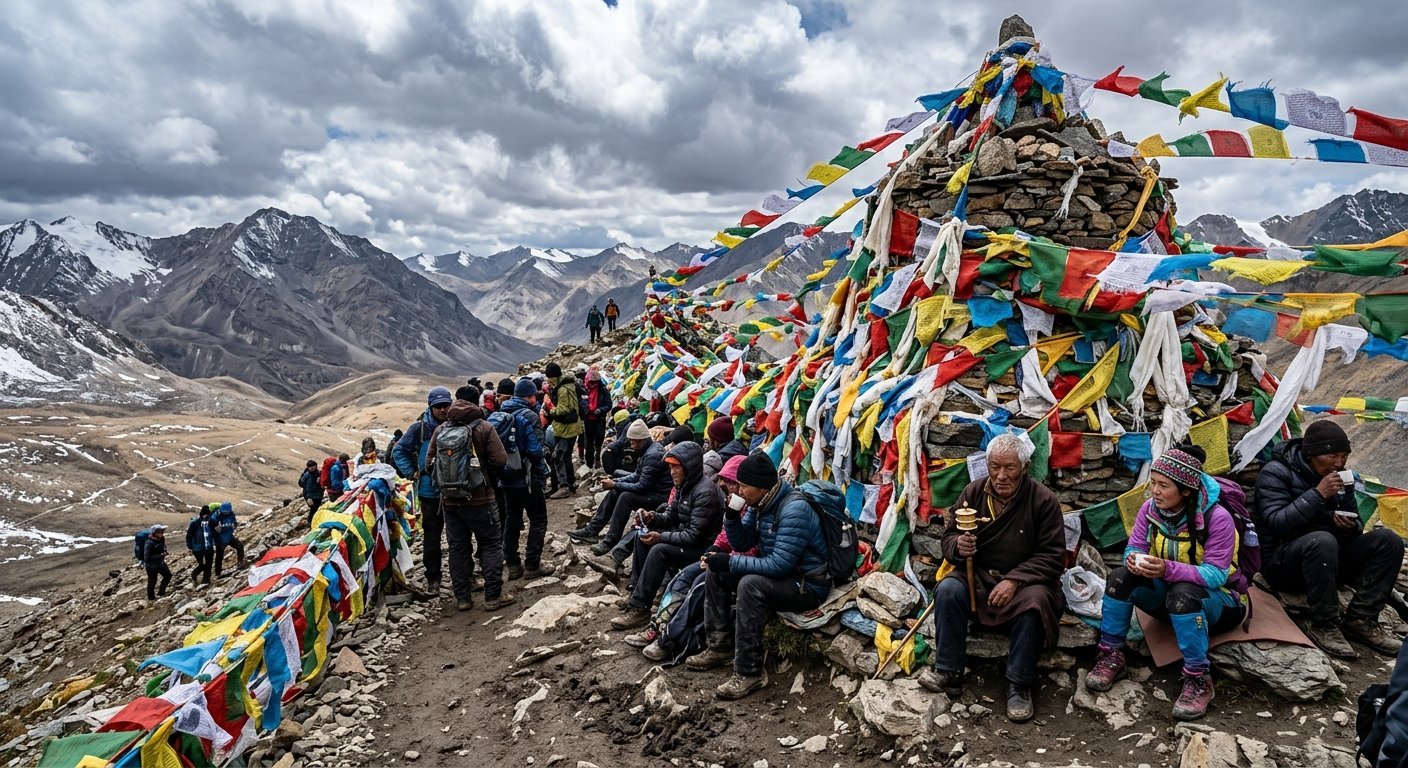
At 5,630 meters, Dolma La is the highest point of the Kailash Kora trek. Prayer flags snap in the wind. Most pilgrims leave an offering—a piece of clothing, a stone, a prayer. You won’t linger long. The cold and wind push you down the other side.
The descent is brutal in a different way. Your knees take the load. The trail is steep, rocky, and slippery in places. It drops fast—800 meters over the next few hours—and by the time you reach Gauri Kund (a sacred lake at the base of the pass), your legs are shaking. From there, it’s another 10 kilometers to Zutulpuk Monastery, mostly flat but mentally exhausting. You’ve been walking for 8, 9, maybe 10 hours. You’re done, but the trail isn’t.
Zutulpuk sits at 4,790 meters. You’ll sleep better here than at Dirapuk, partly because you’re lower, partly because you’re too exhausted to stay awake.
Day 3: Zutulpuk to Darchen (14 kilometers, 4-5 hours)
The final day is the gentlest. The trail follows a wide valley, mostly flat with a slight descent back toward Darchen. Your body is wrecked, but the end is close enough to taste. Most people walk this stretch quietly. There’s a reflective mood. The accomplishment is starting to sink in.
You’ll reach Darchen by midday. Some pilgrims cry. Some laugh. Most just sit down and stare at the mountain one last time. Completing the parikrama isn’t just a physical feat—it’s a closure, a commitment kept, a prayer walked into the earth.
Kailash Parikrama 2026 Preparation: What You Need Before You Go
Most people focus on the trek itself. That’s a mistake. The real work happens months before you reach Darchen.
Altitude Acclimatization: Not Optional
You cannot fake altitude fitness. Your body needs time to adjust to thin air, and there’s no shortcut. If you fly straight to Lhasa or Kathmandu and rush to Kailash, you’re setting yourself up for acute mountain sickness—or worse, pulmonary or cerebral edema, which can kill you.
At Kailash Pilgrim, we build a full week of acclimatization into every itinerary. You’ll spend time in Kathmandu, then gradual ascents through Nyalam, Saga, and Manasarovar before starting the parikrama. It feels slow. Clients always want to speed it up. We don’t let them. Because the ones who rush are the ones who fail—or get evacuated.
Train for endurance, not speed. Walk 10 kilometers a day for weeks before your yatra. Climb stairs with a loaded backpack. Strengthen your knees. But understand this—fitness helps, but it won’t save you if you skip acclimatization.
Permits, Visas, and the 2026 Logistics You Can’t Ignore
The Kailash region is politically sensitive. You can’t just show up. You need a Chinese group visa, a Tibet Travel Permit, an Alien Travel Permit, and a Military Permit. For NRIs living in Australia, the UK, the USA, Canada, or Singapore, the process is more complex and takes longer.
Applications open months in advance. For the 2026 season—especially if you’re planning to go during the Tibetan Fire Horse Year, which happens once every 12 years and carries immense spiritual significance—permits will be in high demand. Apply early. Work with an operator who has direct relationships with Chinese authorities. We’ve handled this process since 1996, and I still see applications rejected because someone missed a detail or applied too late.
Don’t try to DIY this. It won’t work, and you’ll waste time and money.
What to Pack: Less Than You Think, More Than You Want
Layers. That’s the entire packing strategy. Temperatures swing wildly—freezing at night, scorching in direct sun during the day. You’ll need a down jacket, windproof outer layer, thermal base layers, gloves, a good hat, and a neck gaiter. Your feet will take the worst beating, so bring boots you’ve already broken in and blister care supplies.
Oxygen is available, but don’t rely on it as your primary plan. Use it as backup. We carry oxygen cylinders and portable concentrators on every yatra, and they’ve saved lives, but they’re not a substitute for proper acclimatization.
Pack light. You’ll be offered yak or porter support to carry your main bag, but your day pack stays with you. Keep it under 5 kilograms. Water, snacks, rain gear, sunscreen, your phone, a backup battery. That’s it.
Inner Kora and Outer Kora: What’s the Difference?
The 52-kilometer route I’ve described is the Outer Kora. Most pilgrims complete this. But there’s also an Inner Kora—a 34-kilometer route that’s far more challenging, both physically and spiritually.
The Inner Parikrama involves Nandi Parvat, Atmalingam, and the Saptrishi Cave. It’s only accessible to those who’ve completed 13 Outer Koras first, according to Tibetan Buddhist tradition. The trail is rougher, steeper, less traveled. The spiritual significance is deeper. But it’s not for first-timers, and it requires special permission.
If you’re planning your first Kailash Kora trek, focus on the Outer Kora. That alone will test you enough.
What Breaks People on the Parikrama (And How to Avoid It)
Let me be direct. Most failures on the Kailash Parikrama trekking guide itinerary aren’t physical. They’re mental or logistical.
Misjudging Your Pace
The biggest mistake is starting too fast. You’ll see younger trekkers sprint ahead on day one, then collapse on day two. This isn’t a race. The goal is completion, not speed. Walk slower than feels natural. Take more breaks than you think you need. Let your heart rate settle between climbs.
We pace our groups deliberately. If someone pushes too hard, we pull them back. It’s frustrating in the moment. But those pilgrims finish.
Ignoring Early Symptoms of Altitude Sickness
Headache. Nausea. Dizziness. Shortness of breath that doesn’t improve with rest. These are warning signs. If you ignore them and keep climbing, they escalate—vomiting, confusion, loss of coordination. That’s when we evacuate you.
Tell your guide the moment something feels wrong. Don’t downplay it. Don’t tough it out. Altitude sickness doesn’t care how fit you are.
Poor Sleep the Night Before Dolma La
Most people sleep terribly at Dirapuk. But if you don’t rest at all, day two becomes dangerous. Bring earplugs. Use a sleep aid if your doctor approves. Accept that you won’t sleep well, but try to rest your body even if your mind races.
Why Experience Matters More Than You Realize
I’ve completed the Kailash circumambulation more than 20 times since 1996. Every time, I see something new—a weather shift, a medical emergency, a logistical hiccup that could derail an entire group. The difference between operators isn’t the brochure. It’s what happens when something goes wrong.
At Kailash Pilgrim, we carry satellite phones, backup oxygen, emergency evacuation protocols, and medical supplies that most groups skip. We know which guesthouses to avoid, which days to rest, and how to read the signs that someone’s struggling before they say a word.
You’re not just buying a trek. You’re buying judgment—judgment that only comes from doing this dozens of times. If you’re planning the Kailash Parikrama in 2026, especially as an NRI coordinating international travel, or as a senior citizen managing health concerns, work with someone who’s been there. Not someone who’s read about it.
Frequently Asked Questions
How difficult is the Kailash Parikrama for first-time high-altitude trekkers?
The Kailash Kora trek is challenging but doable with proper preparation. It’s not technically difficult—no climbing skills needed—but the altitude makes every step harder. If you’ve never been above 4,000 meters, start training 3 to 6 months early, and plan for at least one week of acclimatization before the parikrama.
Can senior citizens complete the Mount Kailash circumambulation safely?
Yes. We’ve guided pilgrims in their 60s and 70s who completed the parikrama successfully. The key is pace, acclimatization, and medical support. Walk slowly, take frequent rests, and work with an operator who carries oxygen and monitors health daily. Age isn’t the barrier—poor preparation is.
What’s the best time to do the Kailash Parikrama in 2026?
May to early June, and mid-September to early October. The 2026 Tibetan Fire Horse Year makes this an especially auspicious time, so expect higher demand. Book early—permits will be limited, and group slots fill months in advance.
How much does the Kailash Parikrama trekking guide route cost?
Costs vary widely depending on your route (Kathmandu vs. Lhasa start), group size, and support level. Expect anywhere from $3,500 to $6,500 for a full yatra including permits, accommodation, meals, and support. NRI-focused packages from Australia, the UK, or North America often include additional logistics support and coordination, which raises the price but removes the stress.
Start Your Kailash Parikrama with Someone Who’s Done It
The Kailash Parikrama isn’t just a trek. It’s a test—of your body, your will, and your faith. You can read a dozen guides, watch every YouTube video, and still not be ready for what it actually feels like to walk 52 kilometers at 5,000 meters.
At Kailash Pilgrim, we’ve spent 20 years guiding pilgrims through this journey. We know the terrain, the permits, the altitude, and the moments when someone needs encouragement or evacuation. If you’re planning your Kailash Kora trek for 2026—especially during the once-in-12-years Fire Horse Year—let’s talk about how to prepare properly.
Visit kailashpilgrim-com-511751.hostingersite.com/ or reach out directly to Ms. Shalini Patel. Your parikrama isn’t just a trip. It’s a promise you’re making. Let’s make sure you keep it.