
The first time Shalini climbed the Dolma La Pass in 1996, she didn’t know she’d come back. She couldn’t imagine it. The altitude squeezed her chest. Her legs burned. Every breath felt deliberate, earned. But standing at 18,600 feet with the wind howling across the frozen prayer flags, something shifted inside her. Not dramatically. Quietly. She made a promise to herself then — she’d return. Not once. As many times as Shiva called her back.
Twenty Kailash Yatras later, she’s kept that promise. And along the way, she’s learned things you can’t read in a book or hear from a guide who’s only been once. Spiritual transformation isn’t instant. It’s layered. Earned through years of repeated surrender, physical hardship, and devotion that refuses to quit when the altitude gets brutal and your legs won’t move another step.
This isn’t a story about reaching the top. It’s about what happens when you keep going back, year after year, through pain and bliss and everything in between. These are the Kailash Yatra spiritual lessons Shalini’s gathered across two decades of walking the sacred path around Mount Kailash. And they apply far beyond the mountains.
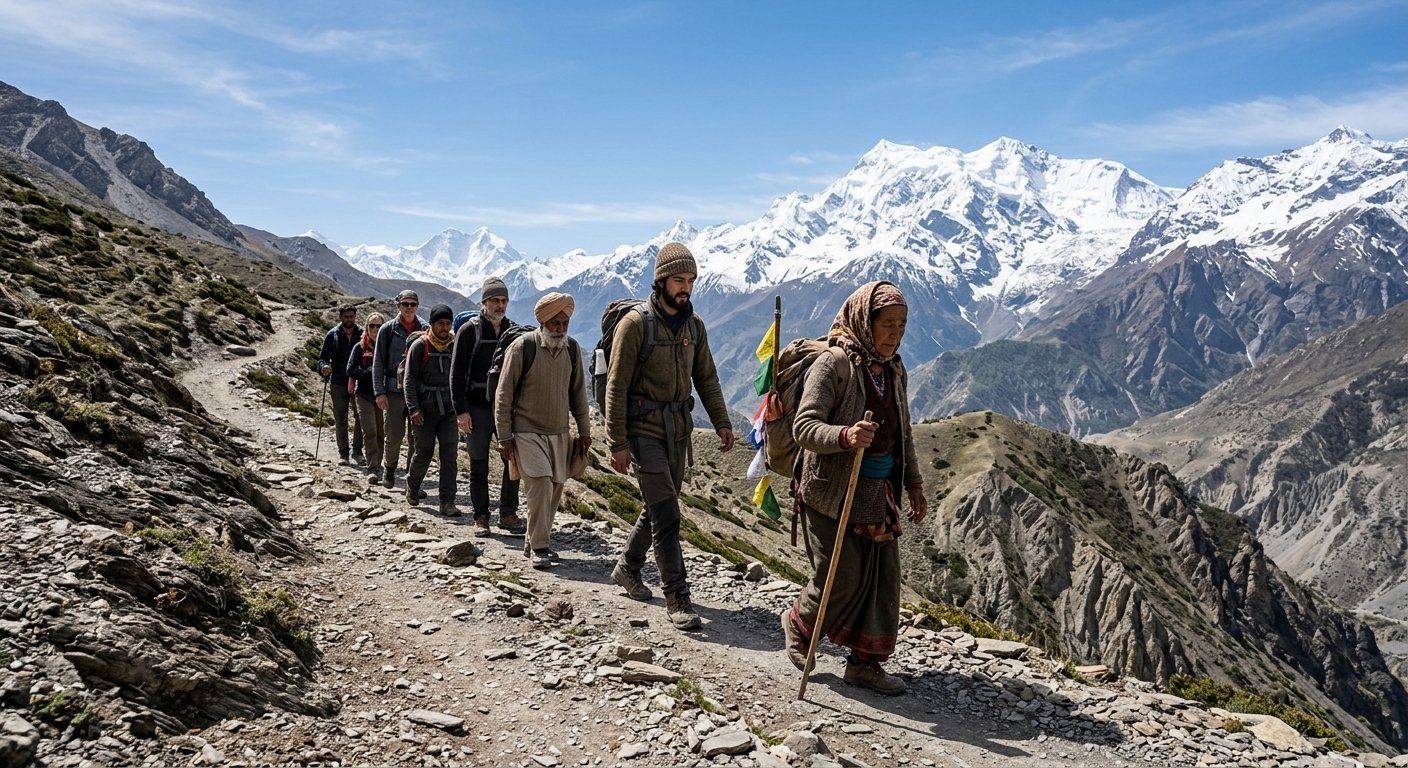
Lesson 1: Your Body Will Lie to You — Trust Your Spirit Instead
Altitude does strange things. You think you’re fine one minute, and the next your vision blurs and your pulse races for no reason. Shalini’s watched hundreds of Yatris panic when their body starts screaming at them to stop. The fear is real. The exhaustion is real. But the capability to continue? That’s real too.
Here’s the thing: your body is wired for self-preservation. It’ll tell you to quit long before you actually need to. But your spirit knows the difference between danger and discomfort. The trick is learning which voice to listen to.
During one particularly brutal stretch near Dirapuk Monastery, a Yatri told Shalini she couldn’t go on. Her legs felt dead. Her breath wouldn’t come. Shalini asked her to sit for five minutes, just breathe, and then try one more step. One turned into ten. Ten turned into a hundred. By the time they reached camp, the woman was crying — not from pain, but from realising she’d almost quit one kilometre before the finish line.
That’s the first lesson. Your body will lie. Your spirit won’t.
Lesson 2: Preparation Isn’t Optional — It’s Part of the Pilgrimage
Most people think the Yatra starts when you land in Kathmandu. Wrong. It starts the day you commit. Maybe earlier. The one-year preparation programme Kailash Pilgrim offers isn’t a fitness class — it’s spiritual conditioning. Physical stamina, yes. But also mental resilience. Emotional readiness. Devotional depth.
Shalini’s learned this the hard way. Early on, she saw too many Yatris arrive unprepared and suffer unnecessarily. Not because they lacked devotion, but because they underestimated the Himalayas. High-altitude trekking doesn’t care how spiritual you are. Your lungs need oxygen. Your legs need strength. Your mind needs the discipline to push through when everything hurts.
Now, every batch goes through altitude acclimatisation training. Sattvic meal prep. Gear checks. Mental conditioning exercises. It’s not glamorous. But it works. A well-prepared Yatri doesn’t just survive the journey — they experience it fully, without panic clouding every moment.
The preparation is the pilgrimage. Don’t skip it.
Lesson 3: Small Batches Mean Deeper Transformations
Tour companies love big groups. Economies of scale. More profit per trip. Shalini chose the opposite path. Small private batches. Eight to twelve people, maximum. It’s not just about logistics — though managing a smaller group in remote Tibet is infinitely easier when someone’s altitude sick or a permit issue comes up.
It’s about transformation. You can’t have a profound spiritual experience when you’re one of forty strangers shuffling through checkpoints like cattle. You need space. Silence. The freedom to stop and cry when Lake Mansarovar first comes into view, without someone rushing you along.
Shalini’s noticed something over the years. Small groups bond differently. They support each other. They share stories around the fire at night. They become a spiritual family, not just a tour group. And when one person struggles, the whole group carries them — not physically, but energetically. That collective devotion is powerful. It’s the difference between completing a trek and completing a pilgrimage.
Kailash Pilgrim has kept that model for 28 years. It’s not the most profitable approach. But it’s the right one.
Lesson 4: Sattvic Meals Aren’t About Diet — They’re About Energy
Food becomes critical at altitude. Your body burns fuel faster. Your digestion slows. Your mind gets foggy. Shalini’s watched Yatris make themselves sick by eating the wrong things at the wrong time — heavy meats, fried snacks, processed junk that their body can’t process when oxygen is scarce.
Sattvic meals solve that problem. Light. Pure. Easy to digest. But more importantly, they shift your energy. Sattva means clarity, balance, purity. The opposite of rajas (agitation) and tamas (heaviness). When you’re eating clean, simple food — dal, rice, fresh vegetables, fruits — your mind stays clearer. Your emotions stay steadier. Your body recovers faster.
This isn’t mystical theory. It’s practical survival. A Yatri who’s eating Sattvic meals through the entire journey has more stamina, better sleep, and clearer thinking at altitude. And when you’re making decisions at 18,000 feet — should I push on or rest? — clarity isn’t a luxury. It’s essential.
Kailash Pilgrim provides 100% Sattvic meals throughout the Yatra. Not as a dietary preference, but as part of the spiritual preparation. Your body is the vessel. Treat it accordingly.
Lesson 5: Ego Dies Faster at Altitude
You can fake spiritual humility at sea level. You can’t fake it at 16,000 feet. Altitude strips you down. Your achievements don’t matter. Your job title doesn’t matter. Your bank balance definitely doesn’t matter. What matters is whether you can take the next breath and keep moving.
Shalini’s seen CEOs reduced to tears. Lawyers begging for help tying their boots. Doctors who can’t diagnose their own altitude sickness. The mountain doesn’t care who you were before you arrived. It only cares about your devotion and your willingness to surrender.
That’s where the real transformation begins. When your ego has no room to operate, your spirit takes over. You stop performing. You stop pretending. You just are. Vulnerable. Tired. Grateful. Alive. It’s uncomfortable. And it’s exactly what you came for.
One Yatri — a successful businessman from Mumbai — told Shalini halfway through the Parikrama that he’d never felt so small in his life. “And I’ve never felt so free,” he added. That’s the paradox. Smallness isn’t defeat. It’s liberation.
Lesson 6: Pain and Bliss Sit Right Next to Each Other
The Kailash Mansarovar Yatra isn’t peaceful in the way people imagine. It’s not a gentle meditation retreat. It’s hard. Physically punishing. There are moments when your knees scream and your lungs burn and you’re certain you’ve made a terrible mistake.
And then — without warning — you round a corner and see the lake glowing under the sunrise, or you hear the monks chanting at Dirapuk, or a fellow Yatri grabs your hand and whispers “Jai Bholenath” just when you needed to hear it. And suddenly the pain doesn’t matter. The bliss isn’t separate from the pain. It’s woven into it.
Shalini calls this the duality of the journey. You can’t have the spiritual awakening without the physical struggle. They’re not opposites. They’re partners. The hardship cracks you open. The bliss fills the cracks.
Western culture tries to avoid pain at all costs. But sacred pilgrimage embraces it. Pain becomes a teacher. Exhaustion becomes surrender. Struggle becomes devotion. And on the other side of all that suffering is a kind of joy that doesn’t exist anywhere else.
That’s the Kailash Yatra spiritual lessons at its core. Don’t run from the pain. Walk through it.
Lesson 7: Devotion Isn’t a Feeling — It’s a Decision You Make Every Step
People think devotion is emotional. That you’ll feel a deep spiritual pull every moment of the journey. Shalini knows better. Devotion is a decision. And you make it over and over, especially when you don’t feel like it.
There are mornings when you wake up in a freezing tent with a headache from altitude and zero desire to lace up your boots and walk another twelve kilometres. The spiritual high from the day before is gone. Your body hurts. Your mind is foggy. You want to quit.
That’s when devotion becomes real. Not when it’s easy, but when it’s hard. When you choose to keep moving even though every part of you wants to stop. That’s when you prove — to yourself, to Shiva, to the mountain — that you mean it.
Shalini’s made that choice hundreds of times across twenty Yatras. Some days she’s walked in bliss. Other days she’s walked in tears. But she’s always walked. Because devotion isn’t a mood. It’s a commitment.
The Yatris who finish strong aren’t the ones who felt the most. They’re the ones who decided the most.
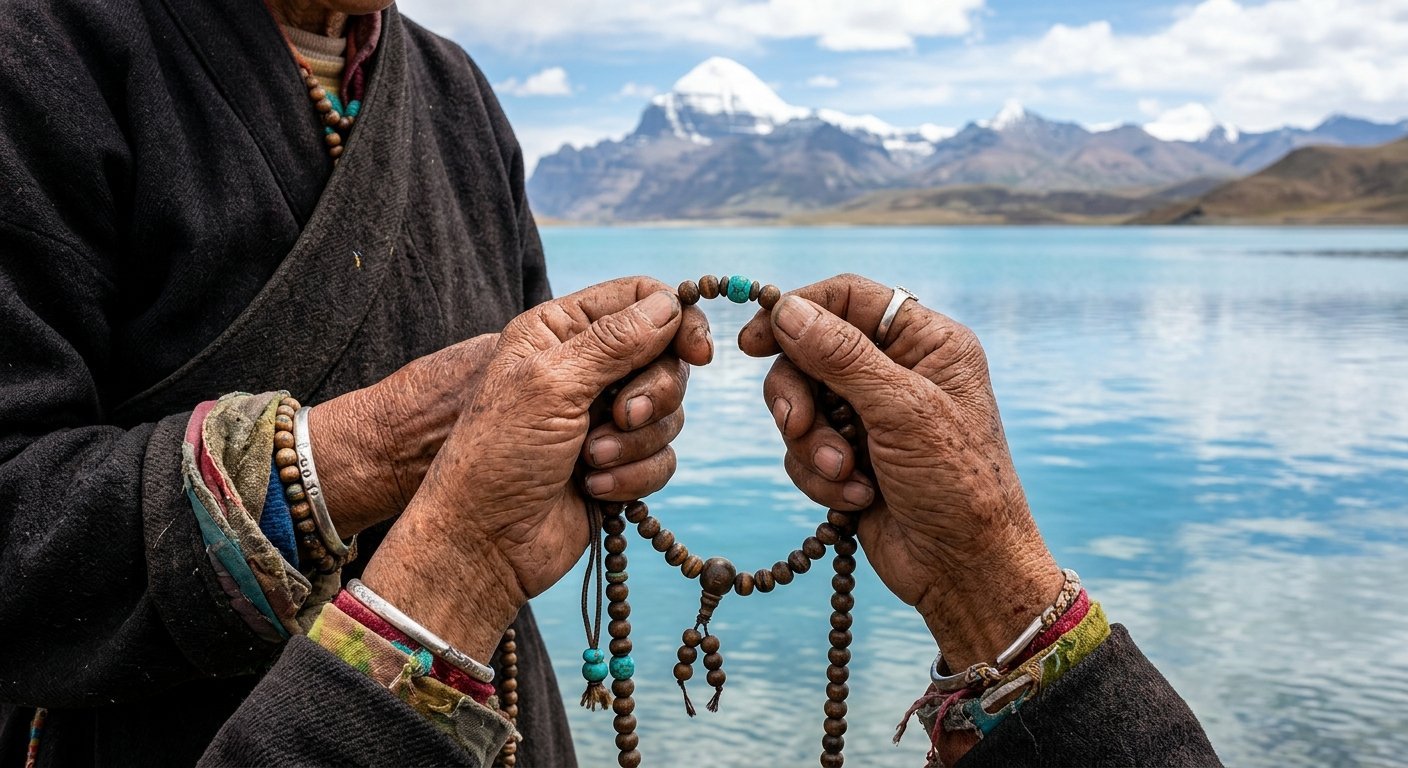
Lesson 8: Your Struggles Prepare You to Guide Others
Shalini didn’t start leading Yatris because she was perfect at it. She started because she’d survived her own struggles and knew how to help others through theirs. Every mistake she made in her early journeys became a lesson she could pass on. Every moment of doubt became a moment she could recognise in someone else and talk them through.
That’s the gift of repetition. The first time you do something, you’re just trying to survive. The tenth time, you start noticing patterns. By the twentieth, you’ve seen almost every scenario. You know when someone’s altitude sick versus anxious. You know when to push and when to rest. You know how to sense fear before it spirals into panic.
And here’s the truth most guides won’t tell you: the best mentors aren’t the ones who never struggled. They’re the ones who struggled, survived, and stayed anyway. Shalini’s not guiding the Kailash Mansarovar Yatra because it’s easy for her. She’s guiding it because it’s still hard, and she knows exactly how to navigate that hardship.
Her struggles didn’t disqualify her. They prepared her.
Lesson 9: Silence Teaches More Than Words Ever Will
Trekking in a group, you’d think there’s constant chatter. There isn’t. Not after the first few days. By the time you reach the higher altitudes, everyone goes quiet. Partly because talking at 17,000 feet is exhausting. But mostly because silence becomes sacred.
Shalini’s learned some of her deepest lessons in that silence. Not from monks or scriptures or other Yatris, but from the mountain itself. The wind. The cold. The endless sky. The sound of your own breath. When there’s nothing to distract you, everything becomes a teacher.
Western culture is terrified of silence. We fill every moment with noise, screens, conversation. But pilgrimage strips that away. You walk for hours with nothing but your thoughts and your footsteps. And in that silence, things surface. Grief you’ve been avoiding. Joy you forgot was there. Gratitude you never voiced. Fear you never admitted.
It’s uncomfortable. Most people try to fight it at first. But the Yatris who surrender to the silence come back changed. They’ve met themselves. Really met themselves. And that’s worth more than any guided meditation or spiritual lecture.
The mountain doesn’t talk. That’s the point.
Lesson 10: Community Carries You When Your Faith Wavers
No one finishes the Kailash Yatra alone. Even if you’re physically walking solo, you’re held by the collective energy of everyone who’s ever walked that path. The monks. The guides. The other Yatris. The locals who’ve spent their lives serving pilgrims. The ancestors who walked before you.
Shalini’s felt this hundreds of times. Moments when her own strength ran out, and someone else’s faith carried her. A hand extended when she stumbled. A prayer chanted when she couldn’t speak. A warm meal when she was too tired to eat. Small acts of kindness that don’t seem like much until you’re at altitude and realise they’re everything.
This is why Kailash Pilgrim operates as a spiritual family, not a tour company. The on-ground support teams aren’t employees. They’re devotees. They believe in the journey as much as the Yatris do. And that belief becomes a lifeline when your own faith wavers.
You’ll have moments when you doubt yourself. When you wonder if you’re strong enough, devoted enough, worthy enough. That’s when community steps in. Not to fix you, but to remind you who you are and why you came.
Don’t try to do it alone. You’re not meant to.
Lesson 11: Every Yatra Is Different — Even the Same Mountain
Shalini’s walked the Kailash Parikrama twenty times. Same route. Same mountain. Same prayer flags snapping in the wind. And every single time, it’s different. Different weather. Different group. Different lessons. Different versions of herself showing up to walk.
That’s the paradox of repetition. You think it’ll get easier or more predictable. It doesn’t. The mountain reveals what you need to see each time. One Yatra teaches patience. Another teaches surrender. Another strips away everything you thought you knew and rebuilds you from scratch.
She’s had Yatras where she cried the entire Parikrama. Others where she felt an unshakable calm. Some where she questioned everything. Some where she felt certain of nothing except Shiva’s presence. No two are the same. And that’s exactly as it should be.
If you’re returning to Kailash, don’t expect to feel what you felt last time. That Yatra is over. This one is new. Show up with fresh eyes and an open heart, and let the mountain teach you whatever you’re ready to learn now.
Lesson 12: Gratitude Is the Only Posture That Matters
You can approach pilgrimage with ambition. Goals. Expectations. A checklist of spiritual experiences you want to have. Shalini tried that early on. It didn’t work.
The Yatris who transform aren’t the ones chasing enlightenment. They’re the ones walking in gratitude. Grateful for the breath in their lungs. Grateful for the chance to be here. Grateful for the pain, the beauty, the struggle, the grace. Gratitude doesn’t mean everything’s easy. It means everything matters.
Shalini teaches her Yatris to start each day with thanks. Not a ritual. Just a quiet acknowledgment: I’m here. I’m alive. I’m walking toward something sacred. That shift in posture changes everything. You stop demanding and start receiving.
Gratitude also protects you from entitlement. You’re not owed this journey. Thousands of devotees dream of Kailash and never get the chance. You’re one of the lucky ones. Treat it accordingly.
When the trek gets brutal and you’re tempted to complain, pause. Look around. You’re standing at the roof of the world, walking a path that’s been sacred for centuries. That’s not a hardship. That’s a gift.
Lesson 13: The Hardest Moments Are Usually the Most Important
Dolma La Pass. Eighteen thousand six hundred feet. The highest point of the Parikrama. Steep. Icy. Brutal. Every Yatri dreads it. And every Yatri remembers it as the moment everything changed.
Shalini’s crossed it twenty times, and it’s never easy. But she’s learned something: the hardest moments are almost always the most sacred. The struggle isn’t a mistake or an obstacle. It’s the point. Transformation doesn’t happen in comfort. It happens when you’re pushed past what you thought you could do and you keep going anyway.
Most Yatris hit a wall somewhere on the climb to Dolma La. Physically, mentally, emotionally. They can’t see a way forward. That’s when Shalini reminds them: this is where the real pilgrimage begins. Not at the temple or the lake or the starting point. Right here. In the hardest moment.
You don’t get to skip the hard parts and still claim the transformation. You have to walk through them. And on the other side — whether it’s an hour later or a day later — you’ll realise you’re not the same person who started the climb.
The mountain knows what it’s doing. Trust the process.
Lesson 14: Surrender Doesn’t Mean Giving Up — It Means Letting Go
There’s a difference, and it matters. Giving up is defeat. Surrender is trust. Giving up says, “I can’t do this.” Surrender says, “I can’t do this alone, and I don’t have to.”
Shalini’s had to surrender on almost every Yatra. Sometimes to the weather. Sometimes to her body. Sometimes to fear or doubt or exhaustion. And every time, surrender opened a door that effort couldn’t. Help arrived. Strength returned. The path forward became clear.
Surrender isn’t passive. It’s active trust. You stop trying to control every variable and you let the mountain, the guides, the universe, Shiva himself take some of the weight. That doesn’t mean you stop walking. It means you stop walking alone.
Western culture treats surrender like weakness. Pilgrimage treats it like wisdom. You’re not meant to white-knuckle your way through this journey. You’re meant to soften, open, receive. Let yourself be carried when you need it. That’s not failure. That’s faith.
One Yatri described it perfectly: “I thought I had to prove I was strong enough for Kailash. Turns out, I just had to admit I wasn’t — and let something bigger than me do the rest.”
That’s the lesson. Let go.

Lesson 15: The Journey Changes How You See Everything Back Home
You don’t finish the Kailash Mansarovar Yatra and return to normal life unchanged. Impossible. Shalini’s watched Yatris come home and quit jobs, repair broken relationships, change how they eat, speak, spend their time. Not because someone told them to, but because they can’t unsee what the mountain showed them.
Kailash recalibrates your priorities. The things that used to matter — status, material success, petty conflicts — suddenly feel hollow. The things you ignored — presence, devotion, gratitude, simplicity — suddenly feel essential.
It’s disorienting at first. You’re living in the same house, seeing the same people, but you’re different. And the world hasn’t caught up yet. Shalini tells returning Yatris to be patient with the re-entry. Give yourself time to integrate. Don’t expect everyone around you to understand. They weren’t on the mountain. They didn’t walk the path. They didn’t meet themselves at 18,000 feet.
The spiritual transformation is real. But it’s also ongoing. The Yatra doesn’t end when you board the flight home. It continues in how you live every day after. How you show up. How you choose. How you serve.
Kailash doesn’t change you for two weeks. It changes you for life.
Lesson 16: You’re Not Climbing for Yourself Alone
Every step you take on the Parikrama, you’re walking for someone. Your ancestors. Your children. Your community. The people who couldn’t come with you. Pilgrimage has never been an individual act. It’s a collective offering.
Shalini carries prayers for others on every Yatra. Names written on paper. Intentions whispered at the lake. Blessings for people who’ll never set foot in Tibet but whose faith sent her there on their behalf. That’s how sacred circumambulation works. You walk, and the merit ripples outward.
The Yatris who grasp this walk differently. Lighter. They’re not performing. They’re not proving anything. They’re serving. And service removes ego faster than anything else.
One woman told Shalini she walked the entire Parikrama thinking of her mother, who’d dreamed of Kailash her whole life but died before she could go. “I felt like I was carrying her with me,” she said. “And that made every step easier, not harder.”
You’re not walking alone. And you’re not walking only for yourself. That’s a gift, not a burden.
Lesson 17: Doubt Is Part of Devotion — Don’t Run from It
Shalini’s doubted herself more times than she can count. Doubted her strength. Doubted her readiness. Doubted whether she was meant to return again. Doubted if she was good enough, devoted enough, spiritually mature enough.
Doubt doesn’t mean you lack faith. It means you’re human. The Yatris who pretend they never doubt are either lying or they’re not paying attention. Real pilgrimage brings everything to the surface — including fear and uncertainty.
The trick is not to let doubt stop you. Acknowledge it. Sit with it. Then walk anyway. Doubt and devotion aren’t opposites. They coexist. And learning to move forward while holding both is one of the deepest lessons the Yatra offers.
Shalini’s learned to welcome doubt now. It keeps her humble. It keeps her honest. It reminds her that faith isn’t certainty — it’s trust in the face of uncertainty. And that’s a much stronger foundation than false confidence.
If you’re doubting yourself before the Yatra, good. You’re awake. Now let that doubt sharpen your focus, not paralyse you.
Lesson 18: The Mountain Doesn’t Judge — It Reflects
Kailash isn’t a test you pass or fail. It’s a mirror. Whatever’s inside you — fear, joy, grief, devotion, ego, surrender — the mountain reflects it back. You see yourself more clearly there than anywhere else.
Shalini’s watched Yatris encounter parts of themselves they didn’t know existed. Some meet their strength. Others meet their fragility. Some meet deep wells of grief they’d been carrying for years. Others meet peace they didn’t think was possible.
The mountain doesn’t impose a lesson. It reveals what’s already there. And that can be confronting. You can’t hide at altitude. Your defences drop. Your masks fall off. You’re left with the raw truth of who you are right now.
That’s uncomfortable. It’s also sacred. Because once you see yourself clearly, you can choose what to do next. Keep the patterns that serve you. Release the ones that don’t. The mountain gives you that clarity. What you do with it is up to you.
Kailash doesn’t judge. It just shows you the truth. And truth, however uncomfortable, is always a gift.
Lesson 19: Coming Back Isn’t About Repetition — It’s About Deepening
People ask Shalini why she’s been to Kailash twenty times. “Didn’t you learn everything the first time?” No. Not even close. Every Yatra peels back another layer. She’s not repeating the experience. She’s deepening it.
Pilgrimage isn’t like checking off a bucket list. It’s not something you do once and move on. It’s a relationship. And relationships deepen over time. You don’t love someone fully the first time you meet them. You grow into that love through years of showing up, listening, learning, forgiving, evolving.
Shalini’s relationship with Kailash has evolved over two decades. The mountain has become a teacher, a mirror, a refuge, a challenge, a home. Each Yatra is another conversation. Another layer of trust. Another offering.
If you’re called to return, don’t question it. The fact that you want to go back means there’s more to receive. Trust that pull. Honour it. And know that the second (or third, or tenth) Yatra won’t be a repeat. It’ll be a deepening.
The mountain doesn’t run out of lessons. Neither do you.
Lesson 20: The Yatra Never Really Ends — You Carry It Forward
The Kailash Yatra doesn’t stop when you leave Tibet. It stays with you. In how you breathe. How you walk. How you face difficulty. How you treat others. How you live.
Shalini’s been carrying her first Yatra for 30 years now. It’s not a memory. It’s a living presence. Every decision she’s made since — starting Kailash Pilgrim, guiding other Yatris, building a life around service and devotion — flows from that first walk around the mountain.
That’s the final lesson. The journey doesn’t end. It transforms. You take the mountain home with you. You take the lessons into your work, your relationships, your daily choices. You become a walking continuation of the pilgrimage.
The Yatris who integrate this lesson don’t just complete a trek. They become pilgrims for life. Not because they’re always traveling, but because they carry the spirit of the journey everywhere they go. That’s the real spiritual transformation. Not a peak experience. A permanent shift.
You’ll leave Mount Kailash. But Mount Kailash won’t leave you.
How to Begin Your Own Kailash Yatra Journey
These twenty Kailash Yatra spiritual lessons aren’t theoretical. They’re lived. Earned. Tested across two decades and countless Yatris who’ve walked the path with courage and devotion.
If you’re feeling the call — and if you’ve read this far, you probably are — don’t wait for the perfect moment. It won’t come. You’ll never feel fully ready. Your body will never be perfectly fit. Your schedule will never be perfectly clear. Your doubts will never be fully resolved.
The 2026 Tibetan Horse Year is a once-in-12-years sacred opportunity. The Mahakumbh of Mount Kailash. This is the time.
Kailash Pilgrim offers a comprehensive one-year preparation programme designed to get you physically, mentally, and spiritually ready for the journey. Led by Ms. Shalini Patel, who’s completed over 20 Kailash Parikramas since 1996, you’ll be guided by someone who’s walked this path more times than almost anyone alive. Small private batches. 100% Sattvic meals. Altitude acclimatization training. On-ground support teams. 28 years of safety record.
You’re not signing up for a tour. You’re joining a spiritual family. And you’re answering a call that’s been waiting for you your whole life.
Visit Kailash Pilgrim today to learn more about the 2026 Kailash Mansarovar Yatra. Don’t let fear or doubt or logistics stop you. Everything you need to succeed on this journey is already waiting for you.
The mountain is calling. Will you answer?
Frequently Asked Questions
How physically demanding is the Kailash Yatra for first-time pilgrims?
The Kailash Mansarovar Yatra is genuinely challenging, especially at altitudes between 15,000 and 18,600 feet. However, with proper preparation through the one-year training programme Kailash Pilgrim offers, most physically capable individuals aged 40 and above complete the journey successfully. Altitude acclimatization, fitness training, and mental preparation make the difference between struggling and thriving.
What makes Shalini Patel’s approach to the Yatra different from other operators?
Shalini Patel has completed over 20 Kailash Parikramas since 1996, bringing 28+ years of hands-on experience. Unlike large commercial operators, Kailash Pilgrim runs small private batches with personalized attention, provides 100% Sattvic meals throughout, and treats the journey as a spiritual pilgrimage rather than adventure tourism. The one-year preparation programme and on-ground support teams ensure safety and spiritual readiness.
Why is the 2026 Horse Year significant for the Kailash Yatra?
The Tibetan Horse Year occurs once every 12 years and is considered the Mahakumbh of Mount Kailash. According to Tibetan Buddhist tradition, completing the Parikrama during the Horse Year multiplies the spiritual merit exponentially. This makes 2026 a once-in-a-generation opportunity for devotees seeking transformative spiritual experiences.
What should I expect during the preparation phase before the Yatra?
Kailash Pilgrim’s one-year preparation programme covers physical fitness training, altitude acclimatization exercises, Sattvic diet adaptation, mental and spiritual conditioning, gear evaluation, and travel logistics planning. You’ll receive personalized guidance, safety training, and support to ensure you’re ready for the challenges of high-altitude pilgrimage. Preparation isn’t optional — it’s part of the sacred journey itself.
Meta Title: Kailash Yatra Spiritual Lessons from 20 Pilgrimages
Meta Description: Discover 20 profound Kailash Yatra spiritual lessons from Ms. Shalini Patel’s decades of guiding sacred pilgrimages to Mount Kailash. Real wisdom, real transformation.
Primary Keyword: Kailash Yatra spiritual lessons
Secondary Keywords: Shalini Patel pilgrimage experience, Mount Kailash spiritual transformation, sacred Kailash Parikrama wisdom, Himalayan pilgrimage life lessons