Most people think the Lake Mansarovar pilgrimage is just another item on a spiritual bucket list. They’re wrong. I’ve watched over a thousand pilgrims wade into those glacial waters since 1996, and what happens there isn’t what you’d expect from reading guidebooks or watching YouTube videos. The transformation isn’t instant. It’s not always peaceful. And it definitely doesn’t happen the way most people imagine.
Here’s what actually changes when you take that holy dip. And here’s why half of what you’ve been told about Mansarovar is incomplete at best.
Myth 1: The Holy Dip Is About Washing Away Sins
Everyone arrives at Mansarovar thinking the same thing. Dip in the water, sins gone, liberation guaranteed. Clean slate. That’s what the stories promise, right?
Not quite.
The spiritual benefits Mansarovar offers aren’t transactional. You don’t drop your karma at the shoreline like checking a bag at the airport. What actually happens is far more demanding and far more real.
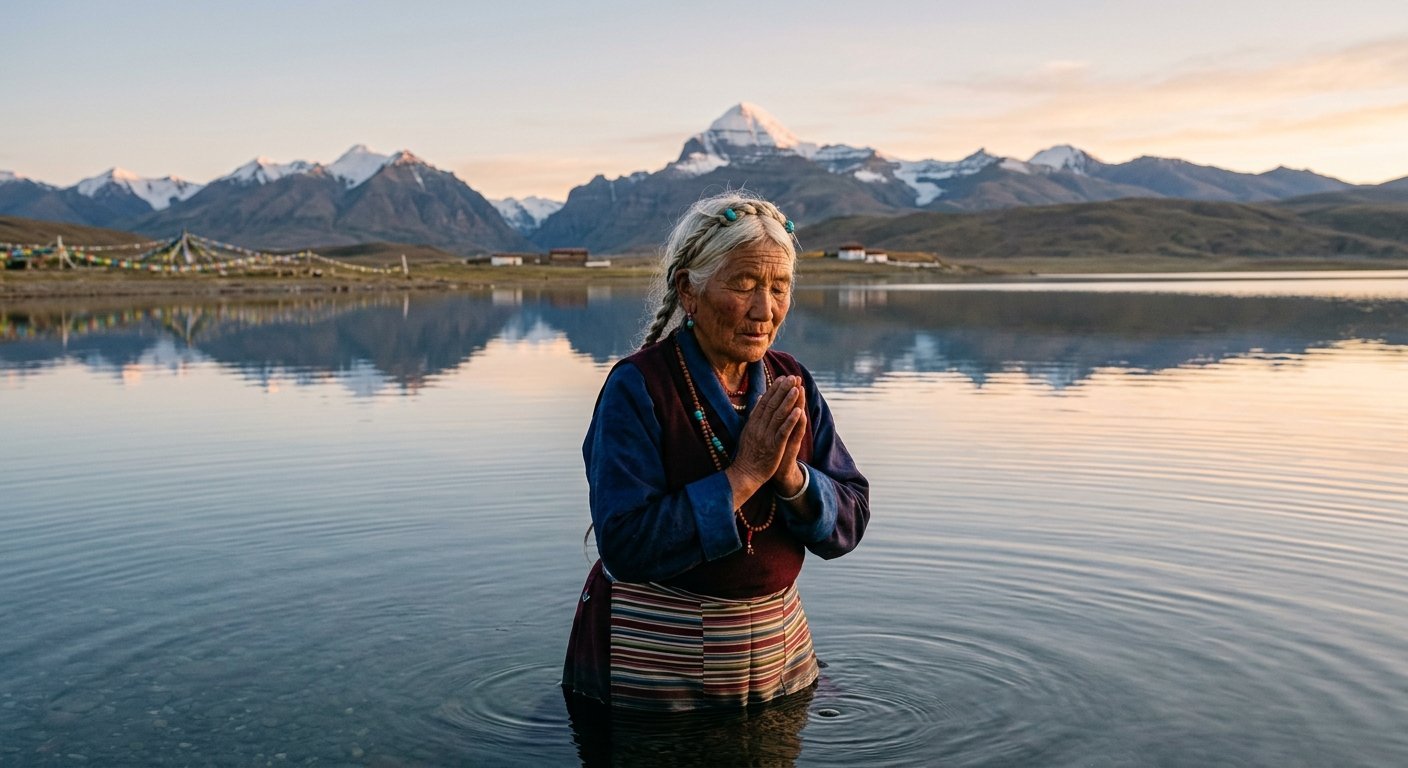
When you step into that water—and I mean the actual moment your feet touch the lake—you’re not erasing your past. You’re confronting it. The temperature alone forces you present. We’re talking 4 to 6 degrees Celsius on a warm day. Your body reacts before your mind can romanticize the moment. Every nerve fires. Every breath becomes deliberate.
I’ve seen senior citizens from Australia wade in with more courage than trekkers half their age. I’ve watched a 68-year-old woman from Melbourne stand waist-deep for eleven minutes, tears streaming, while her daughter waited onshore. She told me later she wasn’t crying from cold. She was crying because for the first time in thirty years, she felt forgiven—not by the lake, but by herself.
That’s the real transformation. Mansarovar doesn’t wash your sins away. It gives you the clarity to stop running from them.
The sacred lake Tibet sits at 4,590 meters above sea level. At that altitude, your body is already under stress. Oxygen is scarce. Your heart works harder. Your thoughts slow down. There’s no mental chatter up there. No room for it. When you enter the water, that clarity intensifies. You’re stripped down to what’s essential. And in that space, real spiritual work happens.
Kailash Pilgrim has guided over twenty Lake Mansarovar pilgrimages since 1996. What we’ve learned is this: the pilgrims who arrive expecting magic leave disappointed. The ones who arrive ready to do the hard inner work—they’re the ones whose lives actually shift.
Myth 2: The Transformation Happens in the Water
Wrong again. The holy dip transformation begins long before you reach the lake, and it continues months after you leave.
The real journey starts the moment you commit. Not when you book your package. Not when you board the flight. When you genuinely commit to doing whatever it takes to reach Mansarovar—that’s when the internal shifts begin.
We require a full year of preparation for the Lake Mansarovar pilgrimage. That’s not a sales tactic. It’s survival. And it’s where the first layer of transformation happens. You can’t fake your way through altitude acclimatization. You can’t shortcut the physical conditioning. Your body either adapts or it doesn’t. And in that process of showing up daily, training, preparing, facing your own resistance—that’s where change roots itself.
I’ve had pilgrims tell me the preparation year was harder than the yatra itself. One gentleman from London—a successful barrister, used to winning—almost quit in month three. He called me frustrated. “I’m not seeing results,” he said. I told him what I tell everyone: you’re not training for a trek. You’re training your mind to handle discomfort without collapsing.
He stayed with it. By month eight, he wasn’t just physically ready. He’d become someone who could sit with difficulty without needing it to end immediately. That shift showed up everywhere in his life—his marriage, his work, his health. He reached Mansarovar, took his holy dip, and completed the Kailash parikrama. But he’d already transformed long before he touched the water.
The life-changing pilgrimage experience isn’t contained in one moment. It’s distributed across hundreds of small moments. The 5 AM training walks. The breath work. The discomfort of slowly increasing altitude. The decision to keep going when your body begs you to stop.
Then there’s the actual journey to the lake. The road from Kathmandu to Mansarovar isn’t scenic tourism. It’s raw, exhausting, and relentless. You spend days in vehicles crossing high passes. You sleep in basic guesthouses. You eat simple food. Every luxury you’ve relied on gets stripped away. By the time you see the lake for the first time, you’re already not the same person who left home.
And here’s what no one tells you—the integration happens after. Most pilgrims expect to return home spiritually elevated, floating through life. Reality is messier. You come back changed, but the world hasn’t changed. Your job is still your job. Your relationships are still your relationships. The challenge isn’t the holy dip. It’s bringing that clarity back into ordinary life without losing it.
We stay connected with pilgrims for months after their return. Some adapt beautifully. Others struggle. The ones who do best are the ones who understand that Mansarovar didn’t fix them. It revealed what needed attention. Then they had to do the work.
The Holy Dip Itself: What Really Happens
Let’s talk about the actual experience, because this is where expectations and reality collide hardest.
You’ve traveled for days. You’ve crossed multiple high-altitude passes. You’ve acclimatized in Kathmandu and again in Tibet. You’ve probably dealt with headaches, nausea, broken sleep, and doubt about whether your body can handle this. Then you see the lake.
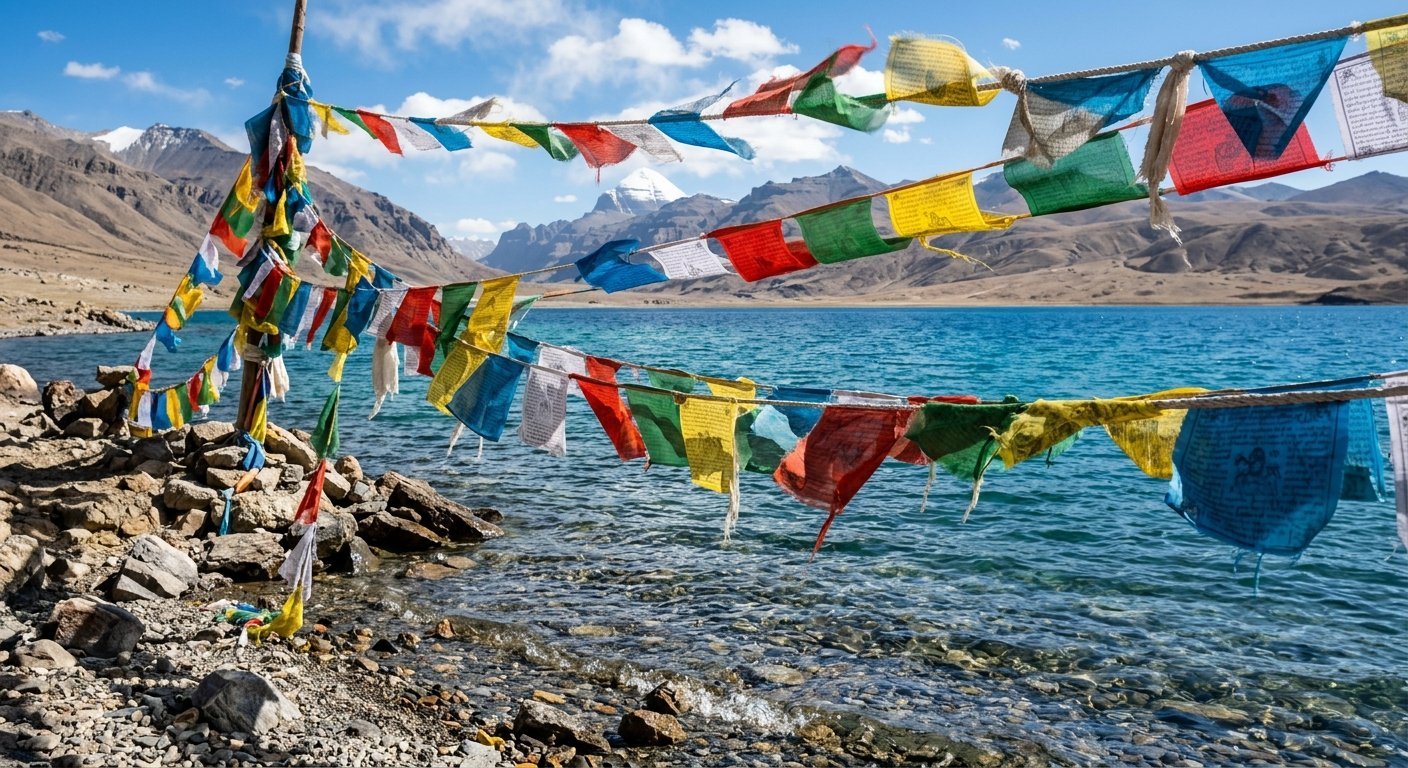
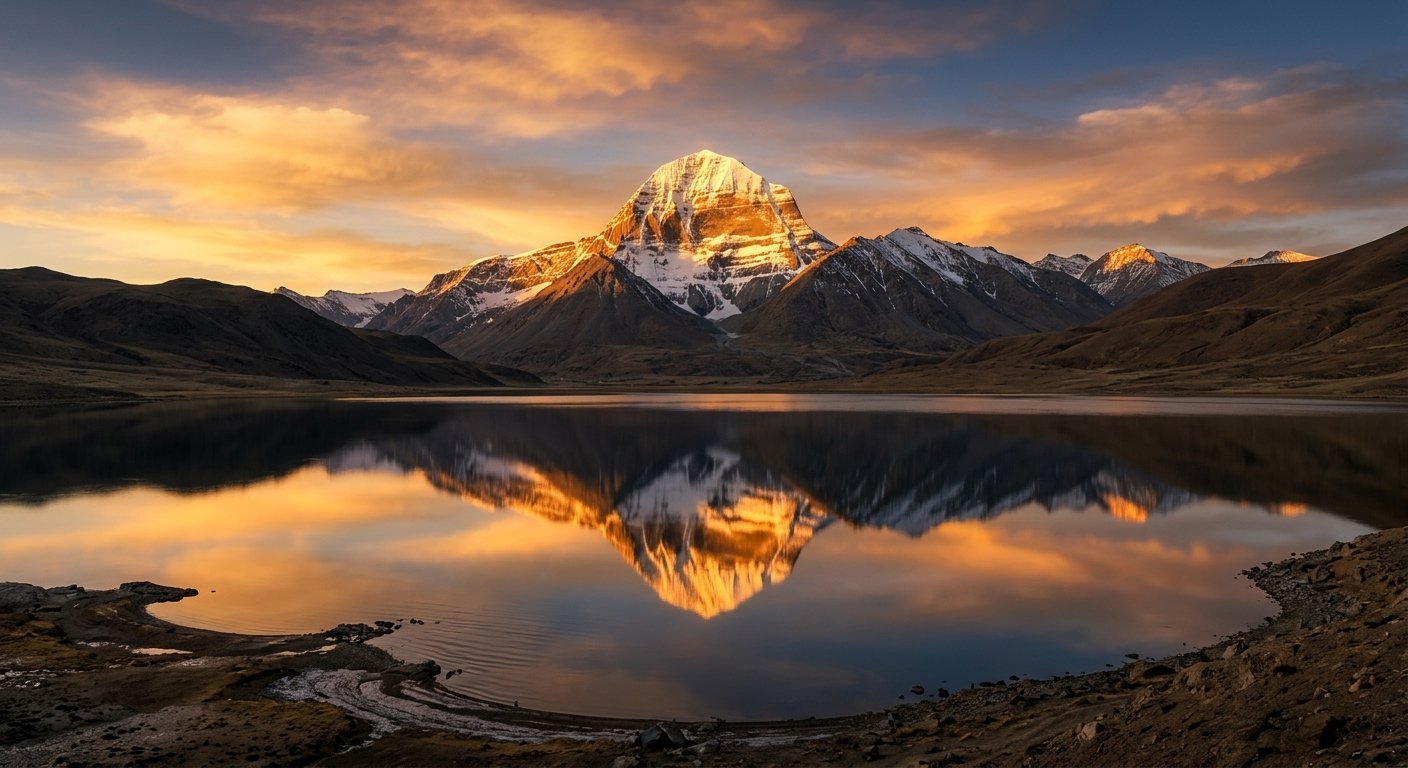
It’s vast. The water is impossibly blue against the barren landscape. Mount Kailash rises behind it, close enough that you feel watched. The wind is constant. The air is thin. And there’s a silence around Mansarovar that’s almost physical. It presses in on you.
Most pilgrims cry before they even reach the water. Not from emotion—though there’s plenty of that. From sheer overwhelm. This is what you came for. And now you’re here. And it’s real.
The holy dip itself is brief. It has to be. The water temperature doesn’t allow for long immersion. You walk in, you submerge fully if you can, you come out. Maybe ninety seconds. Maybe less if your body can’t handle it. There’s no minimum time requirement for spiritual benefit. The lake doesn’t measure your devotion in minutes.
What strikes pilgrims most isn’t the cold. It’s the stillness they feel inside it. For those few seconds, every mental loop stops. Every worry, every plan, every regret—gone. You’re just there. Fully. Completely. Nothing else exists.
One pilgrim—a tech entrepreneur from Bangalore who’d spent fifteen years building a company—told me later he’d never experienced a moment without thought before Mansarovar. His mind was always calculating, always planning three steps ahead. In the lake, for the first time since childhood, his mind went quiet. He said it terrified him and freed him at the same time.
That’s what the sacred lake Tibet offers. Not answers. Not absolution. Just presence. And for most people living in constant mental noise, that few seconds of silence is the most profound spiritual experience they’ve ever had.
The spiritual benefits Mansarovar provides aren’t about what you gain. They’re about what falls away. The stories you’ve been telling yourself about who you are and what you need—they lose their grip. Even if just for a moment. And sometimes a moment is enough to change everything.
Myth 3: You Need to Be Deeply Religious to Be Transformed
This one’s interesting because it goes both ways. Some people think you need years of spiritual practice to “deserve” the Lake Mansarovar pilgrimage. Others think if you’re not religious, there’s no point going. Both are wrong.
I’ve guided atheists to Mansarovar. I’ve guided devout Shiva bhakts. I’ve guided people who couldn’t tell you the difference between a mantra and a mudra. The transformation doesn’t depend on your belief system. It depends on your willingness to show up fully.
The sacred lake Tibet doesn’t ask for your credentials. It doesn’t check your devotional resume at the shore. What it demands is presence. And difficulty has a way of forcing presence better than any meditation practice.
One of our pilgrims—a software engineer from Sydney who described himself as “culturally Hindu but practically agnostic”—joined the yatra because his mother had always wanted to go but couldn’t. He went for her. He didn’t expect anything for himself.
He completed the parikrama around Kailash before reaching Mansarovar. By the time he took his holy dip, something had shifted. He didn’t suddenly become religious. He didn’t start believing in deities he’d dismissed his whole adult life. But he found reverence. For the mountains. For the effort. For the lineage of pilgrims who’d walked this path before him. That’s a spiritual experience, even if he’d never call it that.
The holy dip transformation isn’t about adopting new beliefs. It’s about encountering something bigger than yourself and letting that change your perspective. You don’t have to worship Shiva to feel the power of Kailash. You don’t have to believe in ritual purification to feel different after immersing in Mansarovar.
What you do need is respect. For the journey. For the altitude. For your own limits. And for the fact that millions of people have considered this place holy for thousands of years. There’s wisdom in that continuity. You don’t have to share their beliefs to honor their devotion.
Kailash Pilgrim doesn’t require pilgrims to perform specific rituals or hold particular beliefs. What we do require is sincerity. If you’re coming as a tourist collecting experiences, you’ll probably be miserable. The journey’s too hard for casual tourism. But if you’re coming with genuine curiosity about what this place might offer you—spiritually, psychologically, physically—then you’re ready.
The life-changing pilgrimage experience meets you where you are. It doesn’t ask you to be someone you’re not.
Myth 4: The Pilgrimage Is Only for the Young and Fit
This is the myth that keeps seniors from experiencing something that might matter most to them. And it’s based on outdated assumptions about how these yatras operate.
Yes, the Lake Mansarovar pilgrimage is physically demanding. The altitude alone makes everything harder. Walking, sleeping, eating—basic functions require more effort at 4,500 meters than at sea level. But demanding doesn’t mean impossible. It means you need proper support.
We’ve taken pilgrims in their seventies to Mansarovar. We’ve guided people with diabetes, with heart conditions managed by medication, with knee replacements. We’ve never had a medical emergency that couldn’t be handled because we prepare for worst-case scenarios at every stage.
Here’s what makes it possible: slow acclimatization, medical support, and realistic pacing. We don’t rush. Ever. If someone needs an extra day to adjust, we adjust. We carry oxygen. We have protocols for altitude sickness. We monitor everyone daily.
The physical challenge is real, but it’s not extreme mountaineering. You’re not climbing Kailash. You’re traveling to a lake, walking on relatively flat terrain, and spending time at altitude with full logistical support. That’s different from adventure trekking.
One of our most memorable pilgrims was a 71-year-old woman from Perth. She’d survived cancer twice. She wanted to reach Mansarovar before—in her words—”my body gives up entirely.” Her doctors cleared her. We designed extra acclimatization days into her itinerary. She moved slower than the group, and that was fine. When she reached the lake and took her holy dip, she stayed in the water longer than anyone else that day. Not because she was showing off. Because she’d waited seventy-one years for that moment, and she wasn’t going to rush it.
She made it. And she’s still telling that story five years later.
The spiritual benefits Mansarovar offers don’t discriminate by age. Neither should access. What’s required is honest assessment of your health, proper medical clearance, and a willingness to prepare seriously. If you can commit to the preparation year, work with your doctors, and accept that you’ll need support—there’s no age limit on this pilgrimage.
Kailash Pilgrim specializes in senior citizen and NRI yatras precisely because these demographics often get overlooked by operators chasing younger, fitter clients. We know how to make this journey safe for people who need extra care. That’s not a marketing line. It’s built into every itinerary we design.
What Actually Transforms: The Unseen Shifts
So if it’s not instant karma cleansing, if it’s not contained in one holy moment, if it doesn’t require perfect faith or perfect fitness—what actually changes?
Perspective. That’s the honest answer.
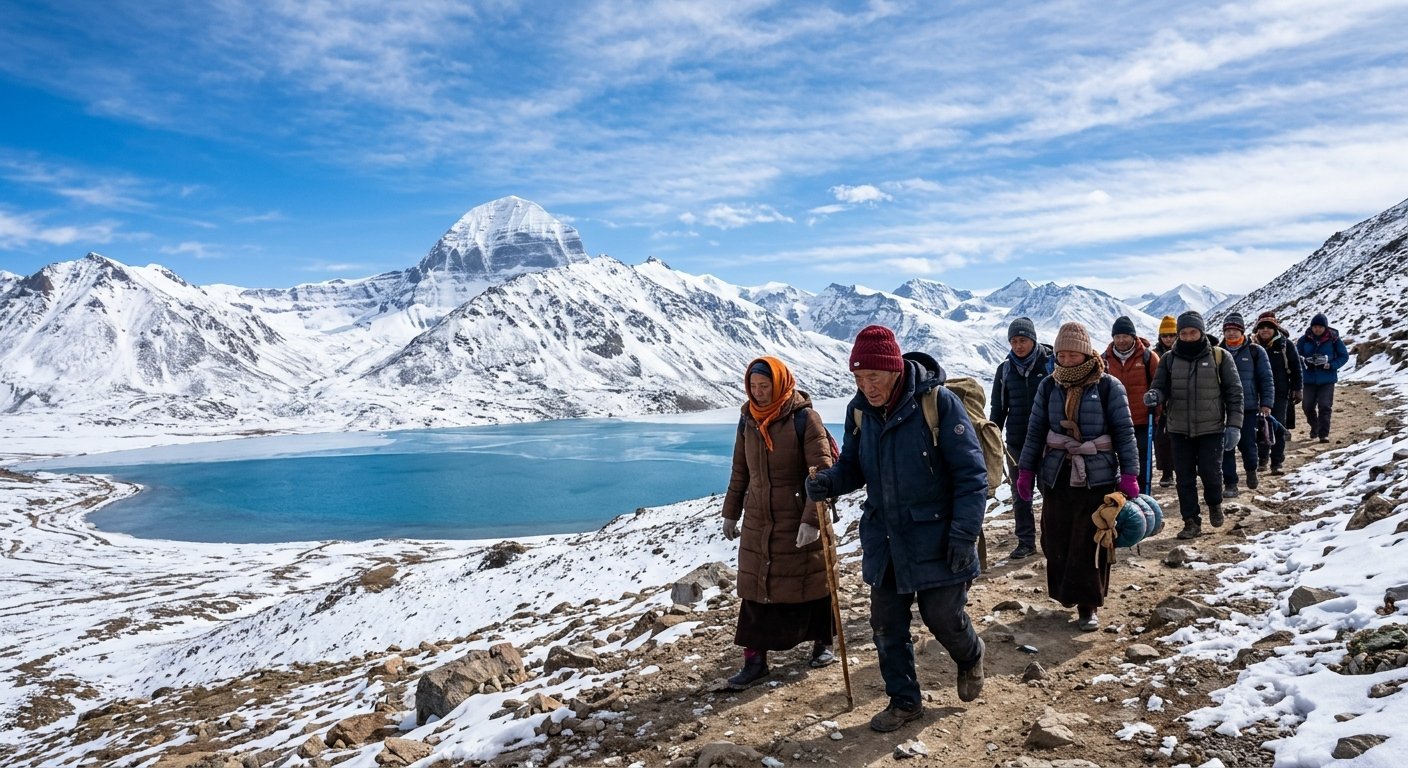
You spend weeks preparing your body. You travel for days across difficult terrain. You push yourself to altitudes your body isn’t designed for. You strip away comfort, convenience, and control. And somewhere in that process, the things that felt desperately important back home start looking different.
The promotion you were stressed about. The argument with your sibling. The money worries. The social comparisons. They don’t disappear. But they shrink. They lose their grip on your nervous system.
I’ve watched this happen consistently. Pilgrims arrive carrying their lives like heavy luggage. They talk about their problems in the first few days. Then the altitude and exhaustion take over, and they stop talking so much. They don’t have energy for narrative. They’re just putting one foot in front of the other.
By the time they reach Mansarovar, something’s loosened. The problems are still there. But the person carrying them has changed. They’re stronger than they thought. They’re capable of more discomfort than they knew. And weirdly, that makes everything else feel more manageable.
The life-changing pilgrimage experience isn’t mystical. It’s deeply practical. You discover you can handle hard things. And once you know that, everything else shifts.
One pilgrim from Toronto told me she’d been anxious her entire adult life. Medication helped, but the baseline worry was always there. After Mansarovar, it didn’t vanish. But she noticed she recovered faster from anxious spirals. She had proof now—physical, undeniable proof—that she could survive difficulty. Her body had the evidence. That changed her relationship with fear.
That’s transformation. Not drama. Not lightning bolts. Just a steady, irreversible shift in what you know yourself to be capable of.
The 2026 Fire Horse Year: Why This Timing Matters
If you’re reading this in 2026, you’re sitting on rare timing. The Tibetan Fire Horse Year comes once every twelve years. In Tibetan Buddhist belief, circumambulating Kailash during this year carries the merit of thirteen ordinary circumambulations.
You don’t have to believe in the mathematics of merit to recognize that collective intention matters. When thousands of pilgrims arrive at the same place at the same time, all holding it as sacred, the energy shifts. Skeptics can call it psychology. Believers can call it divine blessing. Either way, the experience intensifies.
Kailash Pilgrim is preparing for significantly higher demand this year. Every accommodation near Kailash and Mansarovar is booking faster than usual. If you’ve been considering the Lake Mansarovar pilgrimage and waiting for the right time, this is it.
But here’s the hard truth—if you’re planning for 2026 and you haven’t started preparing yet, you’re behind. The yatra season runs from May to September. If you’re reading this in March or April, you’ve got maybe two months before departures begin. That’s not enough time to prepare your body properly for high altitude.
You can still join. But you’ll need to be realistic about your current fitness, get medical clearance immediately, and commit to intensive preparation. Or you’ll need to plan for 2027, which is a better choice if your body needs more time.
The sacred lake Tibet will be there next year. But the Fire Horse convergence won’t.
Practical Reality: What to Actually Expect
Let’s drop the spiritual language for a moment and talk logistics. Because transformation is great, but you also need to know what you’re signing up for practically.
The Lake Mansarovar pilgrimage from Kathmandu typically takes fourteen to eighteen days. That includes acclimatization stops, travel days, time at the lake, and the Kailash parikrama. Some itineraries include helicopter segments to reduce driving time and altitude stress. Others go entirely by road. The route you choose depends on your budget, your fitness, and your time constraints.
Altitude sickness is the biggest risk. Not danger—risk. Most people get mild symptoms. Headache, nausea, sleep disruption. These are normal and manageable. What’s not manageable without proper protocols is high altitude pulmonary edema or high altitude cerebral edema. Both are rare but serious. This is why acclimatization isn’t optional and why you need operators who know how to recognize early warning signs.
Kailash Pilgrim has taken over a thousand pilgrims to Mansarovar without a single critical medical incident because we acclimatize slowly, we monitor obsessively, and we carry oxygen and emergency protocols everywhere. That’s the standard you should expect from any operator. If they rush the itinerary or skip acclimatization stops to save costs, walk away.
Food is basic. Dal, rice, vegetables, chapati. Sometimes noodles. You’re not going for the cuisine. You’re going to reach the sacred lake Tibet, and that requires fuel, not gourmet meals. If you have dietary restrictions, communicate them early. Most things can be managed, but you’re not going to find specialized health food stores at 4,500 meters.
Accommodation ranges from guesthouses to tented camps. None of it is luxury. You’ll have a bed, maybe hot water if you’re lucky, definitely cold nights. If you need comfort to feel safe, this journey will be difficult. If you can be uncomfortable and okay, you’ll be fine.
The holy dip itself is usually done in the morning when pilgrims have energy and the weather is clearest. You’ll have time at the lake—usually several hours. Some pilgrims dip once. Some wade in multiple times. Some sit on the shore and just absorb the space. There’s no prescribed ritual you must perform. You’re there. That’s what matters.
The spiritual benefits Mansarovar offers aren’t conditional on perfect execution. You don’t lose points for being cold, or scared, or uncertain. You get credit just for showing up.
Who Should Actually Go
Not everyone. Let’s be honest about that.
If you’re chasing Instagram content, save your money. If you want to say you’ve been to Kailash but you’re not willing to prepare properly, don’t go. If you think this will fix your life without you having to do the work, stay home.
This pilgrimage is for people who are genuinely seeking something, even if they can’t name exactly what. It’s for people who understand that meaningful experiences require difficulty. It’s for people willing to respect a tradition they may not fully understand. And it’s for people who can handle discomfort without needing rescue.
If that’s you, then yes. Go. The life-changing pilgrimage experience is real. But it asks something of you in return.
Kailash Pilgrim specializes in NRIs—pilgrims based in Australia, the UK, the USA, Canada, the UAE, and Singapore who want to reconnect with something they may have lost living abroad. We also focus on seniors who’ve waited their whole lives for this opportunity. These aren’t our target markets. They’re our communities. And we understand what they need because founder Shalini Patel has been walking this path since 1996.
If you’re reading this and feeling called—not just curious, but actually called—then that instinct is worth listening to. The Lake Mansarovar pilgrimage isn’t for everyone. But if it’s for you, you already know.
Frequently Asked Questions
Is the holy dip in Lake Mansarovar safe for seniors?
Yes, with proper preparation and medical clearance. The cold water and high altitude require caution, but thousands of seniors complete the holy dip safely every year. Work with operators who specialize in senior pilgrim care, allow extra acclimatization time, and have medical support on-site.
How cold is the water at Mansarovar?
Lake Mansarovar water temperature ranges from 4 to 6 degrees Celsius, even in summer months. Most pilgrims can tolerate immersion for 30 to 90 seconds. You don’t need to stay in long for the experience to be meaningful.
Can I visit Lake Mansarovar without doing the Kailash parikrama?
Yes. Some itineraries include only Mansarovar without the full Kailash circumambulation. This reduces the physical demand significantly while still offering the sacred lake experience. Discuss options with your operator based on your fitness level.
What permits are required for the Lake Mansarovar pilgrimage?
You’ll need a Tibet Travel Permit, Alien’s Travel Permit, and Military Permit, plus a Chinese group visa. Kailash Pilgrim handles all permit coordination for our groups. Processing takes four to six weeks, so plan ahead.
Ready to Transform Your Life at Lake Mansarovar?
The Lake Mansarovar pilgrimage isn’t a vacation. It’s a commitment to yourself, to your growth, and to something bigger than your daily concerns. If you’re ready to take that step, Kailash Pilgrim will walk beside you every meter of the way.
With over twenty completed Kailash journeys since 1996, founder Shalini Patel brings lived experience that no brochure can capture. We don’t sell packages. We guide pilgrimages. And we prepare you—physically, spiritually, and practically—for what’s ahead.
The 2026 Fire Horse Year brings rare spiritual energy to Kailash and Mansarovar. If you’ve been waiting for the right time, this is it. But preparation takes a full year, and departures begin in May. Contact Kailash Pilgrim today to discuss your readiness, your timeline, and your path to the sacred lake. This isn’t a journey you take lightly. But it’s one you’ll carry for the rest of your life.