You’ve heard about the Kailash Yatra. You’ve read about the spiritual pull of Mount Kailash. But somewhere between the dream and the booking form, there’s a question most NRIs don’t ask early enough: which route makes sense for you?
Here’s what I’ve learned after accompanying pilgrims on this journey for over two decades — the Lhasa route isn’t just a path to Kailash. It’s an experience that changes how you understand the entire pilgrimage. Most tour operators treat Lhasa as a stopover. We don’t. At Kailash Pilgrim, the Lhasa route has become the preferred choice for NRIs who want proper acclimatization, cultural immersion, and the kind of preparation that makes the difference between struggling at altitude and actually experiencing the sacred parikrama.
The difference matters more than you think.
Why NRIs Choose the Lhasa Route Over Kathmandu
Most pilgrims default to the Kathmandu route because it’s familiar. It’s been the traditional gateway for decades. But here’s the reality I’ve watched unfold trip after trip — the Lhasa route gives you something the Nepal entry can’t match: time.
Not just travel time. Acclimatization time.
When you fly into Lhasa, you’re landing at 3,650 metres above sea level. Your body needs to adjust before you climb higher toward Kailash at 6,638 metres. The Lhasa route builds in that adjustment naturally. You spend two to three days exploring Lhasa’s monasteries and palaces before you even start the road journey to Mount Kailash. You’re walking, breathing thin air, letting your red blood cell count catch up.
Compare that to the Kathmandu approach, where you’re rushing through border crossings and hitting altitude faster than your body can adapt. I’ve seen strong, healthy pilgrims struggle unnecessarily because they didn’t give themselves this buffer. The medical data backs this up — gradual altitude gain reduces acute mountain sickness risk by nearly 40 percent.
For NRIs flying in from Australia, the UK, the UAE, or North America, the Lhasa route also simplifies logistics. You’re dealing with Chinese permits and visas upfront, coordinated through one system. No dual-country permit juggling. No land border delays. Kailash Pilgrim handles the entire Tibet Travel Permit process, the Alien’s Travel Permit, and the Military Permit — all from one coordination point. You land, we’re there, and the journey begins.
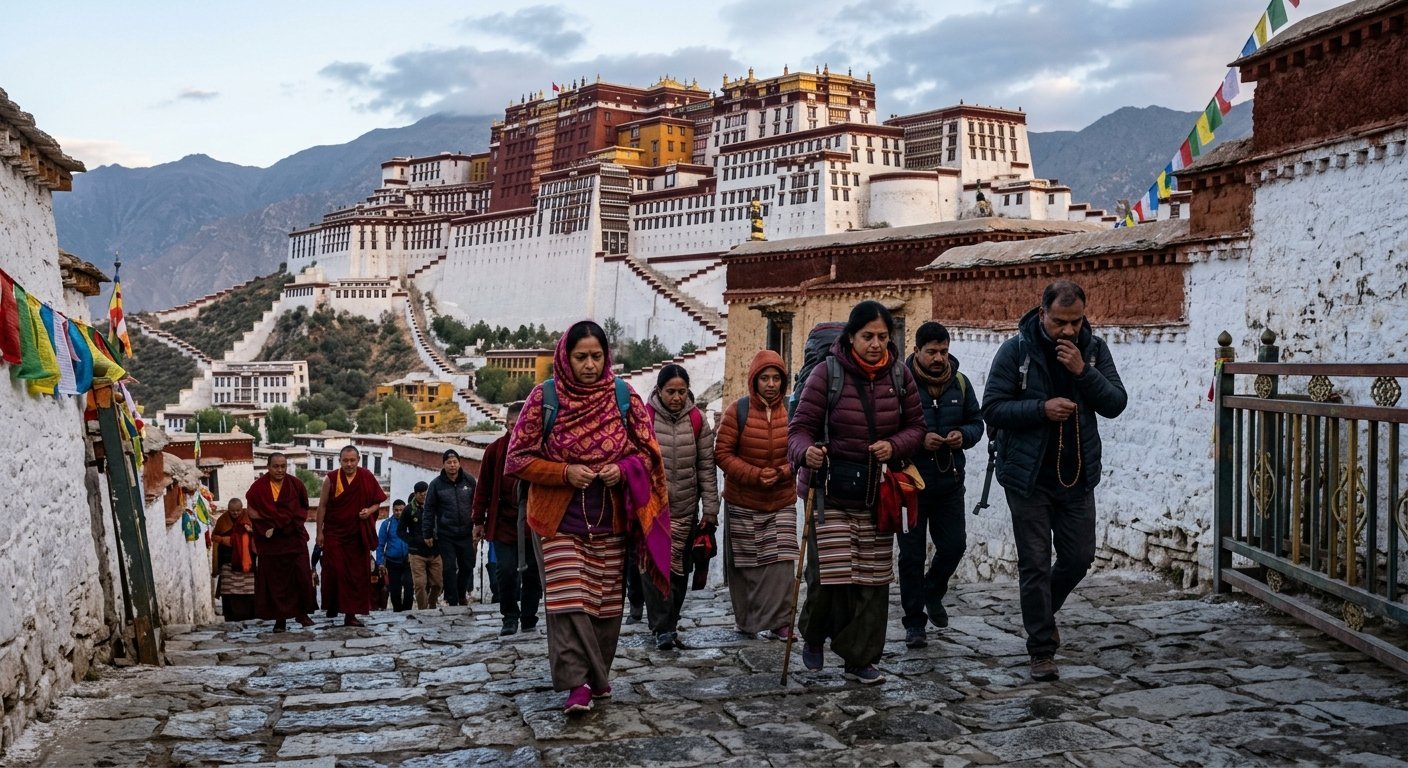
There’s also the cultural depth. Lhasa isn’t a transit stop. It’s the spiritual heart of Tibetan Buddhism. Walking through the Potala Palace or sitting in Jokhang Temple isn’t tourism — it’s preparation. You’re stepping into the living tradition that surrounds Mount Kailash before you reach the mountain itself.
What Makes Potala Palace a Sacred Starting Point
The Potala Palace sits at 3,700 metres above sea level. That alone makes it significant for your body’s adjustment. But the real reason we begin every Lhasa-route yatra here isn’t medical — it’s spiritual.
This 1,300-year-old structure was the winter residence of the Dalai Lamas since the 7th century. It’s named after Mount Potalaka, the sacred abode of Avalokiteshvara, the bodhisattva of compassion. When you climb the 1,080 stone steps to reach the palace’s main complex, you’re not just sightseeing. You’re beginning a pilgrimage in the truest sense — through effort, through breath control, through quiet reverence.
I’ll be honest. The climb is challenging for many senior citizens and first-time high-altitude travellers. We’ve learned to pace this visit differently than most tour groups. No rushing. We start early in the morning when the air’s cooler and the crowds are thinner. We stop frequently. Our Sherpa support team monitors oxygen levels discreetly, and we carry supplemental oxygen for anyone who needs it.
Inside the palace, the chapels and meditation halls prepare your mind for what’s ahead. The murals, the butter lamps, the ancient statues of Lord Padmasambhava and Avalokiteshvara — they ground you in the sacred purpose of this journey. By the time you leave the Potala Palace, your body’s adjusting to altitude and your mind’s shifting from tourist mode to pilgrim mode.
That shift matters. Mount Kailash doesn’t reward casual visitors. It calls devotees.
We also use the Potala visit to assess how each pilgrim’s handling the elevation. Some people feel fine. Others show early signs of altitude stress — headaches, light nausea, shortness of breath. We adjust the itinerary accordingly. If someone needs an extra rest day in Lhasa, we build that in. The Fire Horse Year of 2026 has brought unprecedented interest in this yatra, but we’ve never sacrificed safety for schedule. Not once.
The Lhasa Route Itinerary That Actually Works for NRIs
Most Lhasa itineraries look identical on paper. Fly in, see Potala, drive to Kailash, do parikrama, fly out. But the difference between a well-structured yatra and a rushed disaster comes down to pacing.
Here’s the itinerary we’ve refined over 20 years of leading NRIs on this route.
Day 1 — Arrival in Lhasa
You land at Lhasa Gonggar Airport. We meet you with oxygen cylinders, bottled water, and a private vehicle for the 90-minute drive into the city. No group bus chaos. You check into your hotel, rest, and do nothing else. Seriously. The first day is about breathing and sleeping at altitude. We monitor your oxygen saturation levels in the evening. If you’re hovering below 85 percent, we start supplemental oxygen support overnight.
Day 2 — Potala Palace and Jokhang Temple
Morning visit to Potala Palace. Afternoon visit to Jokhang Temple and a walk through Barkhor Street, the pilgrimage circuit around the temple. You’re moving slowly, deliberately. Both sites sit at similar elevations, so your body’s getting consistent exposure without steep climbs. By the end of Day 2, most pilgrims feel noticeably better. Appetite returns. Sleep improves.
Day 3 — Drepung and Sera Monasteries
Two of the largest monastic universities in Tibetan Buddhism. These aren’t tourist attractions — they’re living centres of study and debate. You’ll see monks engaged in philosophical debate at Sera in the afternoon, a practice that’s continued unbroken for centuries. Culturally, this day deepens your understanding of Tibetan Buddhist traditions. Physically, it’s another day at moderate altitude before you start the drive west.
Day 4 to 6 — Overland Journey to Mount Kailash
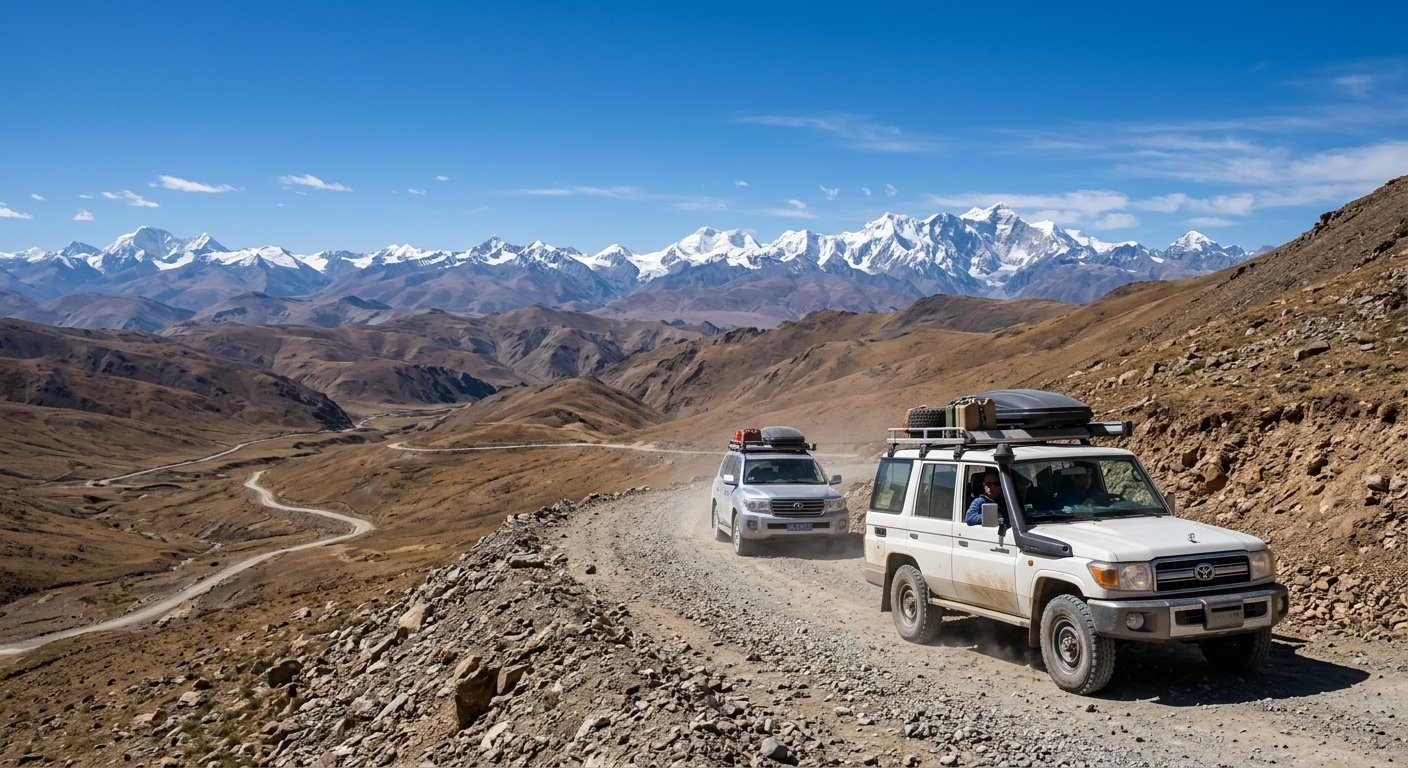
This is where the Lhasa route earns its reputation. The drive from Lhasa to Darchen (the base camp for Kailash parikrama) takes three days, covering roughly 1,200 kilometres across the Tibetan plateau. You’ll cross high mountain passes, including Mayum La at 5,200 metres. You’ll see Yamdrok Lake, one of Tibet’s four sacred lakes. You’ll stop at Saga and Paryang for overnight rest.
Most importantly, you’re ascending gradually. Each night’s accommodation sits at a slightly higher elevation than the last. Your body adapts in stages. By the time you reach Darchen at 4,600 metres, you’ve been living above 3,600 metres for nearly a week. That preparation is the reason our pilgrims complete the parikrama with far fewer altitude-related evacuations than groups coming via the Kathmandu route.
Day 7 — Darchen and Mansarovar Lake
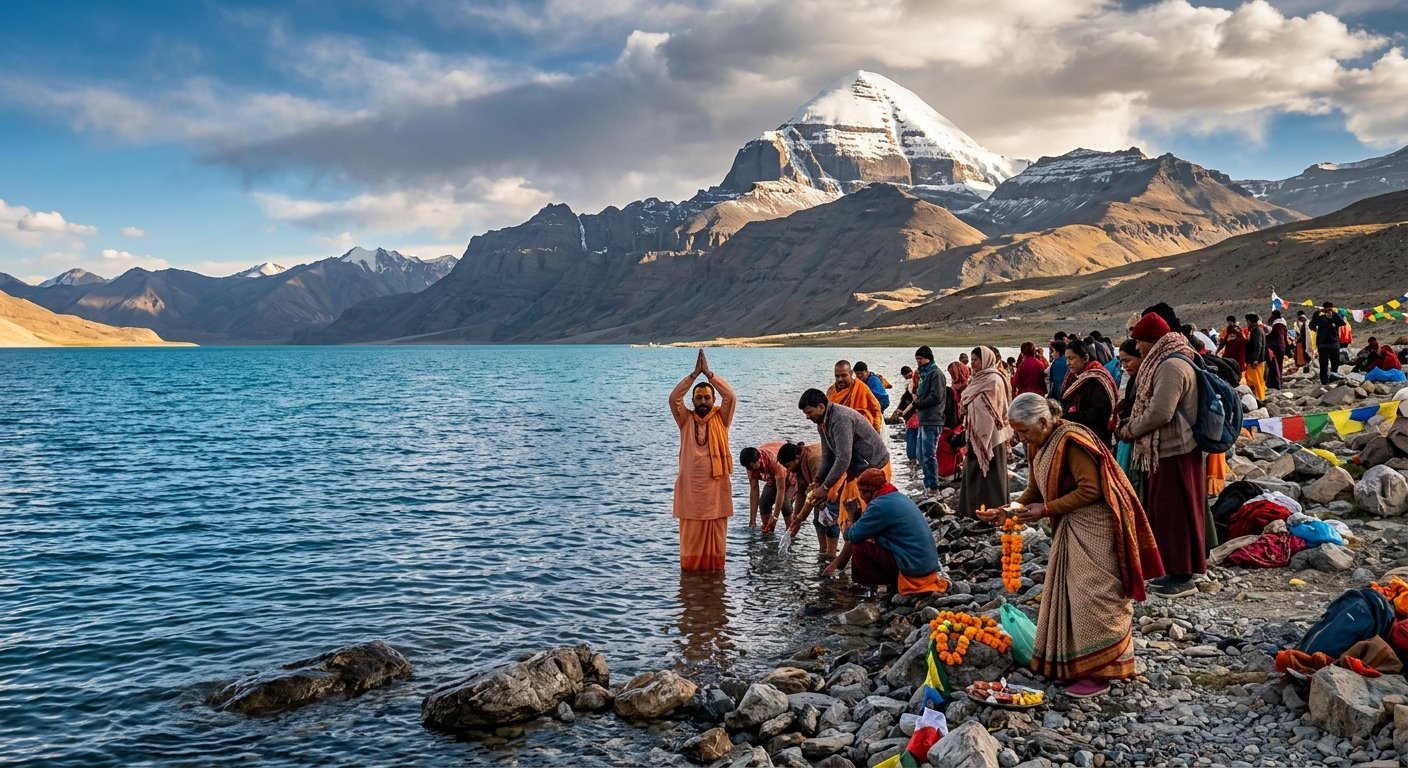
Rest day. Visit Lake Mansarovar for a holy dip (weather and health permitting) and puja rituals. The lake sits at 4,590 metres, so you’re still acclimatizing. Many pilgrims describe this day as the emotional and spiritual peak of the entire journey. The water’s freezing, the wind’s sharp, and yet there’s a pull to the place that’s hard to describe if you haven’t felt it.
Day 8 to 10 — Mount Kailash Parikrama
The 52-kilometre circuit around Mount Kailash. Day one takes you from Darchen to Dirapuk Monastery. Day two crosses Dolma La pass at 5,630 metres — the highest and most challenging stretch. Day three descends to Zuthulpuk and back to Darchen. Each day’s trek ranges from 6 to 10 hours depending on your pace. We walk with you. Full Sherpa support. Yaks carry your luggage. Oxygen’s available at every camp. No one walks alone.
Day 11 to 13 — Return to Lhasa
The overland journey back. By now, your body’s fully acclimatized, so the return feels easier despite covering the same high passes. You’re also carrying the emotional weight of having completed something few people in the world ever attempt.
Day 14 — Departure from Lhasa
Flight out. Most pilgrims describe feeling physically exhausted and spiritually restored at the same time.
This itinerary isn’t the fastest option. It’s the safest. And for NRIs who’ve spent months preparing physically and spiritually for this journey, safety isn’t optional. It’s sacred responsibility.
How Altitude Acclimatization Saves Your Kailash Parikrama
Let’s talk about the part most operators mention once and move on from: altitude sickness.
Acute mountain sickness isn’t rare. It’s common. Roughly 25 percent of people ascending rapidly above 2,500 metres experience symptoms — headache, nausea, dizziness, fatigue. At 5,000 metres and above, that percentage climbs. The Dolma La pass during parikrama sits at 5,630 metres. If your body hasn’t adjusted properly before you attempt that crossing, you’re gambling.
I’ve seen pilgrims turn back. I’ve seen medical evacuations. I’ve also seen 70-year-old devotees complete the circuit without supplemental oxygen because they gave their bodies time to adapt.
The Lhasa route’s greatest advantage is time and structured exposure. You’re not just spending days at altitude — you’re spending those days moving, walking, engaging your cardiovascular system in thin air. That’s what triggers the physiological adaptation: increased red blood cell production, improved oxygen-carrying capacity, better efficiency in how your cells use available oxygen.
At Kailash Pilgrim, we layer additional safeguards on top of this natural acclimatization. Every member of our team carries a pulse oximeter to check your blood oxygen saturation twice daily. We monitor resting heart rates. We ask about sleep quality, appetite, and headaches. If your oxygen saturation drops below 80 percent at rest, we intervene immediately — supplemental oxygen, possible rest day, or in rare cases, descent to a lower altitude.
We also prepare pilgrims for a full year before departure. The pre-yatra program includes cardiovascular training guidance, breathing exercises, and gradual endurance building. We’re not training you to climb Everest. We’re training your body to function efficiently in low-oxygen environments. The difference is everything.
One more thing. Altitude sickness doesn’t care how fit you are. I’ve watched marathon runners struggle while sedentary senior citizens thrive. The variable isn’t fitness — it’s acclimatization. Respect the process, and your body responds.
Comparing Lhasa Route vs Kathmandu Route for NRI Pilgrims
There’s no universal right answer. But there’s a right answer for most NRIs, and it’s the Lhasa route. Here’s why.
Acclimatization Time
Lhasa route: 6 to 7 days of gradual altitude exposure before parikrama.
Kathmandu route: 2 to 3 days, with faster altitude gain and higher risk of acute mountain sickness.
If you’re flying in from sea level — Sydney, London, Dubai, Toronto — the Lhasa route’s pacing protects you.
Permit and Visa Coordination
Lhasa route: All permits processed through Chinese authorities. Single-point coordination.
Kathmandu route: Nepal entry permits plus Tibet permits. Two governments, two bureaucracies, more potential delays.
For NRIs managing this journey from overseas, the Lhasa route simplifies logistics significantly. Kailash Pilgrim handles the Tibet Travel Permit, Alien’s Travel Permit, and Military Permit — all submitted and tracked through one system. You’re not splitting your coordination between Nepal and China.
Cultural Immersion
Lhasa route: Deep exposure to Tibetan Buddhist heritage before reaching Kailash. Potala Palace, Jokhang Temple, Sera Monastery — these aren’t detours. They’re preparation.
Kathmandu route: Faster transit to Kailash, less cultural context.
If your goal is only to complete the parikrama as quickly as possible, the Kathmandu route works. If your goal is pilgrimage in the truest sense, Lhasa offers something deeper.
Cost
Kathmandu route is typically 10 to 15 percent less expensive due to shorter duration and lower permit coordination costs. But I’ll tell you what I tell every inquiry we receive: don’t choose your route based on saving a few hundred dollars. Choose based on safety, preparation, and the experience you actually want. Medical evacuation from Kailash costs far more than the price difference between routes — and that’s assuming money’s the only thing at stake.
Senior Citizen Suitability
Lhasa route: Better for seniors. Slower ascent, more rest days, better infrastructure in Lhasa for medical support.
Kathmandu route: Faster, steeper, less forgiving.
We’ve led pilgrims in their 70s on the Lhasa route who completed parikrama without major issues. The key was time and pacing.
Travel Logistics from Overseas
Lhasa route: Direct international connections to Chengdu or Beijing, then domestic flight to Lhasa. Smoother for NRIs.
Kathmandu route: International flight to Kathmandu, overland entry to Tibet. More ground time, less comfort.
If you’re flying from Australia, the UAE, or North America, the Lhasa route aligns better with international flight paths and reduces total travel fatigue.
What the 2026 Fire Horse Year Means for Your Lhasa Yatra
The Tibetan Fire Horse Year comes once every 12 years. The next one is 2026. And if you’re even remotely considering this pilgrimage, this is the year to do it.
Tibetan astrology and Buddhist tradition hold that circumambulating Mount Kailash during the Fire Horse Year carries 12 times the spiritual merit of a regular year. One parikrama in 2026 equals 12 in any other year. For devotees of Lord Shiva, the alignment is similarly auspicious — the Fire Horse Year coincides with heightened spiritual energy around the mountain.
That’s not marketing language. That’s belief held by millions of Tibetan Buddhists and Hindu pilgrims. And it drives demand.
We’re already seeing unprecedented interest from NRIs for 2026 departures. Permits are finite. Infrastructure around Mount Kailash — guesthouses, campsites, support services — can only handle so many pilgrims at once. The Chinese authorities control access through a strict permit allocation system, and 2026 quotas are filling faster than any year I’ve seen.
If you’re planning to join the Fire Horse Year yatra, book early. We opened our 2026 slots in late 2025, and several departure batches are already at capacity. The Lhasa route, in particular, requires advance coordination — flights into Lhasa, ground transport, monastery visit permits, parikrama support logistics. Everything takes time to arrange.
There’s also the Mahakumbh alignment. For pilgrims planning to attend the Prayagraj Mahakumbh in early 2026 and then continue to Kailash, the timing works beautifully. Kailash Pilgrim offers combined packages that coordinate both sacred journeys without the stress of managing two separate trips. You complete the Kumbh, return home briefly if needed, and then depart for the Lhasa-Kailash yatra in the late spring or summer window when weather conditions are most favourable.
The Fire Horse Year isn’t a gimmick. It’s a once-in-12-years opportunity. And for NRIs who’ve been postponing this journey — waiting for the right time, the right health, the right preparation — 2026 is the answer.
Safety and Medical Preparedness on the Lhasa Route
Here’s something most operators don’t talk about until there’s a problem: medical preparedness at altitude is the difference between a completed yatra and a mid-trek evacuation.
At Kailash Pilgrim, our medical protocol starts a full year before you leave home. We provide a pre-yatra health checklist, recommend baseline fitness assessments, and advise on any underlying conditions that need medical clearance — hypertension, heart conditions, respiratory issues. We’ve turned away bookings when someone’s health profile indicated serious risk. That’s not easy to do, but it’s the responsible choice.
Once you’re in Tibet, the medical support continues throughout. Every group travels with a trained medical assistant who carries a comprehensive high-altitude medical kit — oxygen cylinders, pulse oximeters, medications for acute mountain sickness (Diamox), pain relief, anti-nausea medication, first aid supplies. We also coordinate with local Tibetan medical facilities in Lhasa, Saga, Darchen, and along the parikrama route.
Oxygen support is available at every overnight stop during the overland journey and throughout the Kailash circuit. Some pilgrims need supplemental oxygen only at night. Others use it intermittently during the day, especially at Dolma La pass. There’s no shame in using oxygen — it’s a tool that keeps you safe and allows you to complete the pilgrimage you came to do.
We also adjust the itinerary in real time if someone’s struggling. I’ve added extra rest days in Lhasa when a pilgrim’s oxygen levels weren’t stabilizing. I’ve slowed the parikrama pace for groups where multiple members needed longer recovery time at high camps. Flexibility isn’t a luxury — it’s built into how we operate.
Here’s what we won’t do: push anyone beyond safe limits just to keep a schedule. The mountain isn’t going anywhere. Your health is irreplaceable.
For senior citizens and pilgrims with pre-existing conditions, the Lhasa route’s slower ascent profile provides a critical safety margin. You’re not asking your body to do something extreme overnight. You’re giving it time to adapt, perform, and recover. That’s why we recommend the Lhasa route for NRIs over 60, anyone with cardiovascular concerns, and first-time high-altitude travellers.
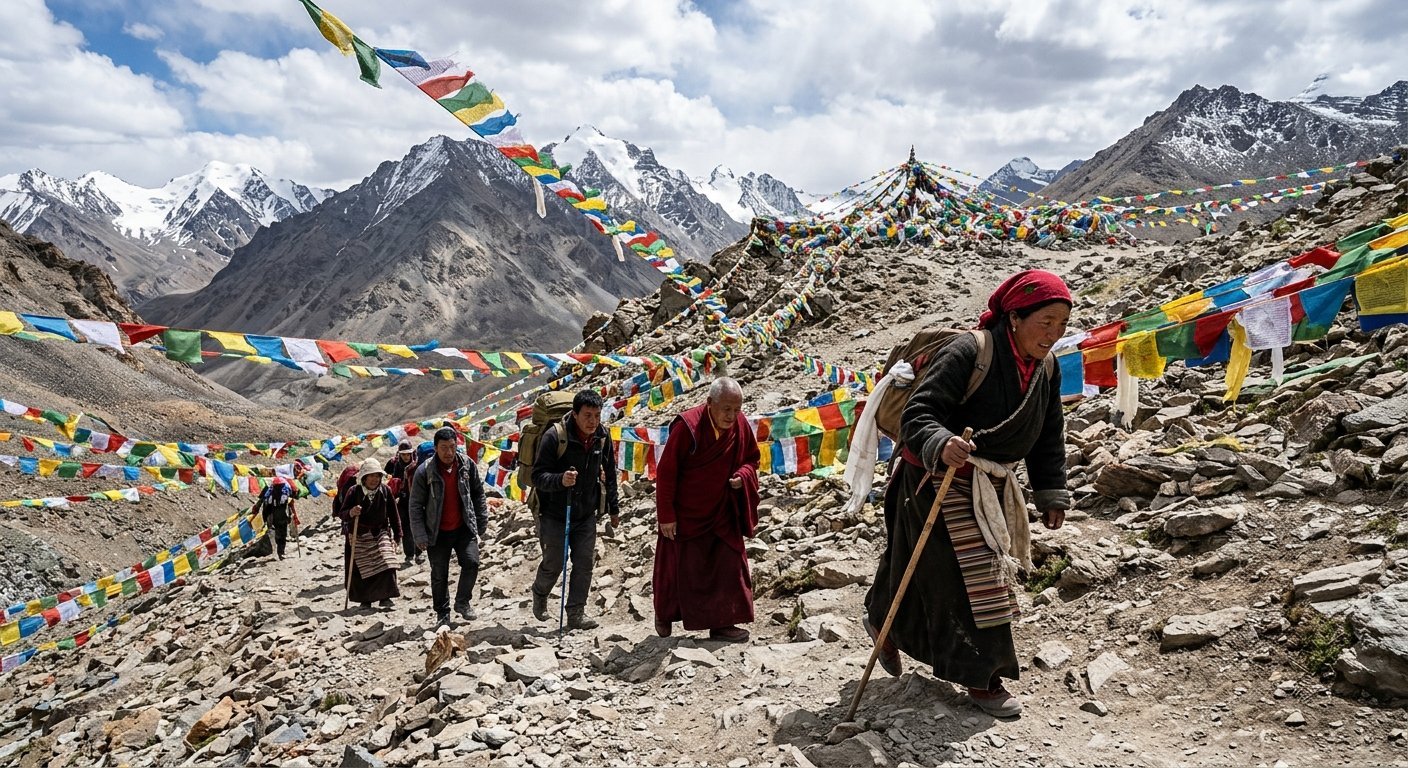
How Kailash Pilgrim Prepares NRIs for the Entire Journey
Most tour operators sell you a yatra package. We prepare you for a pilgrimage. There’s a difference.
The preparation begins the moment you confirm your booking — typically 10 to 12 months before departure. You receive a detailed pre-yatra preparation guide covering physical fitness, spiritual readiness, packing lists, permit documentation, travel insurance requirements, and health assessments.
Physical Preparation
We don’t expect you to become an athlete. We expect you to build cardiovascular endurance and leg strength. Walking 5 to 7 kilometres daily in the months leading up to the yatra makes an enormous difference. Stair climbing, light trekking, and breathing exercises help too. We provide a month-by-month fitness progression plan that’s realistic for working professionals and retirees.
Spiritual Preparation
Mount Kailash isn’t a trekking destination. It’s the abode of Lord Shiva. For the pilgrimage to hold meaning, your heart and mind need to align with that purpose. We share guided meditations, devotional practices, and readings on the significance of Kailash in Hindu and Buddhist traditions. Many pilgrims begin a daily Shiva mantra practice months before departure. That discipline carries you through the difficult moments on the mountain.
Documentation and Permits
NRIs face unique documentation challenges — passport verification, visa applications, travel permits, insurance coordination, and in some cases, OCI card considerations. Kailash Pilgrim manages the entire permit process. We collect your documents, submit applications, track approvals, and handle any bureaucratic delays. You don’t chase paperwork. We do.
Gear and Packing Support
What you bring matters. Layered clothing for extreme temperature swings, quality trekking boots, a sleeping bag rated for sub-zero temperatures, water purification tablets, sunscreen with high SPF — the packing list is long and specific. We provide a detailed checklist and shopping recommendations. We also offer group discounts on gear purchases through partner suppliers in Australia and India.
Group Coordination and Pre-Departure Briefings
Before departure, we organize a virtual briefing session (or in-person if you’re in the same city) where you meet your fellow pilgrims, ask questions, review the itinerary in detail, and clarify any last-minute concerns. Many of our yatra groups stay connected for years after the journey. The bonds formed during this preparation and the parikrama itself are lasting.
This level of preparation is why Kailash Pilgrim’s completion rate is significantly higher than the industry average. It’s not luck. It’s planning, patience, and respect for the scale of what you’re about to attempt.
Frequently Asked Questions
Is the Lhasa route suitable for senior citizens over 65?
Yes, if you’re in reasonable health and follow the preparation plan. The Lhasa route’s gradual altitude gain and built-in rest days make it the safest option for seniors. We’ve successfully guided pilgrims in their 70s who trained properly and allowed time for acclimatization. Medical clearance from your doctor is required before booking.
How far in advance should NRIs book the 2026 Fire Horse Year yatra?
At least 10 to 12 months in advance. Permit allocation is limited, and the Fire Horse Year has created unprecedented demand. Several of our 2026 Lhasa route departures are already full. Early booking also gives you adequate time for physical and spiritual preparation, which directly impacts your safety and experience.
What’s the total cost for the Lhasa route Kailash Yatra for NRIs?
Cost varies depending on departure date, group size, and accommodation level, but expect the range to start around AUD 6,500 to AUD 8,500 per person for a standard 14-day Lhasa route package, including permits, domestic flights within China, ground transport, accommodation, meals, and Sherpa support. This doesn’t include your international airfare to China or travel insurance. Contact Kailash Pilgrim directly for exact pricing based on your departure preference.
Can I do the Kailash parikrama if I’ve never trekked at high altitude before?
Yes, but preparation is non-negotiable. The Lhasa route’s acclimatization structure is designed for first-time high-altitude trekkers. However, you must commit to the pre-yatra fitness program, follow medical advice, and be honest about any health concerns during the journey. Most of our pilgrims are first-timers, and the majority complete the parikrama successfully with proper support.
Begin Your Kailash Journey From Lhasa With Kailash Pilgrim
The Lhasa route isn’t just a path to Mount Kailash. It’s a pilgrimage that honours both the spiritual magnitude of what you’re undertaking and the physical reality of doing it safely.
If you’re an NRI who’s been feeling the pull toward Kailash — especially with the rare Fire Horse Year of 2026 approaching — this is the time to commit. Not later. Not when life’s less busy. Now, while permits are still available and while you have the full year to prepare properly.
At Kailash Pilgrim, we’ve guided hundreds of devotees from Australia, the UK, the UAE, Singapore, Canada, and the USA on this sacred journey. Ms. Shalini Patel, our founder, has completed the Kailash parikrama more than 20 times since 1996. We’re not tour operators. We’re pilgrims who’ve walked this path and now guide others with the care, preparation, and reverence it deserves.
Reach out to us today. Share your questions, your concerns, your timeline. Let’s begin your preparation for the journey that may define the rest of your spiritual life.
Contact Kailash Pilgrim to book your 2026 Lhasa route Kailash Yatra and join a community of devotees who’ve answered the call of Mount Kailash.