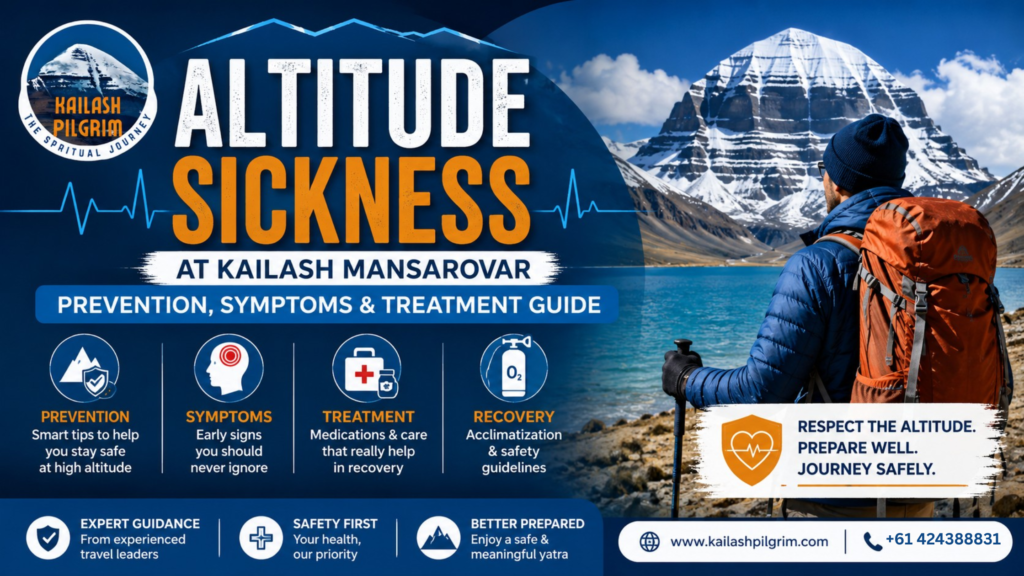
Altitude Sickness at Kailash Mansarovar: Prevention, Symptoms & Treatment Guide
The first thing most pilgrims notice at Kailash isn’t the cold..It’s the breathing.
You take a few steps and suddenly realize your body is working harder than usual. Simple things—walking uphill, carrying a small bag, even talking while walking—start feeling different. That’s the reality of traveling at extreme altitude.
And honestly, this often surprises people.
Despite the deeply spiritual nature of this journey, when it comes to undertaking this pilgrimage physically, this is one of the hardest and remote regions on earth because of the altitude. Both Mansarovar Lake and the Dolma La Pass are thousands of meters above the sea, and the oxygen levels at both sites are relatively low.
It is here that altitude sickness at Kailash Mansarovar becomes an incredibly vital matter for anyone making the pilgrimage.
Not to create fear…But to create awareness.
And that altitude sickness is not exclusive to older people or those who are physically unfit. Healthy individuals can also suffer from it depending on how fast they go up and neglecting the symptoms that may appear.
Table of Contents
And the best part is, with proper preparation, most pilgrims are able to make their journey pleasant and secure. This article will discuss:
- What altitude sickness actually is
- Common altitude sickness symptoms
- Early warning signs you should never ignore
- Altitude sickness prevention strategies
- Altitude sickness medication and treatment options
- How to stay safe during Kailash Parikrama
Let’s begin with the basics.
What Is Altitude Sickness?
Altitude sickness occurs when there are difficulties for the body to adjust to the reduced availability of oxygen at high altitudes.
However, as one ascends further into the Himalayas, the air gets thinner, which means that
Your body will be receiving less oxygen with each breath.
There are three types of altitude sickness, and these get increasingly worse:
- Acute mountain sickness ( AMS): This is the most common and also the first one to develop. Symptoms can be any of severe headache, vomiting, fatigue and dizziness. All pilgrims suffer from AMS while travelling for the Kailash Mansarovar Yatra.
- High altitude pulmonary edema (HAPE): This is the worst and fatal disease which occurs due to fluid in the lungs. This is a situation of emergency and major killer from the disease caused due to high altitude sickness.
- High altitude cerebral edema (HACE): This is the fatal and one in all three of them which occurs due to fluid in the brain. Symptoms are dizziness and coordination lost. A immediate descent and treatment is required for this situation.
In Kailash Mansarovar you ascent from 3800 m at Lake Mansarovar to over 5630 m at the highest point, the Dolma La Pass while performing the parikrama. This steep incline (about 3,800m-5,630m gain) in generally two to three days, provides too short a period for acclimation hence causing high altitude sickness more commonly on the yatra.
Why Altitude Sickness at Kailash Mansarovar Is Common
This pilgrimage of Kailash Mansarovar Yatra is nothing compared to other mountain trekking. It is highest as well as one of the most religiously significant pilgrimage on this earth. You get the idea of the harsh altitude condition if you understand the topography.
Key Altitude Points on the Yatra Route
| Location | Altitude | Risk Level |
| Kathmandu / Lhasa (Starting Point) | 1,400 m / 3,650 m | Low |
| Lake Mansarovar | ~4,590 m | Moderate |
| Darchen (Parikrama Start) | ~4,575 m | Moderate–High |
| Dirapuk Monastery | ~5,000 m | High |
| Dolma La Pass (Summit) | ~5,630 m | Very High |
| Dzonglung / Zutulpuk | ~4,800 m | High |
At these elevations, oxygen availability can feel nearly 50–55% lower compared to sea level.
That’s why even experienced travelers move slowly here.
Common Altitude Sickness Symptoms
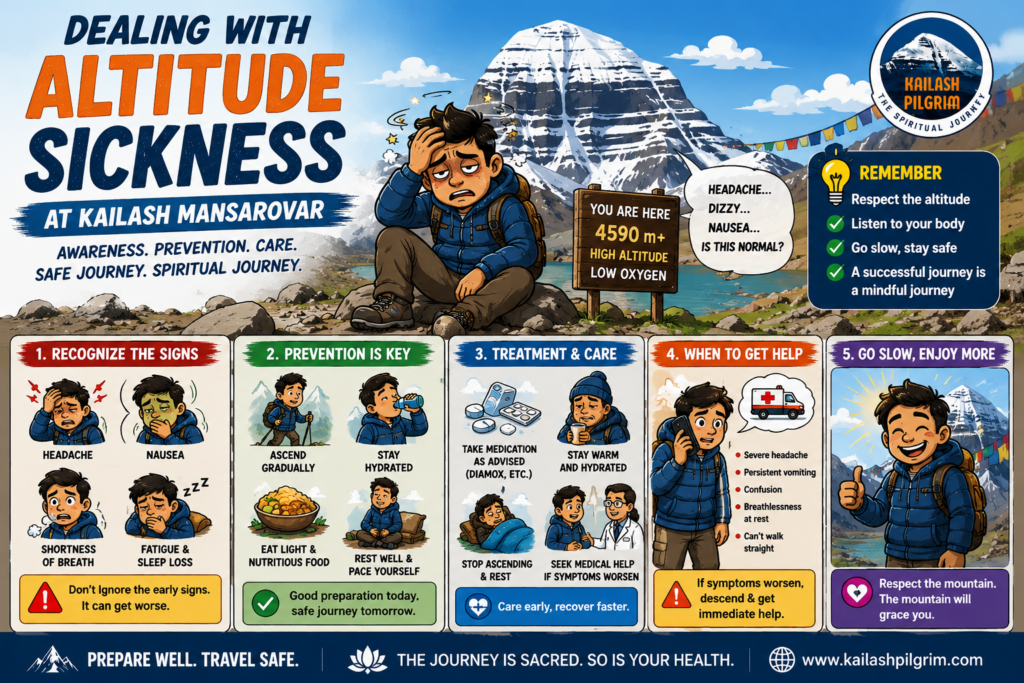
The signs of altitude sickness can alert you to this danger before it can affect you or a companion in a critical way. Symptoms of altitude sickness generally begin to manifest within 6 to 12 hours of arrival at a higher altitude, though on an unusually rapid ascent they may appear earlier.
Symptoms in Early Stage (Mild AMS)
- Continuous headache (most frequently occurring symptom)
- Nausea or vomiting
- Tiredness and fatigue
- Lack of appetite
- Sleep disturbance or inability to sleep
- Dizziness or faintness
- Generally ill feeling
Moderate Symptoms (Developing AMS)
- Intensified headache unrelieved by paracetamol
- Breathlessness even while resting
- Persistent dry cough
- Reduced urination (yellow and dark urine)
- Peripheral oedema (swollen hands or legs)
- Difficulty in walking straight
Symptoms in Advanced Stage (HAPE/HACE – Immediate Emergency Care Required)
- Intense breathlessness or rattly breath
- Persistent coughing up of pink or frothy sputum
- Confused state of mind and disorientation
- Inability to walk or impaired coordination (ataxia)
- Tight chest symptoms
- Loss of consciousness
The golden rule of altitude medicine: If you or anyone in your group shows symptoms of AMS, do NOT ascend further. Rest at the current altitude. If symptoms worsen within 24 hours despite rest and medication, descend immediately. Even 300–500 metres of descent can dramatically improve the condition.
Also Read: Kailash Mansarovar Yatra Difficulty Explained: Essential Preparation Tips for 2026
Altitude Sickness Prevention
Prevention of altitude sickness is ideal. Here are some ways to avoid altitude sickness that are recommended by travel medicine practitioners and doctors involved in mountain climbing around Kailash Mansarovar region:
1. Acclimatise Gradually Before the Yatra
Try to spend at least two to three days in Lhasa (3,650 m) before going to Kailash. This will help your body adapt to the decreased supply of oxygen to its tissues. As a rule, when you fly from Mumbai or Delhi, you should necessarily follow this step.
2. Adhere to the ‘Climb High, Sleep Low’ Technique
It is essential in mountaineering. Make sure you go to walk uphill for a little bit during the day and return to your camp that is located lower. Sleeping promotes your body’s adaptation processes.
3. Adequate Fluid Consumption
Mountain sickness symptoms will only be made worse by dehydration. Drink a minimum of 3 to 4 liters of water daily as you undertake your trek. Coffee and alcohol are prohibited as they cause your body to become dehydrated.
4. Slow Your Pace
Do not race to complete your pilgrimage journey. The desire to push yourself to reach the next camp, especially during the parikrama period, will cause serious issues. It is always best to walk slowly, and you may even require additional days staying at Dirapuk.
5. Eat Light Food Items and Eat Often
Consuming fatty food increases the burden on your digestive system. Eat lighter food items such as dal, rice, tsampa, soups, and breads that have high carbohydrate content. Eating often but in small quantities will keep you energized.
6. Limit Physical Exertion in the First Day After Reaching the Higher Altitude
After reaching a particular campsite, spend the first day resting in that area. Refrain from engaging in strenuous activities like carrying heavy loads, or physical activities altogether.
7. Monitor Your Group and Use the Buddy System
Your judgement and self-awareness might also be affected by Altitude sickness. A person with HACE may not even be aware that he/she is confused. Always travel in pairs; check each other on the situation frequently, and make sure one member of your team is in charge of watching others.
Altitude Sickness Medication: What Pilgrims Commonly Use
Beyond prevention, there are several medications known to significantly lower the risk and symptoms of altitude sickness. Here is a comprehensive guide to the most common altitude sickness medications recommended for the Kailash Mansarovar Yatra.
Acetazolamide (Diamox) – The “Gold Standard” of Altitude Sickness Medications
Acetazolamide, also available by its trade name, Diamox, is the medication most commonly prescribed to combat altitude sickness by travel medicine doctors worldwide. It works to increase breathing, which in turn increases oxygen in the bloodstream and aids in acclimatization.
- Dosage recommendation: Take 125-250 mg twice per day, beginning 1-2 days prior to departure, and then for up to 2 days following arrival at the highest elevation.
- Side effects: Increased urination, numbness of the fingers and toes, altered perception of the taste of carbonated drinks. These side effects are considered normal and expected.
Contraindicated for people with Sulfa allergies. Seek medical advice before using.
Dexamethasone – An Emergency Medicine
It is a potent steroid medication aimed at preventing brain edema. It can be prescribed only in cases of severe AMS and HACE as well as before evacuating the patient.
- Usage: Typically reserved for emergency treatment, not routine prevention.
- Important note: Always carry this if trekking in remote high-altitude areas, as part of your emergency kit.
Nifedipine — For HAPE Treatment
Nifedipine is used to treat High Altitude Pulmonary Edema (HAPE) by relaxing the blood vessels in the lungs, reducing the dangerous build-up of fluid. Like dexamethasone, it is primarily an emergency treatment and should only be used under medical guidance.
Ibuprofen — For Altitude Headache Relief
Several clinical studies have shown that ibuprofen (400–600 mg) can effectively reduce altitude headaches and may have mild AMS preventive properties. It is a useful over-the-counter option for managing headache symptoms and is widely available.
Ginkgo Biloba — The Natural Option
There are some studies showing that extract from Ginkgo biloba (twice per day, 120 mg each time, and starting 5 days prior to ascension) can help decrease the effects of altitude sickness due to enhanced blood circulation. The results have not proven as conclusive as for acetazolamide, although many pilgrims may prefer this option as an additional preventive treatment method.
Altitude Sickness First Aid Box for Kailash Mansarovar Pilgrimage
- Acetazolamide (Diamox) – with prescription of the doctor
- Dexamethasone (4 mg tablets) – emergency use
- Nifedipine (30 mg slow release) – emergency HAPE use
- Ibuprofen 400 mg – headache and other pain medication
- ORS Oral Rehydration Salts – to maintain hydration
- Paracetamol 500 mg – mild headache and fever relief
- Antiseptic Cream, adhesive bandage, blister cushions
- Pulse Oximeter – to monitor SpO2 level
- Portable oxygen cylinder / concentrator (recommended)
Also Read: Kailash Mansarovar Yatra 2026 Guide: For Complete First-Timer Pilgrim
Altitude Sickness Treatment at Kailash Mansarovar
Despite all preventive measures being taken, the occurrence of altitude sickness is not ruled out. It is essential to know altitude sickness treatment and how to act effectively and promptly.
Step 1: Cease Climbing and Rest
As soon as any symptoms occur, especially headaches, nausea, or vertigo, cease climbing. It is crucial to rest at the same altitude. Do not push on hoping symptoms will resolve themselves. Many cases of severe AMS result from ignoring early warning signs.
Step 2: Drink Water and Take Medication
Drink water continuously and take either ibuprofen or paracetamol for headaches. In case you are currently undergoing treatment with acetazolamide, maintain it as well. It’s important to eat even small portions despite loss of appetite – the body requires energy to heal.
Step 3: Take Supplemental Oxygen
Supplemental oxygen helps instantly in recovering from AMS. It is very common for many pilgrim parties such as the Kailash Pilgrim party to carry their own oxygen machines in case something similar happens.
Step 4: Descent – The Best Possible Solution
There is no drug, there is no amount of rest, and no supplementary oxygen that works better than descending at the first sign of acute altitude sickness. Descent of about 300-500 meters would yield very impressive results within minutes to hours. If you notice symptoms of HAPE or HACE, descend immediately – do not delay until morning.
Step 5: Hospitalization
In extreme cases such as loss of consciousness or an inability to walk, the patient should seek urgent care as soon as possible. Helicopter evacuation might be necessary in case of Kailash. This is one of the best reasons to have travel insurance covering evacuation.
Who is Most At Risk? Know Your Vulnerability
Altitude sickness does not discriminate by fitness level, age, or experience. In fact, fit young athletes sometimes fare worse than older, less active pilgrims because they push themselves harder and ascend faster. That said, certain factors do increase risk:
- Previous history of altitude sickness (the strongest predictor of future episodes)
- Living at low altitude (sea level residents have greater adjustment to make)
- Rapid ascent without acclimatisation days
- Dehydration or poor nutrition leading up to the trek
- Certain underlying health conditions: anaemia, heart disease, lung conditions
- Smoking (reduces lung efficiency at altitude)
- Overexertion and exhaustion during the approach
Knowing your personal risk profile — ideally through a pre-travel health consultation — allows you and your guide team to take appropriate precautions specific to your situation.
Watch: https://www.instagram.com/p/DYZY00ugDVu/utm_source=ig_web_copy_link&igsh=MzRlODBiNWFlZA==
Monitoring Your Oxygen Levels: The Pulse Oximeter
An extremely useful tool to have on the Kailash Mansarovar Yatra is a pulse oximeter. This small and affordable clip on device will show your SpO₂ (Blood Oxygen saturation) and heart rate within seconds.
At sea level the average SpO₂ is 95-100%. At altitude, levels naturally drop. Here is a general reference guide for the Kailash region:
| SpO2 Level | What It Means | Action Required |
| 90–94% | Mild reduction — normal at altitude | Monitor closely, rest, hydrate |
| 85–89% | Moderate concern | Rest, supplemental oxygen, consider descent |
| 80–84% | Significant concern | Supplemental oxygen, prepare for descent |
| Below 80% | Medical emergency | Immediate descent + emergency oxygen |
It’s best to monitor your SpO2 at least two times per day: first thing after waking and before going to sleep. Don’t rely solely on the readings – if they suddenly drop, or if you are not feeling well with readings which seem acceptable, go with your symptoms.
FAQs
Q: How high is the Kailash Mansarovar Yatra, and why does it matter?
Ans: The trail reaches its highest point at the Dolma La Pass at around 5,630 meters above sea level. Here, the availability of oxygen becomes half that available at sea level.
Q: Is the Kailash Mansarovar Yatra safe if I’ve previously experienced altitude sickness?
Ans: Yes, but with caution. Visit a travel medicine professional, plan for more acclimatisation time, and make sure your travel company provides good emergency cover.
Q: Do I need altitude sickness medication for the Kailash Mansarovar Yatra?
Ans: It is highly advisable to use. Virtually all of the specialists who work with high altitudes recommend taking acetazolamide at the very least.
Q: What if I experience altitude sickness while doing the parikrama?
Ans: Do not ascend further. Notify your guide. Rest where you are and take your medication. Your safety comes first.
Q: How fit must I be to join the Kailash Mansarovar Yatra?
Ans: Good cardiovascular fitness is crucial – you will have to walk 52 kilometers across three days on extreme altitude trails.
Q: Does supplemental oxygen really help?
Ans: Absolutely. Supplemental oxygen can provide significant, near-immediate relief from altitude sickness symptoms.
Why Choose Kailash Pilgrim for a Safe Kailash Mansarovar Yatra?
The Kailash Mansarovar Yatra completing safely is not only about individual preparation, But also about the team assist you throughtout. The experience of such personnel becomes highly critical here.
Why choose kailash pilgrim
Kailash Pilgrim is an expert tour operator for Kailash Mansarovar Yatra and offers its clients extensive experience in handling the peculiarities related to high altitude treks like Kailash Mansarovar. Some things which make it stand out include:
- Guides with medical background: Our experienced guides are proficient in first-aid and also are aware of altitude sickness symptoms and carry with them pulse oximeters, oxygen cylinder etc.
- Well-planned & relaxed itinerary: All the itineraries are carefully prepared by the Kailash Pilgrim experts, keeping ample time for acclimatization.
- Emergency evacuation: Kailash Pilgrim organizes a complete emergency evacuation plan with helicopter contact numbers and recommends necessary insurance.
- Pre-Departure Health Briefings: We provide you’ll-detailed pre-travel briefing on how to prevent altitude sickness, medications to carry along, suggested fitness training and what to expect at every stage of your journey.
- Small Groups: Smaller groups ensure every pilgrim gets individual attention from your team of guides – which means we can quickly identify the first signs of altitude sickness and get help for it.
- 24 hour onsite support: Once we meet you at arrival in Kathmandu or Lhasa, and until your parikrama is complete, we are with you the entire time.
Every year, countless pilgrims complete this sacred journey safely under Kailash Pilgrim’s care — including those who had concerns about altitude sickness. The combination of proper preparation, expert guidance, and genuine commitment to pilgrim welfare makes all the difference.
Conclusion
Altitude sickness at Kailash Mansarovar is a real and quite significant issue. However, and it is one that the great majority of pilgrims manage to do without on their journey.
The key things that you need to bear in mind are summarized below:
- Knowing about the different types of altitude sickness.
- Know the symptoms associated with initial signs of altitude sickness and react immediately.
- Follow the preventive techniques for altitude sickness as described in the list of seven tips provided.
- Take the necessary medicines and know how and when to take them.
- Remember – you should never sacrifice your health for any purpose. Descent is not a defeat but smart decision.
- Kailash will be forever, only life you have, utilize it properly.
Now you are fit for a Kailash Mansarovar yatra with no risk. You will be able to arrange everything properly.
Do you want to undertake a safe Kailash Mansarovar Yatra?
Our team of yatra experts are all ready to provide assistance for planning of all aspects of your journey with safety.
- Visit kailashpilgrim.com to explore 2026 Kailash Mansarovar Yatra packages
- Book a free pre-travel consultation with our expert team
- Get a personalised altitude sickness preparation plan
Your safety is our priority. Your spirituality is our purpose.